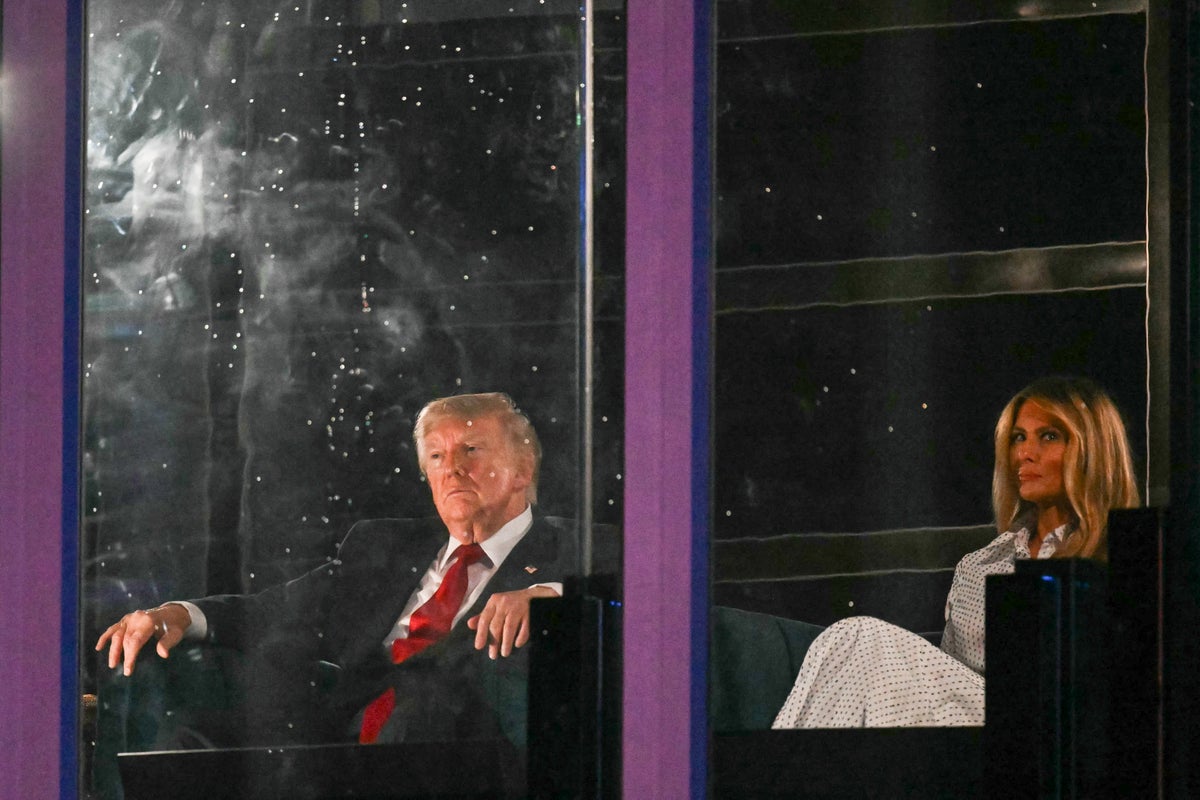
Donald Trump spent the hours winding down from July 4 celebrations by launching a multi-front digital offensive on Truth Social, combining venomous attacks against federal judges with triumphant boasts about his Washington D.C. infrastructure initiatives. To the casual observer, the flurry of posts looked like standard grievance politics. In reality, it represents a highly calculated executive strategy that weaponizes social media to bypass constitutional checks, intimidate the judiciary, and reshape public infrastructure through sheer executive fiat.
By analyzing the specific mechanics of these holiday statements, it becomes clear that Trump is using Truth Social not as a mere megaphone, but as an official tool of governance designed to override judicial roadblocks. For a more detailed analysis into similar topics, we recommend: this related article.
The Executive Decree as Digital Performance
When the Supreme Court or federal district courts rule against the administration, the traditional response involves formal legal appeals. The current administration has inverted this paradigm by using public platforms to render judicial decisions irrelevant in the court of public opinion.
Over the holiday weekend, the primary target was the federal judiciary, specifically judges who have blocked key administration initiatives ranging from immigration enforcement to the management of national landmarks. For broader information on the matter, comprehensive analysis can also be found on TIME.
Dismantling Judicial Credibility
The strategy relies on a simple, repeating loop.
- First, a federal judge issues an injunction against an executive action.
- Second, the platform hosts an immediate, deeply personal attack on the judge’s character, political background, or family connections.
- Third, the administration reboots the blocked policy under a slightly altered administrative justification, daring the courts to intervene again.
Consider the recent battle over the historical preservation of landmarks in the nation's capital. When U.S. District Judge Christopher Cooper ruled that the administration overstepped its statutory bounds by attempting to unilaterally close and rename major cultural institutions, the pushback was instantaneous. Rather than quietly filing an expedited appeal, the digital response reframed the legal dispute as a battle between a master builder trying to fix "rotted and rat-infested" federal infrastructure and an activist judiciary protecting an elite status quo.
The Infrastructure Pivot
What distinguishes this latest wave of activity from previous social media cycles is the deliberate pairing of judicial grievances with specific updates on D.C. building projects. This is not accidental placement. It is a sophisticated branding mechanism. By positioning massive building projects directly alongside complaints about court interference, the administration communicates a clear message to its base: the courts are a stalling mechanism against tangible physical progress.
+-------------------------------------------------------------+
|                THE TRUTH SOCIAL POLICY LOOP                  |
+-------------------------------------------------------------+
|                                                             |
|   1. Executive Order / Policy Mandate Issued                |
|               |                                             |
|               v                                             |
|   2. Federal Judge Issues Injunction (Legal Block)          |
|               |                                             |
|               v                                             |
|   3. Direct Digital Attack on Judicial Credibility          |
|               |                                             |
|               v                                             |
|   4. Policy Re-implemented via Fast-Track Executive Fiat    |
|                                                             |
+-------------------------------------------------------------+
The boasts regarding structural overhauls in Washington serve as a visual counterweight to the abstract legal battles taking place in marble courthouses. When the administration highlights hundreds of millions of dollars secured for capital renovations, it shifts the debate from statutory authority to economic output. The average supporter care less about the procedural intricacies of the Administrative Procedure Act than they do about cranes in the sky and scaffolding on historic facades.
The Legal Cost of Presidential Posting
While this approach yields immense political dividends, it introduces severe complications for the Department of Justice lawyers tasked with defending these actions in court. Federal judges are increasingly citing these social media declarations as explicit evidence of administrative intent.
In multiple ongoing challenges to executive orders, district judges have used the president's own words to prove that agency actions were driven by political retaliation rather than statutory compliance. When a policy's official justification claims objective administrative necessity, but the corresponding social media commentary frames it as a punitive measure against political adversaries, the legal defense collapses under judicial scrutiny.
Changing the Rules of Federal Real Estate
The obsession with reshaping Washington D.C. represents a broader desire to permanently alter the aesthetic and institutional identity of the federal government. By targeting the independent boards that govern cultural spaces and replacing them with staunch loyalists, the executive branch has effectively federalized institutions that historically enjoyed bipartisan independence.
This structural takeover has triggered profound pushback from historical preservation groups and congressional lawmakers, who argue that the executive branch is systematically erasing architectural history to install personal monuments. Yet, by utilizing the holiday weekend to saturate the digital ecosystem with narratives of renewal and modernization, the administration successfully muddies the waters, transforming a complex debate over heritage and separation of powers into a binary choice between construction and decay.
The real story is not that a president is venting online during a national holiday. The real story is that the line between private grievance and official executive action has been completely erased, transforming a niche social media application into the primary venue for American administrative law.