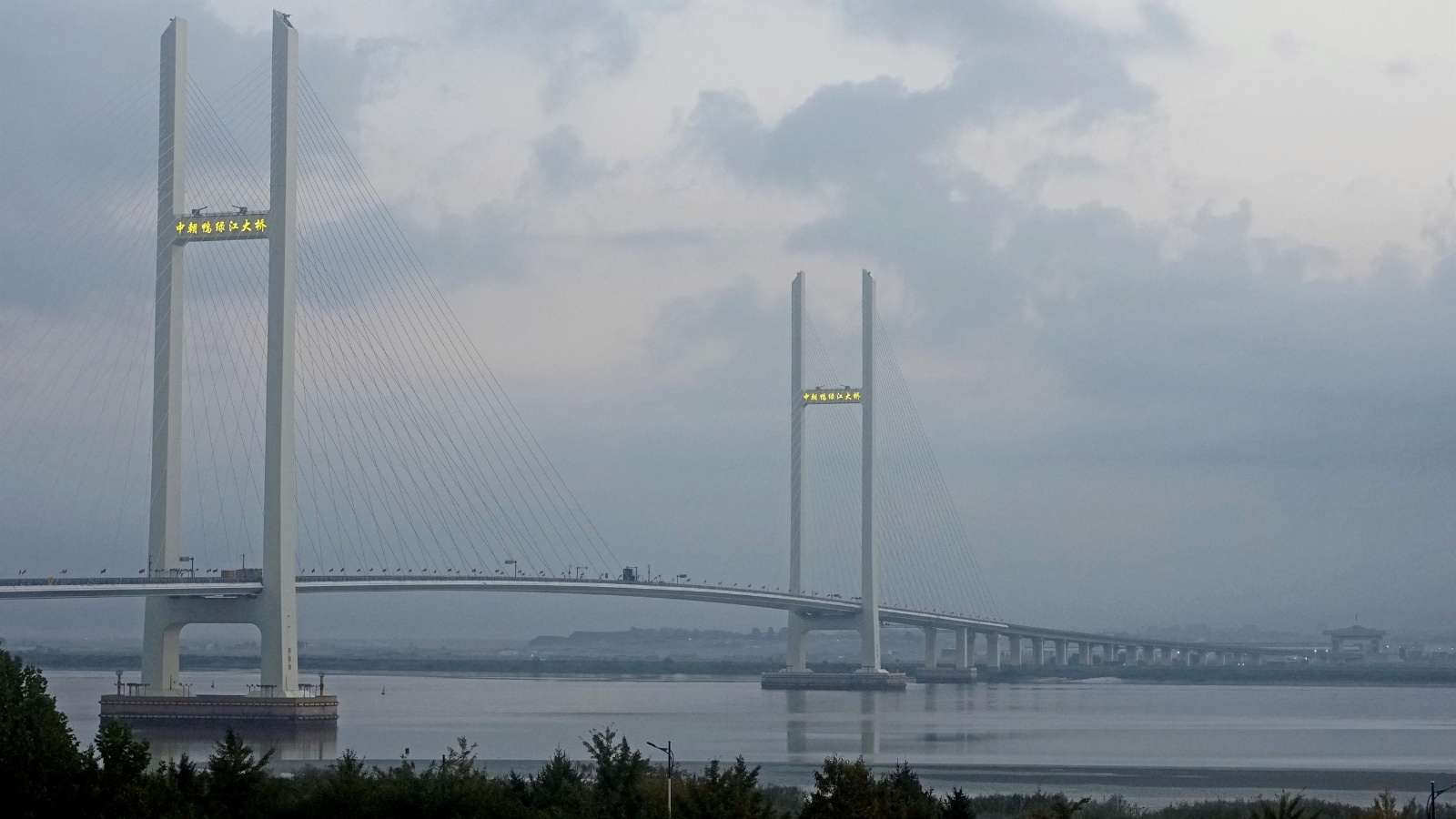
The opening of the long-stalled China-North Korea bridge after more than a decade of diplomatic paralysis and engineering limbo looks like a straightforward trade milestone on paper. It is not. Cross-border commerce along the Yalu River rarely moves on market logic alone, and a span that sat idle for twelve years carries political baggage, sanction constraints, and customs friction that concrete and asphalt cannot solve overnight.
In conventional coverage, a bridge opening gets framed as an immediate surge in freight, a quick boost for border towns like Dandong, and a sign of warm bilateral ties. That reading misses how trade between Beijing and Pyongyang actually functions. Physical infrastructure only unlocks volume when both governments agree on inspection protocols, foreign exchange settlement, and which goods are permitted to cross without triggering secondary enforcement headaches.
Concrete Stands Still While Politics Shifts
Building a bridge across the Yalu River is an engineering problem. Getting trucks across it is a sovereignty problem.
For twelve years, observers watched a massive span link Chinese territory toward North Korean soil while road approaches sat unfinished, customs facilities lacked operational readiness, or political friction froze formal launch dates. Anyone who has covered East Asian border logistics knows that "completed" means very different things depending on which side of the river you stand on. A span can be structurally sound yet functionally dead for years because neither capital wants to absorb the diplomatic cost of flipping the switch at the wrong moment.
When diplomatic winds shift in Beijing or Pyongyang, infrastructure suddenly regains its voice. Beijing has long viewed border stability through an economic lens, worried that economic collapse across the river could send refugees north or destabilize its northeastern provinces. Pyongyang, meanwhile, treats every opening as a calibrated valve, letting in materials it desperately needs while guarding against cultural and informational spillover that could erode domestic control.
Why Trade Volume Rarely Matches Ribbon-Cutting Hype
A new crossing creates capacity. Capacity is not demand, and demand is not cleared freight.
Consider a hypothetical logistics firm trying to move agricultural equipment and light industrial supplies from Liaoning province into northern North Korea. Even with a modern bridge deck in place, the company still faces tight export controls, strict verification of dual-use components, shipping insurance hurdles, and payment channels that avoid standard global clearing systems. Every extra layer of compliance adds cost, time, and risk.
Border traders along the Yalu have spent decades adapting to stop-and-go rhythms. They know that a grand opening ceremony can be followed within weeks by tighter inspections, sudden quota shifts, or unilateral closures when bilateral relations sour or public health fears flare. A bridge speeds up transit times once a truck is cleared to roll, yet it cannot shorten months of political negotiation over tariff schedules and cargo lists.
What Dandong Reveals About Border Economics
Dandong has long served as the unofficial barometer of China-North Korea bridge trade and wider bilateral commerce. Walk its waterfront or talk to local freight forwarders and warehousing operators, and you hear a familiar story of boom-and-bust cycles driven by policy rather than consumer trends.
Warehouses built in anticipation of steady cross-border growth have repeatedly sat half-empty or pivoted to domestic storage during prolonged freezes. Local businesses learn to stay nimble, diversify customer bases, and treat North Korean trade as a high-margin, high-volatility side line rather than a guaranteed growth engine. When a major crossing finally opens after twelve years, local operators welcome the movement, but seasoned players watch the second and third months of cargo manifests before celebrating.
| Factor | Ribbon-Cutting Narrative | Ground-Level Reality |
|---|---|---|
| Primary Driver | Bilateral trade demand and logistics efficiency | Diplomatic signaling, security priorities, and customs rules |
| Main Bottleneck | Lack of physical road or bridge capacity | Sanctions compliance, inspection delays, and payment friction |
| Impact on Local Business | Immediate windfall for border logistics firms | Gradual, uneven activity shaped by strict state oversight |
| Long-Term Trajectory | Continuous expansion of cross-border flows | Cyclical bursts alternating with tight controls |
Sanctions, Compliance, and the Hidden Cost of Crossing
Every shipment moving between China and North Korea sits under a microscope. Even when trade falls into permitted categories like humanitarian aid, food, or basic consumer goods, compliance officers and port authorities scrutinize supply chains for anything that could breach international restrictions.
Banks, insurers, and shipping intermediaries face steep penalties if they get compliance wrong. That pressure makes legitimate cross-border transactions slower and more expensive, pushing many dealings toward barter arrangements, cash settlements, or tightly controlled state-backed channels. A shiny new bridge cannot erase financial friction.
There is also a structural asymmetry between the two economies. China is a massive manufacturing and export powerhouse with deep global supply chains; North Korea is a heavily sanctioned, centrally managed economy with acute shortages of hard currency, modern industrial inputs, and reliable power. Trade between unequal partners with heavy state intervention tends to look like targeted provisioning rather than open, two-way market integration.
Overlooked Forces Shaping the New Corridor
Most commentary stops at trade statistics and geopolitical headlines. Three quieter forces will determine whether this twelve-year-old project becomes a workhorse or a symbolic monument.
First is inspection and quarantine capacity. Modern border crossings depend on scanners, customs databases, and clear rules on perishable goods, vehicles, and construction materials. Without synchronized procedures on both sides, queues build up fast, eroding the time savings that justify using a major bridge in the first place.
Second is domestic development inside North Korea. A bridge connecting to rugged or under-developed road networks inside North Korea runs into an immediate physical ceiling. Heavy trucks need paved highways, bridges further inland, fuel availability, and repair depots to keep freight moving past the border zone.
Third is Beijing's broader strategic calculus. China manages its relationship with Pyongyang alongside its ties with Washington, Seoul, and Tokyo. Opening a long-delayed crossing sends a clear message about Beijing's autonomy and long-term patience, yet China also calibrates how far and how fast it pushes economic engagement so it does not invite broader pushback or lose leverage over Pyongyang.
Why Twelve Years Matters More Than the Number Suggests
Twelve years is more than a construction delay. It is an entire economic cycle during which supply chains shifted, regional competitors upgraded their own transport links, and border communities adjusted to living without a promised corridor.
Projects that stall for over a decade rarely pick up right where they left off. Assumptions made twelve years ago about cargo types, regional industrial hubs, and transport pricing may already be dated. Analysts and investors who treat a twelve-year-old bridge as an overnight shortcut risk mistaking a ceremonial milestone for a structural transformation.
Reading the Cargo Manifests Instead of the Speeches
Speeches at border openings celebrate friendship, connectivity, and shared prosperity. Cargo manifests tell the truth.
To judge what this China-North Korea bridge opening actually achieves, watch what crosses during ordinary weekdays once the cameras leave. Track whether shipments consist of steady industrial inputs and commercial goods or sporadic, state-directed transfers; watch how customs processing times behave under routine pressure; and see whether border logistics firms commit fresh capital or keep their exposure tight. A bridge is just steel and concrete until daily commerce proves it is indispensable.