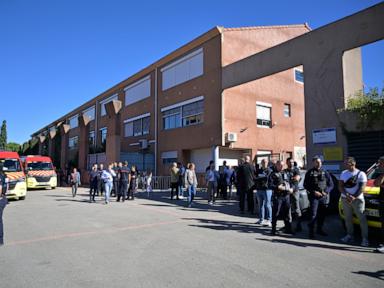
When France’s national anti-terrorism prosecutors took over the investigation into the shooting at Joseph Lakanal middle school in Aubagne, they confronted a case that defies easy ideological labels. A 14-year-old boy walked into his school on October 12, 2026, carrying a shotgun hidden inside a guitar case and opened fire, wounding the principal and a teacher before a staff member disarmed him in a stairwell. No traditional foreign terrorist banner hung over the attack. Yet anti-terror magistrates stepped in anyway, signaling that French authorities now view online mass-violence subcultures among teenagers as a national security threat rather than mere isolated school misconduct.
After decades covering security policy and youth crime across Europe, I have watched prosecutors stretch legal definitions whenever reality outpaces old statutes. Calling a 14-year-old’s classroom attack terrorism raises sharp questions about intent, radicalization, and judicial overreach. At the same time, ignoring digital ecosystems that glorify mass shootings leaves schools blind to threats brewing months in advance. Building on this theme, you can also read: The Last Hoofbeat on Central Park South.
Why Anti-Terror Prosecutors Entered a School Shooting Probe
Ordinarily, a teenager firing a hunting gun inside a middle school near Marseille would fall under local criminal courts and juvenile justice mechanisms. Handing the file to France’s national anti-terrorism prosecutor's office—the Parquet national antiterroriste—and assigning three investigating judges in Paris shifted the state's posture overnight. Prosecutors noted the suspect had no prior criminal record and that an initial psychiatric check found no mental disorder, while investigators examined months of planning and online subcultures obsessed with mass killings.
Terrorism law traditionally requires a clear political, religious, or ideological project aimed at intimidating the public or coercing a government. In the Aubagne case, reports indicate the teenager claimed he wanted revenge against peers and teachers over harassment and denied intending to kill, even as he admitted planning the act for months. Treating a grievance-driven or subculture-steeped teen attack as terrorism tests where ordinary criminal cruelty ends and state security begins. Analysts at NBC News have also weighed in on this situation.
Critics of counter-terrorism expansion have a fair point. Once anti-terror powers attach to troubled adolescents, investigations gain broader reach and heavier stigma, which can blur legal boundaries if every violent online obsession is treated like an organized ideological plot. Still, waiting for a classic manifestos-and-flag template ignores how modern violence actually spreads among minors.
The Online Subcultures Reshaping Youth Violence
Modern adolescent violence rarely forms in a vacuum. Investigators probing the Aubagne shooting looked closely at online environments tied to violent crime and mass-attack fascination, where teenagers trade aesthetics, memes, and notoriety rather than coherent political programs. Algorithms and niche forums reward shock, grim repetition, and taboo imagery long before a physical weapon ever appears.
To see how online echo chambers operate in principle, consider a hypothetical example: a 14-year-old spends evenings watching clips of real-world attacks, reading dark humor about school violence, and chatting with anonymous accounts that treat mass shooters like anti-heroes. Over several months, extreme violence stops looking unthinkable and starts looking scripted. That drift from screen to hallway happens quietly, often invisible to adults checking only grades or attendance.
Recent years in France have already rattled assumptions about youth violence in schools, even when firearms were not involved. A middle school employee in eastern France was fatally stabbed by a 14-year-old student during a bag check in 2025, and a 15-year-old student stabbed four peers at a high school in western France that same year, killing one and wounding three. Different weapons, different motives, same unsettling age bracket.
- Concealment over chaos: Bringing a shotgun inside a guitar case points to deliberate concealment rather than a sudden, impulsive classroom outburst.
- Months of lead time: Multi-month planning gives schools and families potential warning windows, provided anyone recognizes subtle behavioral shifts.
- Adult intervention: A school staff member helped evacuate students and colleagues before disarming the boy on the stairs, preventing worse casualties.
- Incomplete motives: Claims of grievance or lack of intent to kill do not erase the danger of firing a shotgun in a crowded school.
What Schools and Courts Get Wrong About Teen Threats
Schools are built to educate and supervise, not to run counter-intelligence operations. Metal detectors and sporadic bag checks catch occasional contraband, yet a weapon tucked inside a musical instrument case can slip past routine routines unless staff already have reason for alarm. Over-policing hallways can also turn ordinary middle schools into tense fortresses without fixing underlying isolation or bullying.
Courts face a different trap. Treating every teen offender as a mini-terrorist risks turning complex adolescent grievances into sweeping security cases, while treating every threat as mere teenage posturing invites tragedy. Neither approach is tidy, and pretending a single legal label solves everything is a mistake.
Real prevention starts earlier and looks less dramatic than anti-terror press briefings. Schools need fast, confidential channels where teachers, counselors, and students can report escalating fixation on weapons or mass violence without bureaucratic gridlock. Parents and guardians need candid conversations about what their children watch late at night, backed by practical mental health and social support before grievance hardens into rehearsal.
Watch how French investigating judges handle the months ahead—not just the charges filed against one 14-year-old, but whether the state draws a durable line between online mass-violence subcultures and classic terrorism.
This video report provides additional context on the Aubagne school shooting and why France's national anti-terrorism prosecutor became involved in investigating the 14-year-old suspect's background.