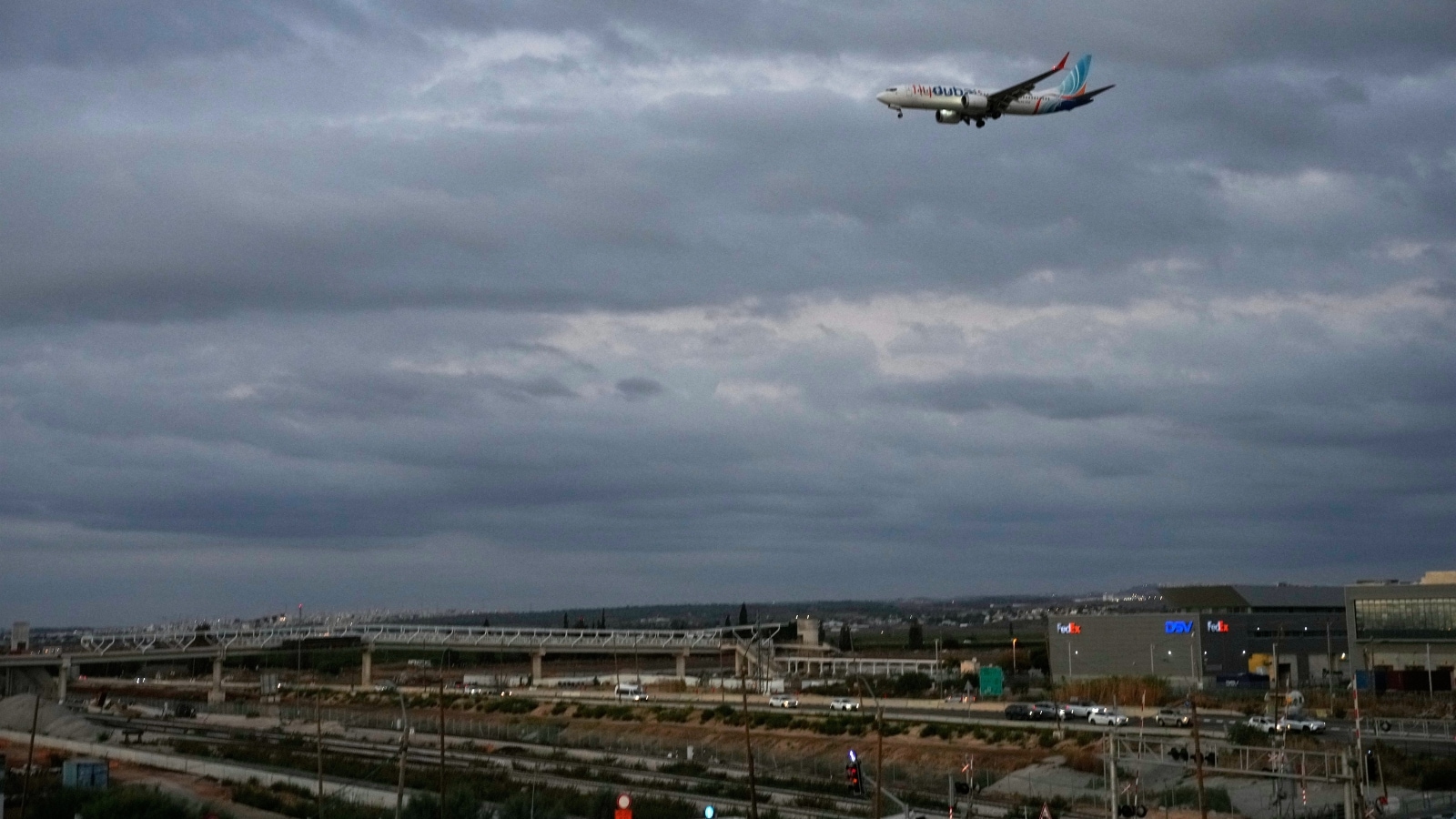
Commercial aviation safety operates on the assumption that civilian airframes are insulated from military targeting matrices through predictable identification protocols, strict flight path adherence, and active diplomatic deconfliction channels. When a national defense apparatus publicly contemplates or prepares kinetic interception against a civilian carrier—such as the reported calculus surrounding a flydubai flight carrying over 150 passengers—the failure mode is not merely tactical; it represents a complete collapse of the risk-assessment models that govern international airspace. Deconstructing this event requires analyzing how military command structures evaluate ambiguous radar returns, the strict threshold criteria required to authorize the destruction of a passenger aircraft, and the systemic failure points that push civil aviation into active geopolitical crossfire.
The Operational Mechanics of Airspace Threat Assessment
Air defense identification zones and sovereign airspace boundaries rely on continuous transponder telemetry, flight plan verification, and radio interrogation. Under nominal operational parameters, an unidentified or errant civilian aircraft triggers a predictable escalation sequence: electronic query, visual inspection via interceptor aircraft, radio communication on international emergency frequencies, and, finally, non-kinetic dissuasive maneuvers such as warning shots or forced diversion. Also making news in related news: Why Renting House Seats is the Smartest Political Gamble in Washington.
When a commercial flight is categorized as an extreme threat—suspected of being hijacked, commandeered as a kinetic weapon, or carrying hostile payloads—the decision tree shifts from air traffic management to strategic asset defense. The cost function governing this decision weighs two catastrophic outcomes: the potential loss of ground-based infrastructure or high-value personnel against the absolute political and moral cost of destroying a civilian aircraft.
In high-threat environments characterized by active missile exchanges or electronic warfare jamming, civilian transponder data can be spoofed, degraded, or entirely masked. This introduces a critical information deficit into the military command loop. Operators must decide whether an unverified radar contact is a friendly or neutral commercial flight experiencing avionics failure, or a hostile platform exploiting civil aviation corridors for cover. Further information on this are explored by The Washington Post.
The Interception Decision Matrix
Authorizing the kinetic destruction of a commercial airframe demands an evidentiary threshold that standard military rules of engagement rarely permit in real-time friction. The decision architecture requires satisfying three sequential conditions before lethal force is deployed:
- Positive Hostile Intent or Capability Verification: The target must demonstrate an unyielding trajectory directly toward a protected asset, with communications explicitly refusing commands to divert or identify.
- Exhaustion of Non-Lethal Interventions: All electronic countermeasures, visual warnings, and physical signaling must be demonstrably attempted unless time compression due to extreme velocity makes them impossible.
- Proportionality and Collateral Minimization: The anticipated damage of allowing the flight to proceed must quantitatively exceed the collateral damage of intercepting a fuselage containing non-combatant civilians.
When a government or military unit prepares to shoot down a commercial flight, it indicates that the risk threshold has inverted. The perceived probability of an asymmetric catastrophic attack outweighs the institutional and diplomatic fallout of an accidental shootdown. This inversion typically occurs under conditions of extreme operational stress, intelligence failures, or hyper-vigilance induced by active conflict.
Systemic Vulnerabilities in Regional Air Corridors
The vulnerability of carriers operating near active conflict zones exposes deep structural flaws in how civil aviation authorities evaluate route safety. Commercial airlines rely on state-issued Notices to Air Missions and risk assessments provided by international bodies like the International Civil Aviation Organization and the European Union Aviation Safety Agency. However, these advisories often lag behind rapidly evolving tactical realities on the ground.
Airlines balance economic optimization against safety margins. Operating longer routes to bypass contested airspace incurs significant fuel penalties, crew hour constraints, and ticket pricing friction. Consequently, carriers often thread narrow corridors between hostile zones, trusting that military radar operators will reliably distinguish between a Boeing 737 and a military transport or cruise missile.
This trust is dangerously fragile. Modern anti-access and area-denial weapon systems operate at hypersonic speeds, leaving human operators seconds to make terminal engagement decisions. Automated air defense batteries running on aggressive algorithms may prioritize target elimination over manual identification checks, turning commercial air corridors into high-risk kill zones.
Strategic Operational Recommendations
Mitigating the recurrence of near-miss events involving civilian carriers and military engagement zones requires a fundamental overhaul of air corridor governance and real-time data sharing.
Airlines and regulatory bodies must institutionalize automated geofencing that automatically restricts flight clearances through any airspace where surface-to-air missile systems are actively engaged in combat operations, removing the financial incentive for carriers to gamble on marginal safety buffers.
Military command centers must integrate civilian air traffic management feeds directly into their air defense command-and-control networks, ensuring that every active transponder signal is cross-referenced instantly with commercial flight databases before any engagement sequence reaches the terminal authorization stage.
Civilian aviation authorities must establish independent intelligence units dedicated to monitoring ground-level military readiness rather than relying solely on diplomatic assurances from sovereign states operating contested airspace.
The persistence of commercial flights near active combat zones remains an unacceptable systemic vulnerability. Until airspace closure protocols are depoliticized and bound strictly to military engagement radiuses, civilian passengers will continue to serve as unintended leverage in geopolitical standoffs.


