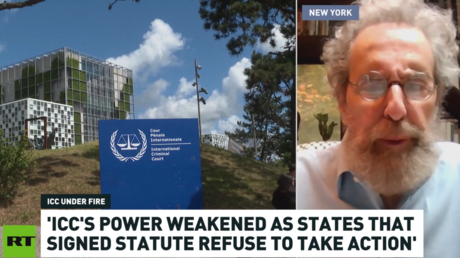
International law is built on a quiet fiction. We pretend that ink on parchment and solemn gowns in The Hague can check the machinery of state violence. Then an arrest warrant is issued for a sitting head of government, and the machinery grinds to a halt not because the law is unclear, but because the institution tasked with enforcing it has no army, no police force, and no real leverage.
The International Criminal Court finds its authority tested to the breaking point by the ongoing legal battles surrounding Benjamin Netanyahu. When an international tribunal issues a high-stakes arrest warrant that member states quietly ignore or openly defy, the institution suffers a structural blow from which it may not recover. The structural impotence exposed by this standoff is not an accidental glitch. It is the foundational design flaw of a global judicial system that relies entirely on the voluntary cooperation of the very powers it seeks to police.
Years of diplomatic maneuvering preceded the current crisis at the ICC. Prosecutors and jurists labored behind closed doors to build cases regarding alleged war crimes and crimes against humanity. Yet, the transition from investigative files to executable warrants remains a political minefield. When the court moves against leaders backed by powerful allies or commanding formidable military apparatuses, the limits of international jurisprudence are laid bare.
The Anatomy of Institutional Impotence
Power respects power. A court without bailiffs cannot compel compliance from a sovereign state with functioning air defense systems and intelligence services. The ICC relies on the Rome Statute, a treaty ratified by over 120 nations. But ratification does not equal enforcement. When a warrant demands the detention of a high-profile political figure, the burden shifts entirely to national capitals.
If a European signatory state decides that domestic political stability, intelligence-sharing agreements, or strategic alliances outweigh its treaty obligations, the warrant becomes a piece of expensive paper. Leaders travel through allied airspaces with impunity. Diplomats exchange handshakes while arrest orders gather dust. This gap between legal theory and geopolitical reality exposes the court to charges of selective justice and institutional toothlessness.
Critics argue that the court is weaponized against weaker nations while remaining powerless against major superpowers or their close partners. When prosecutions target leaders from states that reject the court's jurisdiction entirely, such as the United States, China, or Israel, the enforcement mechanism breaks down completely. Article 98 agreements and bilateral non-surrender pacts further insulate political targets from accountability.
Why the Status Quo Favors Impunity
The international legal order operates on a transactional premise. Nations cooperate when it serves their interests and stonewall when it does not. The ICC prosecutor's office faces an impossible arithmetic. Investigating complex urban warfare requires vast resources, access to restricted zones, and cooperation from local authorities who are often parties to the conflict.
Denial of access is the first line of defense for targeted states. Investigators cannot visit blast sites, interview witnesses under protection, or inspect military command structures if the host government bars entry. Consequently, prosecutors must rely on open-source intelligence, satellite imagery, and testimony gathered from afar. While these tools have grown more sophisticated, they rarely substitute for boots-on-the-ground forensics that withstand rigorous cross-examination in a courtroom.
Diplomatic pressure compounds the difficulty. Allied governments threaten funding cuts, mount public relations campaigns against court officials, and question the legitimacy of the judges themselves. The pressure campaign operates in broad daylight. When a prosecutor's independence is challenged by the world's leading economic and military powers, the institutional shield begins to crack.
The Legal Precedent and Its Discontents
Precedent matters in common law systems, but in international criminal law, precedent is often a graveyard of discarded ideals. Past tribunals, from Nuremberg to the ad hoc tribunals for Rwanda and the former Yugoslavia, operated in the wake of total military collapse or regime change. In those instances, the victors or the international community held absolute sway over the territory in question.
Today's conflicts present a different reality. Governments remain in power. Armies remain combat-effective. Coalitions hold firm. Applying a post-conflict judicial model to an active, high-intensity geopolitical struggle produces friction that the system was never engineered to withstand.
The Netanyahu warrant highlights this operational mismatch. A domestic leader fighting a multi-front war has zero incentive to surrender to an international court, and his domestic political survival depends on projecting defiance against external interference. Meanwhile, international supporters find themselves trapped in a diplomatic squeeze, forced to choose between upholding the rules-based international order and maintaining vital security partnerships.
Beyond the Rhetoric of Accountability
Reform proposals surface regularly in academic journals and diplomatic backchannels. Some analysts advocate for a dedicated international police force to execute warrants independently of local authorities. Others suggest expanding the Security Council's referral powers, though the permanent member veto renders that path a dead end.
Without a fundamental shift in how global power is distributed and enforced, the court will remain an arena of symbolic gestures. The law matters, but force dictates its application. As long as international justice depends on the goodwill of the powerful, warrants will be issued, borders will be crossed, and the illusion of global accountability will persist until the next crisis strips away the remaining veneer.


