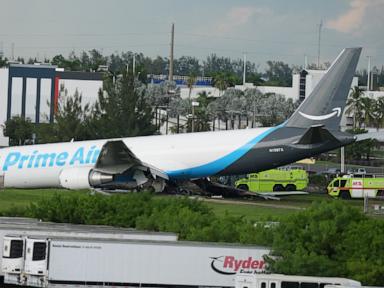
Planes aren't supposed to end up in parking lots. Yet that's precisely where an Amazon cargo jet finished its run at Miami International Airport, turning a routine Sunday afternoon into a massive disaster.
Prime Air Flight 7598, a Boeing 767-300 operated by 21 Air, barreled off the end of a diagonal runway. It smashed through perimeter areas, struck vehicles on a nearby road, and burst into devastating flames. Five people lost their lives, while others suffered critical injuries.
When aviation disasters happen, the public wants instant answers. The truth is messy. Federal agencies now face the grueling task of pulling apart flight data, weather patterns, and mechanical logs to figure out how a standard landing turned fatal.
The Landing Sequence and Runway Overruns
The National Transportation Safety Board (NTSB), led by Chairwoman Jennifer Homendy, has launched a full investigation. Their primary focus points straight at the touchdown zone.
A standard safe landing happens within the first 3,000 feet of a runway. Veteran pilots and safety experts examining flight data note that the aircraft appeared to float down the strip for an unusually long time without forcing its landing gear down.
If a pilot misses that initial window, standard procedure demands a go-around. They should pull up, circle back, and try again. Skipping that option on a short or compromised approach spells disaster. Investigators are currently reviewing whether high winds or an unexpected tailwind pushed the heavy freighter further down the tarmac than intended. A tailwind drastically reduces braking efficiency, turning a normal rollout into an uncontrolled slide.
Infrastructure and Safety Gaps at Miami International
Another uncomfortable question involves the airport's layout itself. Miami International Airport lacks Engineered Materials Arresting Systems (EMAS) on the runway in question.
These are beds made of lightweight, crushable concrete blocks designed specifically to swallow the wheels of an overrunning aircraft and bring it safely to a halt. The Federal Aviation Administration has pushed for these systems nationwide, crediting them with saving hundreds of lives. Their absence in Miami means there was no physical safety net when the Boeing 767 failed to stop before the airport boundary.
The Aging Fleet and Maintenance Scrutiny
The aircraft involved carries history—and plenty of miles. Built over thirty years ago, the Boeing 767 spent decades carrying passengers for various commercial airlines before getting converted into a dedicated freighter in 2015.
Older airframes aren't inherently unsafe, but they demand meticulous maintenance tracking. Aviation specialists point out that the NTSB will dig deep into the plane’s historical records, noting its past foreign ownership history. Investigators will comb through repair logs, engine performance data, and brake assembly health to check if a mechanical failure contributed to the lack of stopping power.
Ground Operations and Corporate Accountability
The tragedy didn't just affect the flight crew; it tore through a working roadway utilized by warehouse employees and local business traffic surrounding the airport. Emergency responders faced a chaotic scene involving a complex engine compartment fire, active fuel leaks, and victims trapped underneath heavy vehicles.
For Amazon, the crash places heavy scrutiny on how e-commerce giants outsource their logistical networks. While 21 Air operated the flight, the plane bore the Prime Air livery, tying the corporate giant directly to the public fallout. Both companies have pledged full cooperation with federal inspectors, but the pressure is mounting for tighter oversight of third-party cargo contractors operating out of America's busiest freight hubs.
The NTSB investigation will take months to yield a final report. Until then, aviation authorities are left reviewing the margins of error that separate a routine landing from catastrophe.