The rain in Kowloon does not fall so much as it hangs, heavy and warm, turning the neon reflections on Nathan Road into bruised ribbons of magenta and gold.
Inside a cramped fourth-floor office three blocks from the harbor, a detective named Marcus—let us call him Marcus, though his real name is buried under layers of diplomatic clearance—stares at a bank ledger that refuses to make sense. A family in Lyon had their life savings drained through a synthetic voice scam on a Tuesday. By Wednesday morning, the money had fractured into forty micro-transfers, bounced through a shell company in Panama, converted into Tether, and landed in a digital wallet accessed from an IP address bouncing off a server in Southeast Asia. For a different look, consider: this related article.
Marcus has the warrant. He has the forensic trail. What he does not have is the authority to kick down a door six thousand miles away.
To stop the thief, Marcus needs a phone call answered by someone who wears a different uniform, salutes a different flag, and reports to a government that might currently be locked in a bitter trade dispute with his own. Further analysis regarding this has been provided by Reuters.
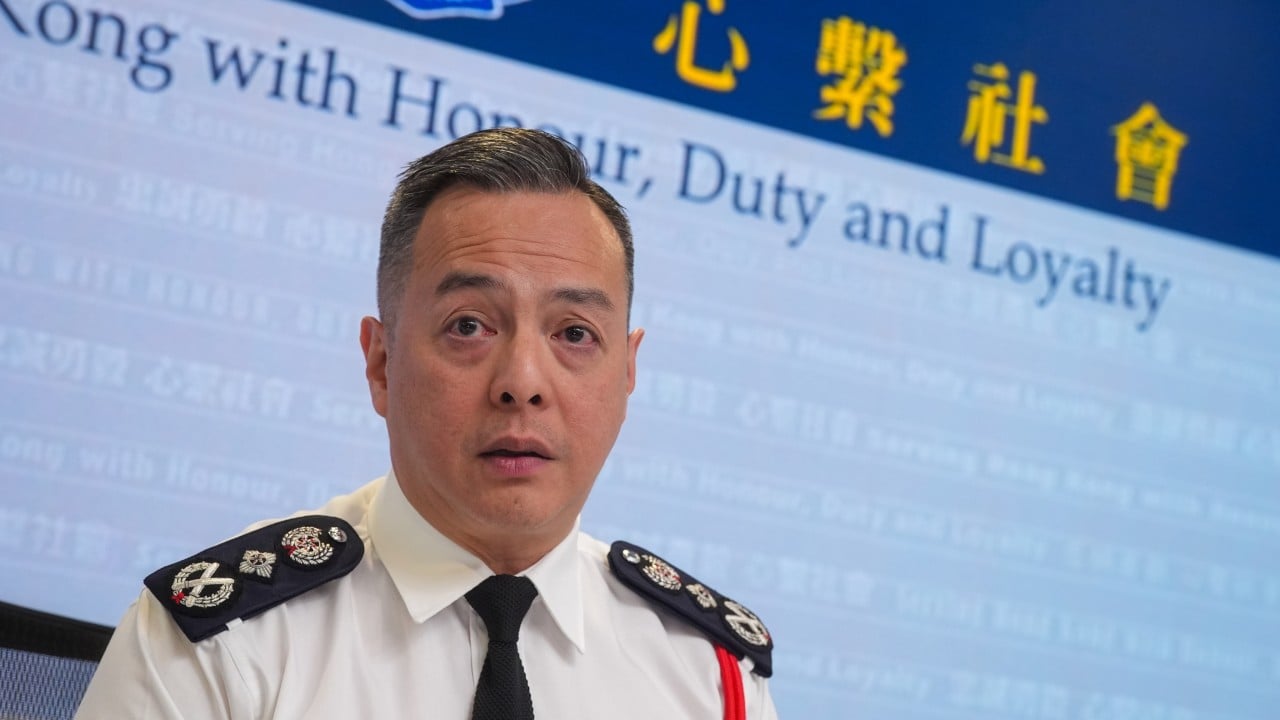
That phone call is the entire reason Interpol exists. And when Hong Kong’s top police official recently stepped up to a bank of microphones to declare that geopolitics will not derail the upcoming Interpol General Assembly in the city, the press corps scribbled down the quote, filed their copy, and moved on to the next press conference.
They missed the real story.
Because the promise that politics stops at the precinct door is not just a diplomatic talking point. It is a fragile, high-wire act upon which the safety of ordinary people quietly depends.
The Architecture of a Necessary Truce
To understand why a gathering of police chiefs in Hong Kong matters to anyone outside the halls of power, you have to strip away the Hollywood mythology of international law enforcement. Interpol does not have agents kicking down doors in trench coats. It has no jail cells, no handcuffs, and no power of arrest.
Think of it instead as the world’s most sensitive switchboard.
When a child goes missing in Warsaw, or a ransomware gang locks down a hospital network in Chicago, local detectives cannot simply hop on a plane and start flashing badges in foreign jurisdictions. Sovereignty is a brick wall. Interpol is the small, reinforced window cut into that wall, allowing 196 member countries to pass notes, fingerprints, and urgent warnings to one another without waiting months for diplomatic cables to clear foreign ministries.
Its constitution, specifically Article 3, is explicit: the organization is strictly forbidden from undertaking any intervention or activities of a political, military, religious, or racial character.
On paper, the rule is clean. In practice, keeping politics out of policing is like trying to keep salt out of the ocean.
Consider what happens when the General Assembly—Interpol’s supreme governing body—convenes. For a few days, delegates from nations that are actively sanctioning each other, spying on each other, or sparring over maritime borders must sit under the same fluorescent lights. They vote on budgets. They elect leadership. They debate how to share biometric data on human traffickers and fugitive financiers.
Hosting that room in Hong Kong carries undeniable weight. The city sits at the fault line of modern global rivalries, a place where East and West do not merely meet, they grind against one another like tectonic plates. Skeptics hear a local police chief promise smooth, apolitical cooperation and immediately raise an eyebrow. They wonder if visas will be quietly delayed for certain delegates, if sensitive intelligence will be guarded behind polite smiles, or if the host city’s own complex political recent history will cast a long shadow over the banquet tables.
Those doubts are fair. Pretending otherwise would be naive.
Yet if you talk to the investigators who actually work the night shift on transnational crime—the ones who have spent years watching syndicates exploit every crack in international trust—you hear a very different kind of anxiety. They are not worried about diplomats scoring points. They are terrified of what happens when the switchboard goes dark.
The Criminals Who Love a Cold War
Organized crime syndicates are the ultimate geopolitical realists. They read the headlines faster than any intelligence analyst, and they build their business models directly inside the blind spots created by diplomatic friction.
Imagine a hypothetical syndicate operating out of a compound along the Mekong River. Let us trace how they think. They know Country A and Country B are not speaking to each other over a tariff dispute. They know Country C has suspended extradition treaties with Country D. So where do they set up their servers? In Country C. Where do they recruit their money mules? In Country A. Whom do they target? Retirees in Country B.
Every time two governments freeze communication, a criminal enterprise gets a tax-free safe haven.
I once spent an afternoon in a fluorescent-lit briefing room listening to a cybercrime investigator explain how ransomware groups choose their targets. He pulled up a map of the world covered in red and blue lines. "You think they care about ideology?" he asked, tapping a finger against the glass. "They care about latency. Not internet latency—bureaucratic latency. If it takes six months for my subpoena to reach a prosecutor in a rival nation, the servers are wiped, the crypto is washed, and the guys who stole a pension fund are drinking champagne on a beach before my paperwork even gets translated."
This is the invisible reality behind the Hong Kong announcement. When the city’s police chief insists that preparations for the General Assembly are proceeding smoothly and that operational cooperation remains insulated from political turbulence, he is speaking directly to that latency problem.
Hong Kong itself is a case study in why this insulation is non-negotiable. As one of the world’s premier financial hubs, hundreds of billions of dollars flow through its clearing houses every single day. Most of it is the lifeblood of legitimate global commerce. A fraction of it—a tiny, toxic fraction—is the proceeds of fraud, narcotics, and cyber extortion.
If the Hong Kong Police Force cannot talk seamlessly to the FBI, Europol, the Australian Federal Police, and Singapore’s Commercial Affairs Department, that toxic fraction stays hidden. The shell companies remain opaque. The frozen accounts thaw.
Policing in the twenty-first century cannot be done in isolation, because crime stopped respecting borders the day the first fiber-optic cable hit the ocean floor.
The Weight of the Red Notice
Of course, trust in an apolitical Interpol is not an abstract ideal; it is tested every single day through a piece of digital paperwork known as a Red Notice.
To the public, a Red Notice is often misunderstood as an international arrest warrant. It is not. It is a request to law enforcement worldwide to locate and provisionally arrest a person pending extradition, surrender, or similar legal action. For a fugitive murderer or a cartel boss, it shrinks the map of the world until there is nowhere left to land a plane without hearing the click of handcuffs.
For human rights advocates and legal scholars, however, the Red Notice system has long been a source of deep unease. Over the past decade, authoritarian governments have occasionally been accused of abusing the system—trying to use Interpol’s neutral machinery to hunt down political dissidents, investigative journalists, or exiled business rivals under the guise of fabricated financial crimes.
It is an uncomfortable truth that anyone defending international police cooperation has to confront squarely. The system is only as clean as the integrity of the requests fed into it.
In response, Interpol has spent years tightening its vetting mechanisms, empowering an independent commission to scrub politically motivated notices before they ever hit a border control officer’s screen. Every time a General Assembly meets, that delicate balance is on trial: how do you keep the doors wide open for catching genuine predators while slamming them shut on political score-settling?
When Hong Kong hosts the assembly, every glance, every seating arrangement, and every bilateral handshake in the hallways of the Convention and Exhibition Centre will be scrutinized through that exact lens. Critics will watch for any sign of political overreach. Supporters will watch for proof that professionalism still trumps ideology.
The truth is that both things can exist in tension at the exact same time. Diplomacy is messy. International policing is even messier. You do not wait until every nation in the room shares the same political philosophy before you agree to share fingerprints on a child predator. If you did, you would wait forever, and the predators would win by default.
What Happens in the Corridor
The real work of an Interpol General Assembly rarely happens during the speeches under the main chandeliers.
It happens at 8:30 in the morning over terrible hotel coffee in a side corridor.
It happens when a superintendent from Nairobi corners an inspector from Madrid to finally untangle a six-month-old bottleneck in a wildlife trafficking investigation. It happens when a cyber-forensics lead from Tokyo shares a single line of malicious code on a napkin with a counterpart from Berlin, realizing in thirty seconds that the same crew hit both of their power grids last autumn.
You cannot automate that kind of trust. You cannot build it over an encrypted video call where everyone is reading from talking points approved by legal counsel. Human beings have to stand across from one another, look each other in the eye, and decide whether the person holding the coffee cup cares more about catching the bad guy than scoring points for their ministry.
That is why the physical venue matters, and why the assurance that politics will stay outside the venue is so fiercely guarded by career police officials.
Let us return for a moment to Marcus, our hypothetical detective in Kowloon, staring at the laundered money from Lyon.
In a world where geopolitics dictates police work, Marcus’s case dies on his desk. His request for cross-border account freezes sits in an inbox in Paris, caught in a diplomatic freeze, while the scammers in Southeast Asia move on to their next victim—perhaps a schoolteacher in Toronto, or a small business owner in Sydney. The ledger closes. The thieves vanish into the static between rival superpowers.
Now picture the alternative.
Because the channels stay open—because a detective in France and an inspector in Hong Kong share a common protocol, a shared database, and a mutual understanding that theft is theft regardless of which flag flies over the courthouse—the freeze order lands before the banks open on Thursday morning. The digital wallet is locked. The funds are traced back to a physical exchange. And six months later, a stunned family in Lyon gets a phone call telling them their life savings are coming home.
Nobody writes a headline about that phone call. There is no press conference for a quiet wire reversal, no viral clip of a bureaucrat stamping a form at midnight.
The Fragile Line
History shows us that international institutions rarely collapse all at once. They erode. They weaken when nations decide that symbolic victories matter more than practical cooperation, when the temptation to turn every neutral forum into a stage for ideological combat becomes too strong to resist.
We have seen it happen to trade bodies, to climate summits, and to cultural exchanges. Each time a neutral space gets politicized, the world grows a little louder, a little angrier, and significantly less safe for the people who have no seat at the negotiating table.
Hong Kong’s police leadership knows the eyes of the world will be fixed on the harbor when the delegates arrive. The city has spent decades building a reputation for crisp, methodical law enforcement—a reputation forged in the grit of anti-triad task forces and high-stakes financial crime units. Hosting the General Assembly is a chance to prove that its operational backbone remains intact, and that the switchboard can handle the voltage of a fractured world.
Skepticism will not vanish overnight, nor should it. Vigilance is the price of keeping any global institution honest.
Still, as the delegates pack their bags and the security perimeters go up around Victoria Harbour, it is worth remembering what is actually sitting in the middle of that conference table. It is not a treaty. It is not a trade deal. It is a thin, invisible lifeline stretched across the darkest corners of the globe—the only thing standing between a borderless underworld and the quiet neighborhoods we call home.
Out on Nathan Road, the rain keeps falling, washing the neon streaks down into the storm drains, while somewhere behind a locked door, a phone rings, and someone on the other side of the world picks it up.