The grocery store receipt doesn’t lie, even when the headlines try to soften the blow. You stand there, the fluorescent lights humming overhead, staring at a total that feels like a clerical error. You haven’t bought steak. You haven’t splurged on that imported cheese. Yet, the numbers at the bottom of the thermal paper keep creeping upward, a slow-motion heist executed in broad daylight.
This isn't just about a few extra cents on a gallon of milk. It’s the sound of a cooling engine.
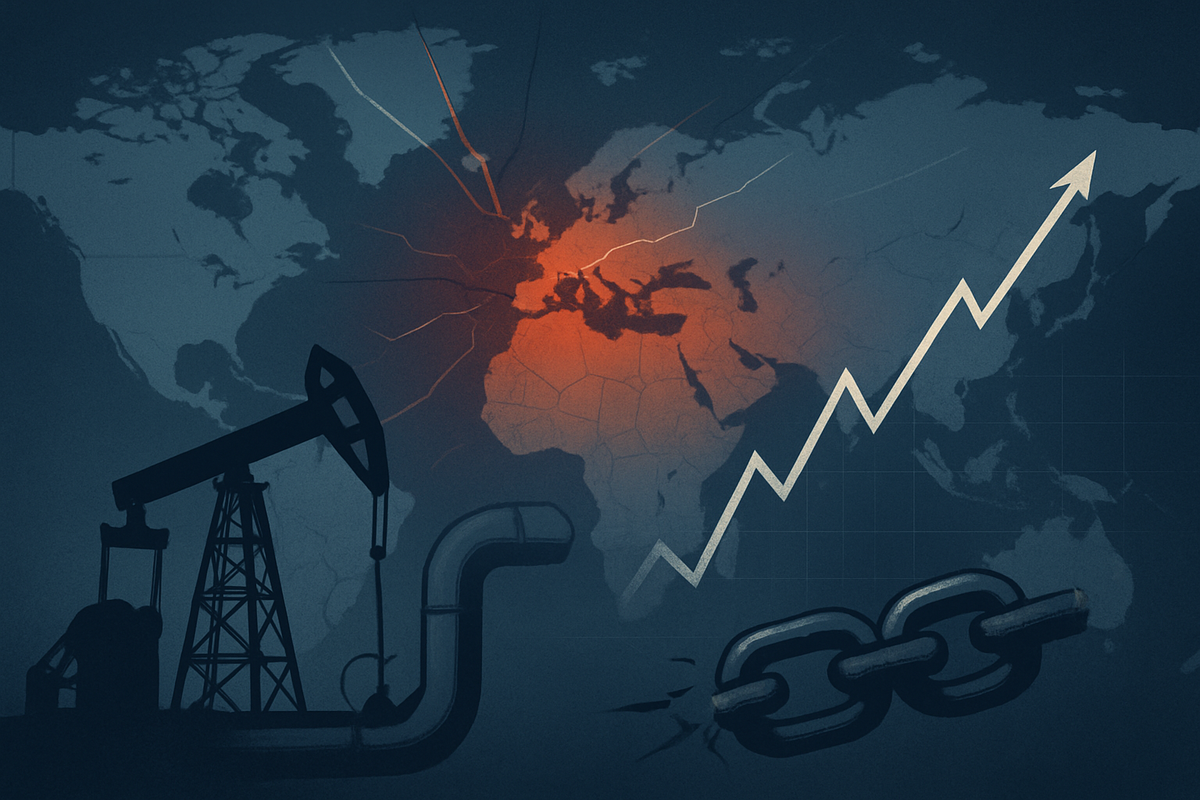
In March, the economic machinery of the country hit a jagged patch of ice. The numbers released by the Department of Commerce tell a story of two opposing forces colliding: growth is slowing down to a sluggish 2% crawl, while the "core" cost of living—the stuff that actually matters once you strip away the volatile swings of gas and food—is heating up to 3.2%.
Economists have a clinical name for this. They call it a "disappointment." But for anyone trying to balance a checkbook, it feels more like a pincer movement.
The Myth of the Soft Landing
For months, the narrative coming out of high-rise offices in D.C. and New York was one of cautious optimism. We were told the "landing" would be soft. The idea was that the Federal Reserve could raise interest rates just enough to chill inflation without snapping the spine of the economy. It was a delicate dance, a performance on a high wire.
But the latest data suggests the wire is fraying.
When growth hits 2%—down significantly from the energetic sprints of previous quarters—it means the engine is losing steam. Businesses stop hiring with abandon. Expansion plans are tucked away in desk drawers. The "vibe" shifts from "let's build" to "let's hold on."
Consider a hypothetical small business owner named Elena. She runs a mid-sized printing firm. Last year, she was looking at a second location. Now, she’s looking at her power bill and the 3.2% rise in core inflation. That 3.2% represents the "sticky" prices—the rent for her warehouse, the cost of the chemicals for her ink, the health insurance premiums for her staff. These aren't prices that drop when a ship finally clears a port in Shanghai. They are structural. They are stubborn. They are the weight in her backpack as she tries to climb a mountain that just got steeper.
The Core of the Problem
Why do we look at "core" inflation anyway? It seems counterintuitive to ignore the price of a burger or a tank of gas. But the reason is simple: food and energy are the drama queens of the economy. They spike and dive based on a war in Eastern Europe or a bad harvest in South America. They are noise.
Core inflation is the signal.
At 3.2%, the signal is loud and clear: the heat is coming from inside the house. When service costs—everything from your haircut to your car repair—continue to climb while the overall economy slows down, we enter a purgatory of "stagflationary" pressure.
It is a uniquely frustrating feeling. Usually, when the economy slows down, prices stabilize because demand drops. People buy less, so sellers lower prices to entice them. That is the natural rhythm of the market. But right now, the rhythm is broken. We are paying more for the privilege of a stagnant reality.
The 2% growth rate is particularly stinging because it arrived well below what most experts predicted. It’s the difference between a car slowing down to take a turn and a car beginning to sputter because it’s running out of fuel. When growth underperforms, the cushion disappears. There is less room for error. If a global shock hits tomorrow, we aren't starting from a position of strength; we’re starting from a defensive crouch.
The Human Toll of Interest Rates
The Fed has one primary tool to fight this: the interest rate. It’s a blunt instrument, a heavy hammer used to smash the inflation glass. By keeping rates high, they make it more expensive to borrow money, which is supposed to cool off spending.
But high rates are their own kind of tax on the dream of the future.
Ask anyone in their late twenties trying to buy a first home. They are watching 3.2% core inflation eat their savings while 7% mortgage rates eat their purchasing power. They are trapped in the middle of a mathematical squeeze. For them, the "2% growth" statistic isn't an abstract data point; it’s the reason their boss told them there wouldn't be a cost-of-living adjustment this year.
The invisible stakes of these numbers are found in the choices made at the kitchen table. It’s the decision to delay a wedding. It’s the choice to keep the old car running for one more year with duct tape and prayers because a new loan is unthinkable. It’s the quiet anxiety that comes with knowing that while your paycheck is the same size, it’s objectively worth less than it was thirty days ago.
The Friction of Reality
There is a gap between what the spreadsheets say and how the world feels. The spreadsheets say we are still growing. Technically, 2% is still forward motion. But 2% feels like standing still when the costs of your "core" existence are rising at a faster clip.
We are living through a period of immense friction. Every transaction feels a bit harder. Every budget feels a bit tighter. The optimism that fueled the post-pandemic recovery has been replaced by a weary pragmatism. We are waiting for the other shoe to drop, watching the Federal Reserve officials for any hint of a pivot, any sign that they might lower rates to spark that 2% growth back into a flame.
But they can't. Not yet. Not while that 3.2% core number is still staring them in the face. To lower rates now would be to pour gasoline on the inflation fire. To keep them high is to risk choking the economy into a recession.
It is a trap of our own making, a consequence of years of easy money followed by a sudden, violent correction. We are the ones caught in the gears.
The walk from the grocery store to the car feels a little longer when the bags are lighter and the bill is higher. You look at the receipt one last time before crumpling it up. It’s just a piece of paper, but it’s also a map of a world that is becoming more expensive and less certain by the day. The theft isn't happening all at once; it’s happening in increments of 3.2%, one silent percentage point at a time, until you realize the life you were planning for has moved just slightly out of reach.
The sun sets on a 2% world, and the shadows of the prices we pay are growing longer.