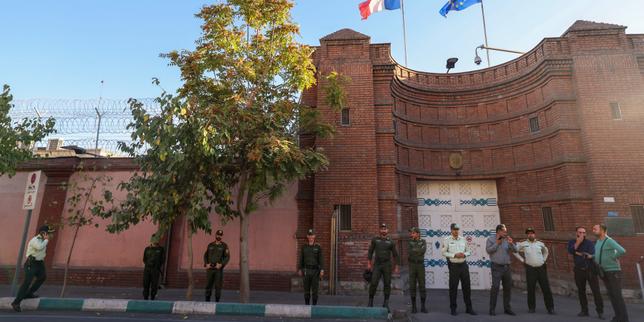
Geopolitics rarely operates on pure diplomacy, and the recent shutdown of the Centre de Langue Française in Tehran proves it. When Iranian authorities decided to shutter a cultural institution tied to the French embassy, they didn't just target a language school. They sent a sharp, calculated message to Paris.
If you're wondering why a simple library and certification center became a political casualty, you have to look past the official pretexts. Let's break down what's actually going on behind closed doors.
The Official Story Versus Reality
The Iranian judiciary didn't waste words when it announced the closure. Officials claimed the institution, operating for over twenty years, was running illegal activities under the cover of language instruction. It's a standard formula used when authorities want to pull the plug on foreign entities without getting bogged down in public debates.
Paris didn't buy it for a second. French Foreign Minister Jean-Noël Barrot labeled the move a hostile attack and immediately summoned the Iranian ambassador to the Quai d'Orsay.
You don't need a degree in international relations to see that cultural hubs are often the first diplomatic pawns sacrificed when bilateral ties sour. When governments run out of patience with each other, soft power takes the hit.
A Chronology of Mounting Tensions
This closure didn't happen in a vacuum. Relations between Paris and Tehran have been steadily deteriorating for months, fueled by friction points that keep piling up.
Back in July, an alarming incident involved two French diplomats stationed in Tehran. According to reports from the French foreign ministry, they were detained for hours without justification, and one was reportedly roughed up by security forces. Add that to the ongoing, highly sensitive issue of French nationals still detained in Iran, and you have an environment where compromise is nearly impossible.
Then there is the broader international chessboard. Earlier in the year, during intense escalations involving the United States, Israel, and Iran, France chose a distinct path. Paris refused to join the U.S.-led coalition and blocked American military aircraft from using its airspace for strikes against Iranian targets. While that decision drew sharp criticism from Washington, it didn't earn Paris any genuine warmth in Tehran either. The Iranian government views European powers with deep suspicion, regardless of occasional tactical disagreements with the White House.
The Real Loss for Iranian Students
Stripping away the geopolitical posturing leaves a very human cost. The Centre de Langue Française wasn't just a political office. For over two decades, it served as a vital bridge for young Iranians wanting to study abroad, access French literature, or engage with European academics. Its extensive library and certification exams were a rare gateway to the outside world.
When institutions like this close, local students lose access to independent educational resources. Cultural diplomacy relies on people-to-people connections, and cutting those off only deepens the isolation on both sides.
Expect the French government to weigh retaliatory diplomatic measures in the coming weeks, though meaningful leverage is hard to come by when dealing with a regime unfazed by Western pressure. For now, the doors in Tehran remain locked, marking another dark chapter for international cultural exchange.
Iranian authorities close the French Language Center in Tehran
This short video provides a quick look at the breaking news report regarding the shutdown of the French cultural center in Tehran.