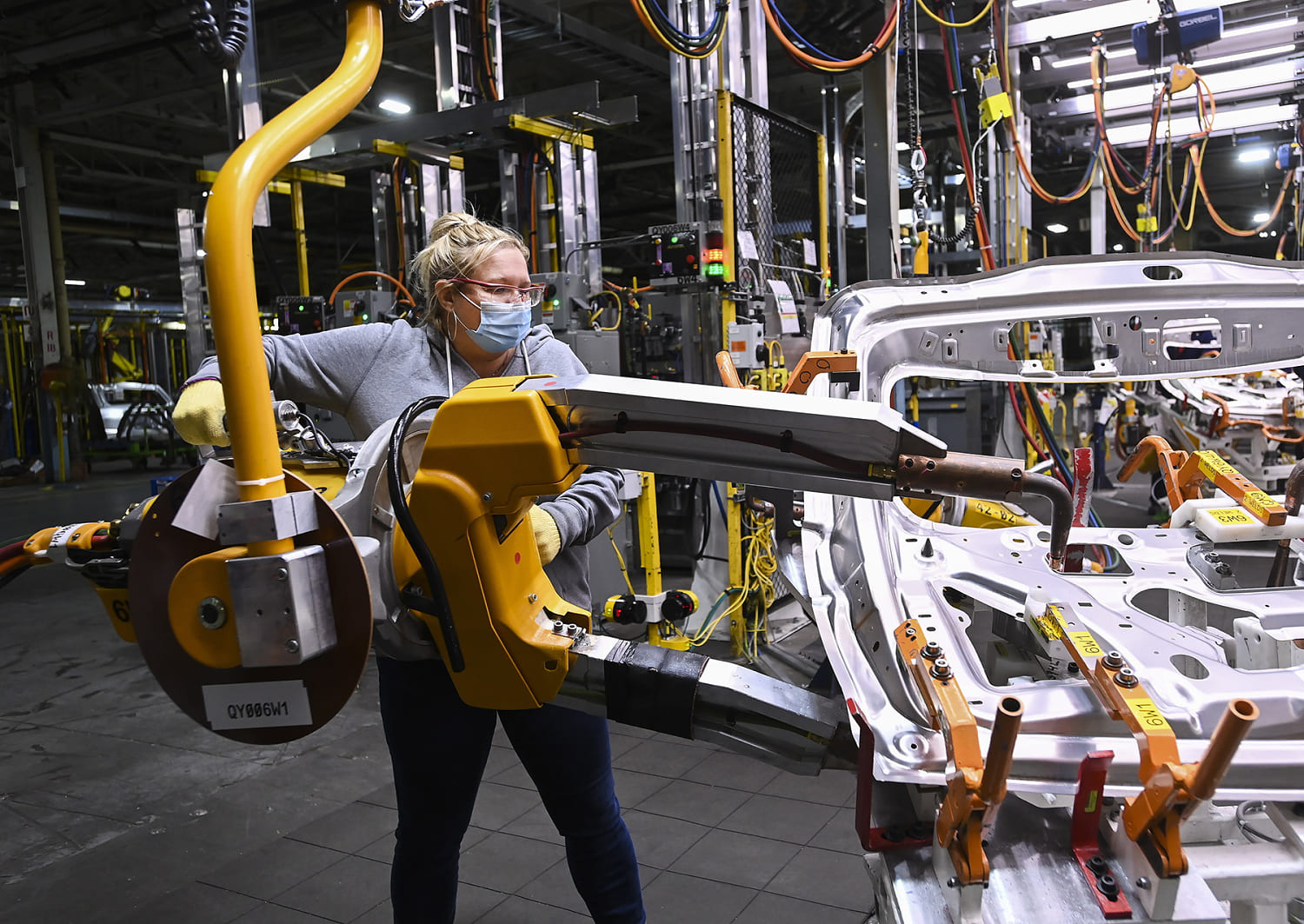
The morning air in the industrial corridor smells of hot steel, heavy oil, and the quiet dread of an uncertain tomorrow. On the factory floor of a midwestern stamping plant, Mark wipes grease from his knuckles with a rag that has seen better decades. He listens to the rhythmic pounding of a massive press that shapes heavy gauge sheet metal into components destined for assembly lines across North America. To Mark, trade policy is not a collection of abstract macroeconomic theories debated by pundits in distant capitals. It is the price of raw steel, the margin of profit that keeps his shift employed, and the heavy shadow cast by political declarations echoing through the television screen mounted above the breakroom.
When political figures start tossing around numbers like fifty percent tariffs on automobiles, trucks, and metals, the shockwaves do not hit Wall Street first. They hit the floorboards of places like Mark's shop. They hit the quiet kitchen tables where families calculate whether the next truck payment or grocery run is going to stretch their budget past the breaking point.
Consider what happens when the rhetoric of protectionism meets the reality of global supply chains. Steel does not simply appear at a factory door because a decree was signed. It moves across borders on railcars, massive cargo ships, and flatbed trucks, woven into a complex tapestry of manufacturing that has taken half a century to build. When tariffs are threatened, every single node in that delicate network spasms.
Mark remembers the last time trade tensions boiled over into broad retaliatory measures. The cost of raw materials spiked overnight. Purchasing managers scrambled to find domestic alternatives that often did not have the capacity to meet demand, leading to bottlenecked production lines and idle machinery. The logic behind such high tariffs is framed as a shield. It is meant to protect domestic industries from foreign competition, to build an iron wall that forces manufacturing back onto home soil. But walls work both ways. They keep competitors out, but they also lock domestic producers inside a high cost structure, cut off from vital inputs and exposed to retaliatory strikes from trading partners who will not simply absorb the blow without fighting back.
Let us step inside a hypothetical boardroom in Detroit or Toronto to see the human mechanism at work. Executives stare at spreadsheets glowing in the dim light, watching margin projections evaporate. If the cost of imported aluminum and steel jumps by half, the final price of a finished vehicle climbs steeply. When car prices rise, consumer demand drops. When demand drops, production lines slow down. When lines slow down, shifts are cut.
This is the hidden gravity of trade policy. It pulls down on the everyday worker with the force of an anvil.
The political theater surrounding these announcements often relies on a simple, powerful narrative of us versus them. It paints a picture of heroic domestic industries besieged by unfair foreign actors, requiring a bold leader to step in with a heavy hand and restore balance. There is a kernel of truth in the grievance. Globalization has left scars across industrial heartlands, hollowing out towns where generations worked for the same company and retired with dignity. The anger is real. The economic dislocation is real.
Yet, applying a fifty percent tariff is like using a sledgehammer to fix a Swiss watch. It is loud, dramatic, and likely to break more gears than it repairs.
Trade is not a zero-sum game where one nation wins only by bankrupting another. It is a messy, interconnected ecosystem. When the United States threatens massive tariffs on Canadian and global automotive and metal sectors, the response from trading partners is swift and predictable. They look for vulnerabilities in American exports, targeting agricultural goods, machinery, or consumer products. The retaliatory fire lands squarely on midwestern soybean farmers, software developers in Washington, and textile mills in the South.
History teaches us a harsh lesson about trade wars. They escalate in spirals of escalation and retaliation, each side eager to prove its toughness, while the economic friction grinds down growth. We saw glimpses of this dynamic in previous administrations, where tariffs were deployed as diplomatic weapons. The intended outcome was often elusive, while the unintended consequences piled up in the form of higher consumer prices, supply chain disruptions, and strained international alliances.
Mark does not care about the geopolitical chess match. He cares about whether his plant will still be running three months from now. He cares about his daughter's upcoming college tuition. He cares about the quiet dignity of honest work traded for an honest wage. When leaders speak of fifty percent tariffs as a blunt instrument of economic coercion, they are playing with fire in a room full of dry timber.
The argument for protectionism rests on the belief that a nation can wall itself off from the chaotic currents of global commerce and recapture a golden age of manufacturing supremacy. But the modern economy cannot be unmade. You cannot simply wind the clock back to 1950 by executive order. Supply chains are global because efficiency demands it, because specialized skills and raw materials are distributed unevenly across the globe, and because consumers have grown accustomed to products that are assembled from parts sourced across multiple continents.
If an automaker has to pay fifty percent more for the steel and aluminum embedded in a pickup truck, that cost gets passed along to the buyer. A vehicle that once cost a working family forty thousand dollars suddenly drifts out of reach at fifty thousand. The dealership lot fills with unsold inventory. The transport companies carrying those vehicles see their delivery orders dry up. The ripple effect widens, touching local diners, gas stations, and hardware stores that rely on the spending power of factory workers.
It is easy to get lost in the numbers, to treat billions of dollars in trade volume as mere pixels on a screen. But behind every percentage point is a human story of risk, investment, and survival.
Trade policy requires nuance, steady diplomacy, and targeted support for workers who have been left behind by economic shifts, rather than broad economic shocks that punish the very people they claim to protect. Throwing up massive tariff walls may sound decisive on a campaign stage, but on the ground, it feels like locking the doors from the inside while the roof is already leaking.
The metal press in Mark's factory keeps pounding, its heavy rhythm keeping time with a world that refuses to stand still. He picks up another sheet of steel, checks its surface for flaws, and feeds it into the jaws of the machine. Outside, the political winds howl, carrying threats of new walls and rising barriers, but inside the plant, the work remains the same, hanging by a thread of resilience and hope against the storm.