The wind in Reykjavik does not merely blow; it strips the thoughts right out of your head. Standing on the harbor wall, watching the iron-grey North Atlantic heave against the basalt rocks, I understood why the old sagas were written with such fierce, unforgiving clarity. This is a place where nature holds all the cards. You survive here by cooperation, by listening to the rumble beneath your feet, and by accepting that you cannot fight the elements alone.
Yet, there is a quieter vulnerability here, one that has nothing to do with volcanoes or howling gales.
Iceland is the only member of the North Atlantic Treaty Organization that maintains no standing army. No infantry. No tanks. No fighter jets slicing through the stratospheric chill. For a nation sitting strategically astride the GIUK gap—the crucial maritime bottleneck between Greenland, Iceland, and the United Kingdom where Soviet submarines once lurked and modern Russian patrols still test the waters—this absence of a military is an extraordinary geopolitical paradox.
How does an island of less-than-400,000 souls, sitting smack in the middle of the world’s most contested maritime chessboard, choose to keep its borders wide open?
To understand this, you have to talk to people like Einar.
Einar is a retired fisherman who spent forty years wrestling cod out of the freezing depths off the Westfjords. When I sat with him in a small, wood-paneled café smelling of roasted chicory and damp wool, I asked him about the soldiers. Not that you see many of them. The Keflavík Air Base, once a sprawling American military city that hummed with Phantom jets and Cold War paranoia, has long since emptied of permanent combat units. The Americans packed up in 2006, leaving behind cavernous hangars and a profound silence.
"We don't need uniforms," Einar told me, stirring a cube of sugar into his black coffee with hands carved out of teak. "We have the sea. And we have our treaties. Why pay for boys with rifles when the ocean itself is a wall, and our friends across the water have promised to watch our back?"
It sounds naive. In a world currently rediscovering the grim mechanics of territorial conquest, trusting your security to a collective agreement signed decades ago feels like leaving your front door unlocked in a thunderstorm. But Iceland’s calculation is built on history, geography, and a very specific kind of stubborn pragmatism.
Consider what happened in 1949. When the ink dried on the North Atlantic Treaty, Icelanders rioted in the streets of Reykjavik. They were a proud, newly independent republic—having broken away from Denmark just five years prior, while German boots occupied Copenhagen. The idea of binding their fragile sovereignty to a global superpower coalition felt like trading one master for another.
Yet, reality bit hard. The Cold War turned the North Atlantic into a high-stakes hunting ground. The location was too valuable to be left undefended, and Iceland was too small to defend it. So, a compromise was struck. Iceland would host the alliance, provide strategic real estate, and handle civilian infrastructure like air surveillance radars through its Icelandic Coast Guard, while the alliance—principally the United States—would provide the muscle.
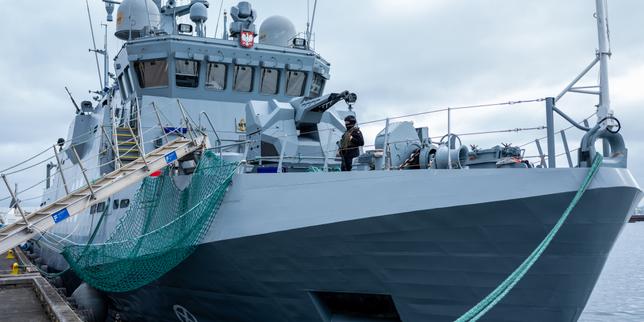
(Note: When looking at the modern landscape, it is crucial to recognize that while Iceland has no army, navy, or air force, its Coast Guard is a professional, well-equipped paramilitary force operating armed patrol vessels and search-and-rescue helicopters.)
Walk into the Coast Guard headquarters in Reykjavik, and you feel the shift from abstract diplomacy to immediate, human stakes. This is not about global deterrence strategies or nuclear posturing. It is about a trawler losing its rudder in a hurricane three hundred miles offshore. It is about a rescue swimmer plunging into black water with a winch cable wrapped around his ribs.
Lieutenant Commander Sigrún looks at security through a different lens entirely.
"People talk about defense as if it is only about bullets and missiles," she told me, pointing to a sprawling weather map of the Denmark Strait on her wall. "For us, defense is search and rescue. It is cyber security. It is monitoring underwater fiber-optic cables that carry the financial transactions of two continents. If a ship goes down or a cable is cut, that is our national security crisis. We manage the immediate chaos. For the high-end military threats—the submarines, the strategic air policing—we rely on our allies to fly in when the alarm sounds."
That reliance is the invisible thread holding the island's peace together.
Periodic deployments tell the story. Danish frigates patrol the surrounding waters. Norwegian and Italian fighter jets rotate through Keflavík for Icelandic Air Policing missions, roaring into the arctic sky for a few weeks before rotating home. It is a shifting, phantom defense. The shield is there, but you only see the bearers when the shadows lengthen.
Is it fragile? Absolutely.
During the height of post-Cold War optimism, the departure of the U.S. Marines felt permanent. People whispered that history had ended, that borders didn't matter anymore, that the North Atlantic was just a highway for container ships and whale-watching tours. Then came the annexation of Crimea. Then came the thunder of artillery in Ukraine. The geopolitical weather changed overnight, shifting from a mild breeze to a gale-force squall.
Suddenly, those empty hangars at Keflavík didn't look like relics of an obsolete era. They looked like empty seats at a dinner party where everyone else has brought a knife.
The debate in Iceland shifted, too. Quietly, cautiously. You won't find mass movements demanding the creation of an Icelandic army. The national identity is too deeply rooted in pacifism, in soft power, in cultural exports like literature and music rather than military might. But the government has had to invest more heavily in host-nation support infrastructure. They upgraded the radar stations. They deepened the harbors to accommodate allied submarines. They are spending money not on weapons, but on the logistics of welcoming armed strangers when the need arises.
It is a strange bargain. To remain a nation without a military, you must become exceptionally skilled at managing your alliances. You must be the diplomatic host who keeps everyone talking, ensuring that when the storm breaks, the big powers still care enough to send their ships north.
Sitting by the harbor as the afternoon light turned the glaciers to bruised lavender and gold, I watched a Coast Guard vessel slip quietly out past the breakwater. It carried no missiles, no torpedoes, no threat to anyone. Just men and women heading into the dark, trusting that the world was still connected by invisible lines of mutual obligation.
We build walls because we are afraid of our neighbors. Or, occasionally, we choose to leave the gates open, betting everything on the hope that someone, somewhere, will remember to show up if the night turns cold.