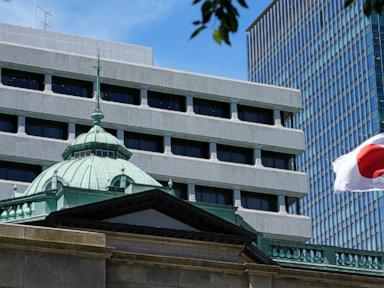
Every financial pundit with a keyboard and a Bloomberg terminal is currently regurgitating a tired, lazy geopolitical fairy tale. The narrative goes like this: the Federal Reserve kept American rates high, the yen crashed to historical lows, and a panicked Washington twisted Tokyo's arm until the Bank of Japan surrendered, hiking interest rates to a 31-year high against its will.
It is a neat story. It fits the crude cinematic framing of global finance as an American playground where Washington barks and Tokyo rolls over. If you found value in this article, you might want to check out: this related article.
It is also entirely false.
I have watched Western analysts misread Japanese monetary policy for decades, viewing the world's third-largest economy through a myopic lens shaped entirely by Wall Street anxieties. They assume that every move in Tokyo must be a reaction to Washington. They miss the subterranean reality entirely. The Bank of Japan did not hike rates because the U.S. Treasury demanded it. Tokyo raised rates because the alternative—maintaining negative and zero interest rates forever—was a slow-motion national suicide pact that the Ministry of Finance could no longer sustain. For another perspective on this development, refer to the latest update from Reuters Business.
Let us dismantle the fiction piece by piece.
The Lazy Geopolitical Myth
The core premise of the mainstream commentary rests on the idea of subordination. According to this view, Japan is a client state whose monetary sovereignty was overridden by a dominant hegemon desperate to narrow the dollar-yen interest rate differential and curb speculative capital flight.
This view ignores who actually runs the show in Kasumigaseki.
The Japanese bureaucracy is arguably the most insular, long-term-focused, and fiercely independent institutional apparatus on the planet. The Ministry of Finance does not jump because Washington says hop. When Kazuo Ueda and his colleagues at the Bank of Japan began dismantling Yield Curve Control and nudging interest rates upward, they were executing a domestic survival strategy meticulously plotted out over years.
For three decades, Japan suffered under the crushing weight of deflationary psychology. Companies hoarded cash. Households stuffed over a thousand trillion yen into zero-yielding bank accounts and physical cash. Real estate languished. The economy became clogged with "zombie companies"—unproductive, debt-addled enterprises kept on life support solely because borrowing costs were near absolute zero.
Zero interest rates were not a badge of economic health or a dovish paradise; they were a morphine drip keeping a comatose patient breathing while the muscle mass wasted away.
Washington did not force Japan off the morphine. Japan chose to rip the needle out because the patient was rotting from the inside.
The Real Enemy Is Demographic Decay
To understand why Japan is willingly embracing higher rates, you have to look past currency fluctuations and stare directly into the demographic abyss.
Japan’s population is shrinking and aging faster than any industrialized society in human history. A shrinking labor force means that the old model of deflationary stagnation—where goods and services get cheaper because demand evaporates—is no longer a manageable baseline. It is a death spiral. When fewer workers have to support a massive cohort of retirees, asset stagnation ceases to be an academic debate and becomes a fiscal catastrophe for the pension system.
For years, ultra-loose monetary policy was supposed to stimulate growth by making corporate borrowing frictionless. Instead, it created an economy of rent-seekers. Banks could not make profitable margins on lending when rates were negative, so they parked cash safely. Corporations sat on mountains of retained earnings because investing in domestic expansion made zero sense in a shrinking market.
By raising rates, the Bank of Japan is performing a brutal act of creative destruction.
Higher borrowing costs immediately separate viable enterprises from zombie corpses. If a company cannot turn a profit when money costs one percent, it deserves to go bankrupt. That capital needs to be reallocated to firms actually investing in automation, software, and labor-saving technologies required to survive a labor shortage.
The U.S. didn't ask for this. Japanese policymakers engineered it because they realized that coddling dead businesses was guaranteeing national irrelevance.
Engineering Inflation On Purpose
For thirty years, Western economists lectured Japan on how to generate inflation. They demanded quantitative easing, helicopter money, and fiscal stimulus. When those measures failed to spark organic wage growth, foreign analysts declared Japan’s monetary plumbing permanently broken.
Then, something ironic happened. Japan finally got inflation.
Imported inflation, driven by global commodity shocks and a weak currency, forced the issue. But instead of panicking, the Bank of Japan recognized a historic window of opportunity. Inflation provides the psychological cover necessary to break the deeply entrenched deflationary mindset of the Japanese consumer and worker.
When prices rise slowly, workers demand higher wages. When wages rise, companies pass costs on, breaking the vicious cycle of price cuts that characterized the Heisei era.
The interest rate hikes are not an admission of defeat against currency speculators. They are the stabilizing anchor for this new inflationary reality. If the BOJ had kept rates anchored at zero while inflation took root, real interest rates would have plunged deep into negative territory, destroying household purchasing power and triggering a political revolt among pensioners.
By raising rates, the central bank is telling savers: your capital is finally worth something again.
The Great Household Wealth Migration
Look at where Japanese household assets sit. For generations, the standard advice given to a Japanese saver was simple: keep your money in bank deposits earning zero percent.
This created a bizarre macro-economic paradox. Japan is a nation of immense aggregate wealth, yet ordinary citizens felt chronically poor because their savings generated no yield. Meanwhile, the government and corporate sector gorged on dirt-cheap debt.
The shift in monetary policy is deliberately designed to force a cultural asset reallocation.
Through initiatives like the expanded Nippon Individual Savings Account program, the government is aggressively nudging citizens to move cash out of dormant bank accounts and into productive equities. When interest rates rise, the entire financial ecosystem shifts. Fixed income starts offering returns. Pension funds stop struggling to meet liabilities with government bonds yielding next to nothing.
This is not monetary tightening executed out of fear. It is a wealth-redistribution mechanism designed to put capital to work before the demographic window slams shut permanently.
At the same time, the Tokyo Stock Exchange has tightened the screws on corporate governance, publicly shaming companies trading below a price-to-book ratio of 1.0 and forcing them to either buy back shares or invest in actual return on equity. Higher interest rates act as the final disciplinary whip in this campaign. Companies can no longer sit on idle cash piles when capital actually has an opportunity cost.
Saying this happened because of U.S. pressure is like watching a surgeon perform an open-heart operation and claiming they only did it because the patient sneezed.
The Real Risks No One Is Talking About
I am not here to paint a picture of a flawless macroeconomic masterclass. Every aggressive policy shift carries collateral damage, and the Bank of Japan’s pivot is fraught with genuine peril.
First, the Japanese government is the most indebted sovereign issuer in the developed world, with a debt-to-GDP ratio hovering near two hundred and sixty percent. For decades, the BOJ kept government debt-servicing costs near zero by buying up the vast majority of Japanese Government Bonds.
As rates rise, the arithmetic changes brutally. Even a modest increase in benchmark yields translates into massive jumps in debt-servicing expenses for the Ministry of Finance. If the central bank loses control of the yield curve, the fiscal space for public spending evaporates.
Second, commercial banks and regional lenders hold massive portfolios of fixed-income assets purchased during the era of rock-bottom yields. As rates climb, the market value of those legacy bonds drops. While Japanese banks are heavily capitalized compared to their Western counterparts during past crises, unrealized losses on bond portfolios represent a creeping vulnerability that regulators must monitor with absolute ruthlessness.
Third, the real estate market—particularly in regional areas with collapsing populations—faces a reckoning. Cheap debt kept unviable properties afloat. Higher borrowing costs will force a wave of liquidations that could wipe out small-scale property investors who mistook easy credit for organic demand.
These are the real battles being fought behind closed doors in Tokyo. They have very little to do with what Jerome Powell is doing in Washington.
Stop Watching Washington
If you want to understand where global markets are heading, stop listening to commentators who view everything through an American prism.
Japan is charting its own path through a historical crucible of demographic decline, debt overhang, and structural transformation. The decision to raise interest rates to levels not seen in three decades is a calculated gamble. It is an admission that the old model is dead and buried.
The narrative of American coercion is comforting because it requires zero deep thinking. It reduces complex domestic economic engineering to a simple soap opera of international bullying.
Discard the lazy consensus. Look at the balance sheets, the demographic curves, and the quiet revolution happening inside Japanese corporate boardrooms. The country is not bending the knee to Washington. It is rewriting its own economic future, brick by brutal brick.
Watch the bond yields, watch the wage negotiations, and watch the massive outflow of domestic capital into global markets. That is where the real story is unfolding.