The white flag hasn't been raised, but the calculus in Washington has shifted completely. This week, the Trump administration did something few expected when military operations launched back in February. They signed a fourteen-point memorandum of understanding with Iranian President Masoud Pezeshkian to halt a hot war that has already cost over seven thousand lives, sent global oil markets into a tailspin, and pushed the Middle East to the absolute brink.
Now comes the hard part. Selling it.
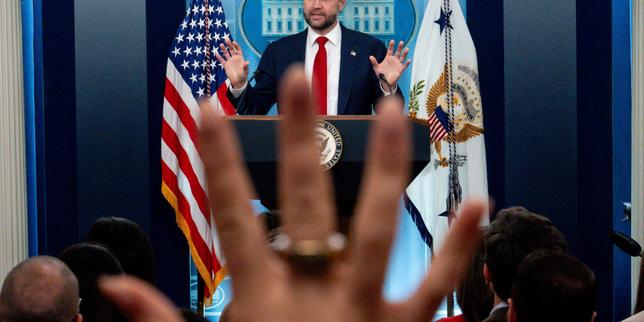
Vice President JD Vance stepped up to the White House briefing podium on Thursday to do exactly that. He didn't mince words, and he didn't apologize for what many right-wing hawks are already calling a massive capitulation. Instead, Vance is framing this interim deal as a hard-nosed, transactional victory that gives the United States a big stick while stopping an economic catastrophe at home.
It's a high-stakes gamble. By anchoring the administration's defense, Vance is putting his own political capital on the line for an agreement that is still incredibly fragile.
The Reality of the Iran Agreement
Let's look at what this deal actually does right now. The memorandum of understanding is a temporary framework. It stops the shooting, lifts the American naval blockade on Iranian ports, and opens up the Strait of Hormuz. On Wednesday night alone, 12.5 million barrels of oil transited through that crucial channel. That is the highest volume since the war began in late February.
That number matters. It's the core reason the administration pivoted. Energy prices in the West were skyrocketing, and the economic fallout was becoming untenable for voters back home.
Critics are furious that the U.S. military is already honoring its end of the deal before a final treaty is signed. Central Command has officially wound down the blockade. Tankers are moving freely to China and other nations. To the critics, this looks like giving away all American structural advantages up front.
Vance pushes back heavily on that narrative. He argues that the economic opening isn't a blank check. Every single piece of sanctions relief or future foreign investment will require explicit American sign-off. If Iran wants to build a power plant with funding from the United Arab Emirates, Washington has to issue the waiver. Vance thinks this gives the U.S. long-term economic control. It's an interesting theory, but it relies entirely on foreign corporations waiting for Washington's permission.
Selling a Hard Pivot to Congressional Hawks
The political friction inside the Republican party is real. For years, the party line on Iran was maximum pressure. Now, the administration is talking about a three hundred billion dollar reconstruction and economic development plan for Iran.
That number has sent shockwaves through Capitol Hill. Senator Roger Wicker didn't hold back, stating that this proposed fund makes the Obama administration's 2015 nuclear deal look tiny by comparison. Hawks are terrified that Iran will take its newfound oil revenue, which could hit six billion dollars a month, and immediately plow it back into rebuilding its depleted military infrastructure.
Vance's strategy to counter this is simple. He is explicitly drawing a line between this document and the old Obama-era Joint Comprehensive Plan of Action. He keeps repeating one phrase over and over. This is not the Obama deal.
The administration's defense rests on execution and verification. Vance claims that under the old deal, Iran was permitted to enrich uranium to a certain degree. Under the final terms being negotiated now, enrichment will be banned entirely. He insists that the current stockpile of highly enriched uranium must be completely destroyed, not just monitored.
It sounds great at a press conference. But the reality on the ground is far messier. The highly enriched material is currently buried under rubble from American airstrikes. Finding it, testing it, and diluting it under international supervision will be a logistical nightmare.
The Nuclear Question Everyone is Dodging
There's a massive gap between what the White House says is happening and what Tehran is telling its own people. Vance told reporters that Iran has agreed to end all uranium enrichment, even for civilian energy purposes. Almost simultaneously, Iranian state media reported that the country has no intention of abandoning its sovereign right to domestic enrichment.
This is a fundamental contradiction. It's the kind of diplomatic fault line that can crack an agreement wide open within days.
The deal relies heavily on the International Atomic Energy Agency. Trump's envoy, Steve Witkoff, privately briefed congressional leaders that Iran will sign a side letter inviting UN inspectors back to its nuclear sites. The goal is to uncover the locations of the hidden, enriched material.
But trust is zero. The supreme leader hasn't been seen in public since being wounded in an airstrike at the beginning of the war. The internal power dynamics in Tehran are shifting rapidly. Vance claims that pragmatists are winning the internal arguments in Iran right now. He wants the West to help those pragmatists solidify power by delivering economic relief. It's a classic foreign policy gamble, but if the hardliners reassert themselves, the U.S. will have funded its own adversary.
Managing the Israeli Backlash and the Lebanon Problem
The diplomatic fallout isn't contained to Washington and Tehran. Israel was completely excluded from these secret negotiations, and its leadership is furious. Prime Minister Benjamin Netanyahu has already made it clear that Israeli forces have no intention of honoring the ceasefire terms regarding Lebanon.
The agreement states that military operations must end on all fronts, including the northern border. It calls for the permanent termination of the war in Lebanon and the preservation of its territorial integrity. Yet, Israel just released a new military map showing an expanded occupation zone in southern Lebanon.
Vance addressed this friction directly, warning Israeli leaders that they need to wake up and see that they are becoming internationally isolated. It was a remarkably blunt statement from an administration that has historically positioned itself as entirely pro-Israel.
The administration's bet is that the memorandum will force Iran to restrain Hezbollah. Vance noted that there has been radical progress on the ground with less shooting, even if small flare-ups continue. But if Israel continues to launch strikes in southern Lebanon, Iran will face immense pressure to retaliate, potentially dragging the U.S. right back into the conflict.
Next Steps in the Sixty Day Countdown
The clock is ticking. Day one of the sixty-day negotiation period started on Thursday. The goal is to turn this vague fourteen-point outline into a legally binding, comprehensive treaty.
The logistics are already getting messy. Vance was scheduled to fly to a mountaintop resort in Switzerland to kick off technical talks with Iranian Parliamentary Speaker Mohammad Bagher Ghalibaf. At the last minute, the White House announced that Vance was delaying the trip.
The official reason is that the logistics of these negotiations are never simple. The unofficial reality is that Iran is demanding concrete signs of sanctions removal before their top diplomats sit down at the table. Meanwhile, the U.S. House of Representatives is out of session this week, delaying the formal briefings required to keep lawmakers from tanking the deal before it even starts.
If you are tracking this situation, watch the shipping data in the Strait of Hormuz over the next two weeks. That is the real metric of success. If the oil keeps flowing without incident, the administration buys itself time to fight the political battles in Washington. If a single tanker is targeted, or if Israel intensifies its campaign in Lebanon, this framework will collapse.
The administration is moving fast because the Pentagon is already eyeing the exit, reportedly preparing an eighty billion dollar supplemental request just to cover the costs of the operations that occurred since February. The war was expensive, bloody, and inconclusive. Vance is betting that a flawed peace is better than an endless conflict, but he has sixty days to prove he's right.