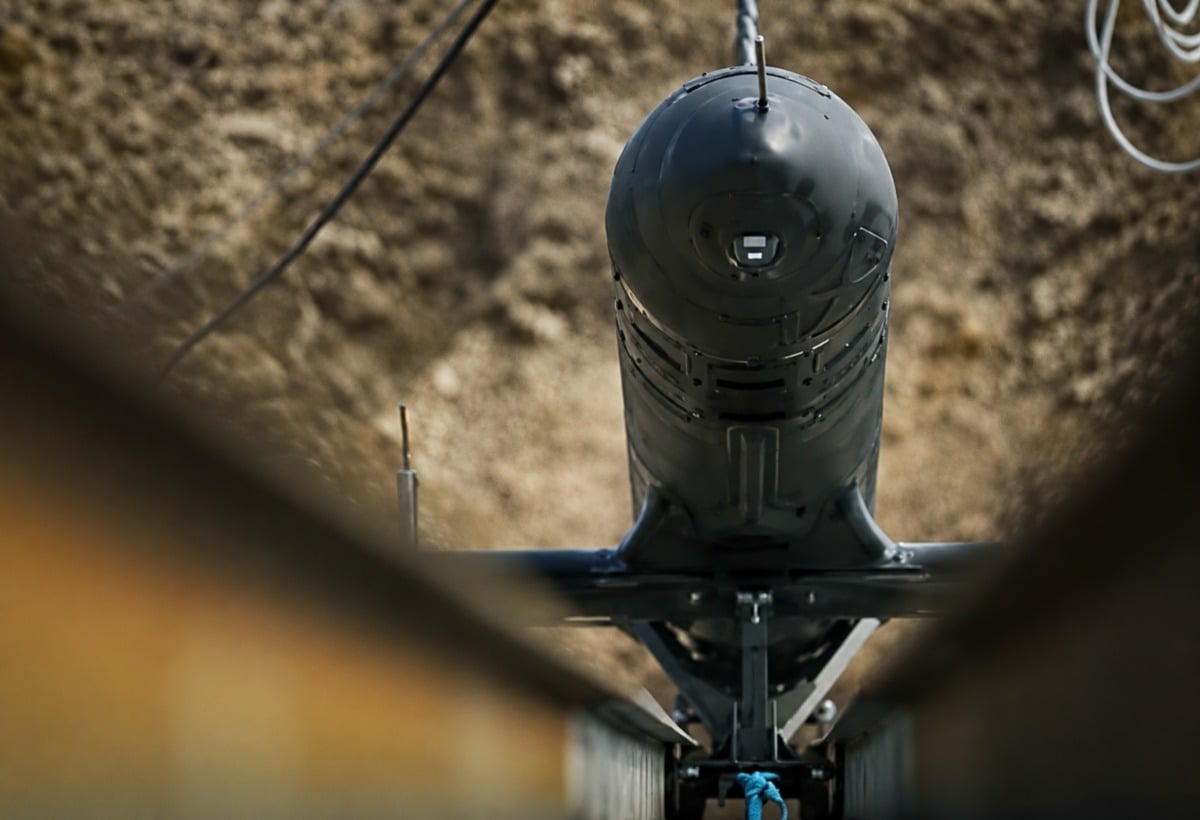
Mainstream defense analysts are panicking over a number. They see an eightfold increase in Russia's deployment of jet-powered drones over Ukraine and instantly sound the alarm on a technological revolution. They want you to believe that faster engines mean a fundamental shift in the theater of war.
They are wrong.
The media is falling for a classic engineering trap: confusing raw speed with strategic efficacy. An eightfold increase from next to nothing is still a minor operational footnote. More importantly, bolting a turbojet engine onto a one-way attack drone does not represent a massive leap forward. It represents a desperate, resource-intensive pivot that actually exposes the limitations of Russian loitering munitions.
We need to stop measuring military capability through simple multiplication tables and start looking at the cold math of attrition, logistics, and cost-per-kill.
The Speed Illusion and the Physics of Air Defense
The lazy consensus says a faster drone is a deadlier drone because it reduces the reaction time of air defense systems. On paper, moving from a propeller-driven Shahed-136 traveling at 185 km/h to a jet-powered model pushing over 500 km/h sounds terrifying.
In reality, speed is a double-edged sword that often cuts the attacker.
The Infrared Gift to Interceptors
Propeller-driven loitering munitions are notoriously difficult to track because their thermal signature is minuscule. They use small, internal combustion engines—often modified two-stroke lawnmower engines—that emit very little heat.
Jet engines change the equation entirely:
- Massive Thermal Signatures: A turbojet relies on continuous combustion, spewing a hot exhaust plume that glows like a beacon on infrared sensors.
- Easy Targeting: This thermal output makes these drones incredibly easy targets for man-portable air defense systems (MANPADS) like the Stinger or Starstreak, as well as heat-seeking air-to-air missiles fired from fighter jets.
- Automated Tracking: Electro-optical tracking systems on Western air defense platforms can lock onto a jet exhaust instantly, nullifying the advantage of the drone’s low radar cross-section.
The Ruin of Mobile Fire Teams
The real argument for jet drones is that they bypass the mobile fire teams—the pickup trucks equipped with searchlights and twin-barreled machine guns that hunt slow-moving Shaheds. Yes, a jet drone moves too fast for a soldier to manually track and shoot down with a heavy machine gun.
But bypassing a low-cost machine gun by forcing yourself to fly directly into the teeth of an automated, radar-guided missile system like a NASAMS or an Iris-T is a terrible trade-off. Russia is trading a vulnerability to cheap bullets for a vulnerability to highly effective missiles.
The Ruinous Economics of the Turbojet Pivot
War at this scale is an industrial ledger. The side that manages its cost-to-effect ratio more efficiently wins. The traditional Shahed model succeeded precisely because it was dirt cheap—estimated at roughly $20,000 to $40,000 per unit. They forced Ukraine to deplete its multi-million-dollar Patriot or S-300 interceptor stockpiles on cheap flying lawnmowers.
The moment you introduce a turbojet engine, that economic asymmetry collapses.
The Cost Asymmetry Flips
Small turbojet engines are high-precision pieces of engineering. They require specialized metallurgical components to withstand extreme rotational speeds and temperatures. They are not cheap, and they cannot be easily mass-produced in a sanctions-squeezed economy.
When you increase the unit cost of a one-way drone by three or four times just to make it go faster, you are doing your enemy a favor. If Ukraine uses a $100,000 interceptor to down a $20,000 propeller drone, Ukraine loses the economic war. If Russia builds a $150,000 jet drone, the economic pain of that interception shifts back onto Moscow.
Range Destruction via Fuel Consumption
Basic thermodynamics dictates that small turbojets are notoriously inefficient fuel hogs compared to internal combustion piston engines.
Imagine a scenario where a standard propeller drone carries a modest payload and enough fuel to fly 1,000 kilometers. To push that same payload at three times the speed using a turbojet, the fuel consumption rates skyrocket exponentially.
To maintain any semblance of operational range, the drone must either:
- Scale down its warhead significantly to make room for massive fuel bladders.
- Accept a drastically reduced operational radius, turning a strategic long-range weapon into a short-range tactical nuisance.
By deploying these systems, Russia is choosing smaller explosions and shorter ranges just to achieve higher speeds. That is a tactical regression, not progress.
Dismantling the Counterarguments
Whenever I point out these flaws to defense tech executives, they immediately pivot to the same set of flawed assumptions. Let us dismantle them one by one.
Doesn't speed increase the kinetic impact energy?
This is a favorite among armchair physicists. They argue that kinetic energy ($E_k = \frac{1}{2}mv^2$) increases with the square of the velocity, making the impact far more destructive.
This matters for solid tungsten penetrators fired from tanks. It does not matter for a flimsy, carbon-fiber or fiberglass drone packed with high explosives. A drone traveling at 500 km/h will disintegrate upon hitting the outer structure of a hardened building before the main explosive payload can penetrate deeply. For a loitering munition, structural penetration relies on warhead design (like shaped charges or delayed fuzes), not airframe velocity.
Can't they be used to swamp air defense networks?
Yes, but you do not need an expensive jet engine to saturate a radar screen. You can achieve the exact same saturation effect by launching a swarm of cheaper, propeller-driven decoys. Using expensive turbojet drones as sacrificial decoys to clear a path is an incredibly inefficient use of industrial capacity.
The Real Driver: A Failure of Electronic Warfare Dominance
The abrupt surge in jet-powered drone production points to a truth that Moscow does not want to admit: Western-supplied electronic warfare (EW) and localized GPS jamming are working.
Slow drones rely heavily on continuous, low-bandwidth satellite navigation corrections to hit their targets. Because they spend hours in the air traveling to a target, Ukrainian EW teams have ample time to detect their approach, calculate their trajectories, and activate localized spoofing networks that throw the drones off course.
The shift to jet power is a brute-force confession of failure.
By increasing the speed, Russian engineers are trying to minimize the time window a drone spends inside an EW jamming bubble. It is an admission that their guidance systems cannot survive prolonged exposure to modern electronic countermeasures. They are sacrificing efficiency, range, and cost solely because their slow systems are getting lost in the electronic fog of war.
The Operational Reality
I have analyzed procurement data and industrial supply chains for over a decade. Whenever an autarkic defense industry rapidly scales a complex variant of an existing weapon, it almost always signals a bottleneck elsewhere.
Russia is not scaling jet drones because they are a superior weapon system. They are scaling them because they are facing diminishing returns on their primary drone fleets and are scrambling for a silver bullet.
The downsides of this approach are severe:
- Logistical Complexity: Field units now have to manage highly volatile aviation fuel alongside standard gasoline.
- Manufacturing Bottlenecks: Precision tooling lines are diverted away from cruise missile production to build short-lived drone engines.
- Diminishing Strategic Return: Fewer targets are hit per ruble spent.
Stop rewriting the panic headlines every time a competitor counts a new engine type. The eightfold increase in jet drones is not a sign of impending technological dominance. It is a loud, expensive symptom of an industrial war machine struggling to adapt to its own inefficiencies.