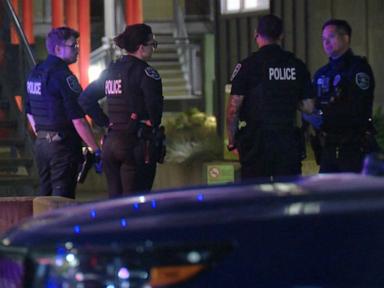
The arrest of a suspect in the killing of a transgender college student marks a grim milestone in what has become an escalating pattern of targeted violence across the country. While law enforcement officials often frame these cases as isolated incidents or crimes of opportunity, a closer look at the data and the social climate reveals a more systemic failure to protect vulnerable students on and off campus. This specific case, involving a young life cut short at the height of their academic pursuit, forces a difficult conversation about the gap between university diversity statements and the lived reality of the students they recruit.
Police took a 24-year-old male into custody this week, charging him with first-degree murder following a forensic investigation that spanned several states. The victim, a promising sophomore known for their advocacy and academic excellence, was found in an off-campus apartment. While the arrest provides a semblance of legal progress, it does little to alleviate the profound sense of insecurity felt by the LGBTQ+ community within higher education. The focus now shifts from the manhunt to the courtroom, but the underlying conditions that facilitate such violence remain largely unaddressed by institutional leaders.
The Illusion of Campus Safety
University campuses are marketed as sanctuaries of thought and personal growth. For transgender students, however, that sanctuary often stops at the edge of the campus map. Statistical trends show that violence against gender-diverse individuals frequently occurs in the "gray zones" of student life—unaffiliated housing, public transit routes, and social spaces where university security has no jurisdiction.
The disconnect is stark. We see multi-million dollar investments in campus "wellness centers" while the actual physical safety of students traveling to and from those centers is ignored. Security remains reactive rather than proactive. In this latest tragedy, the suspect was not a student, yet he was able to move through student-heavy residential areas without detection. This highlights a critical flaw in how urban universities manage the porous boundaries between their hallowed halls and the surrounding city streets.
Investigating the Motive and the Pattern
When a marginalized person is killed, the legal system is often hesitant to apply hate crime enhancements. Prosecutors argue that proving intent is a high bar, yet the specific brutality often found in these cases suggests something beyond simple theft or random aggression. Forensic analysts have noted that crimes against transgender individuals frequently involve "overkill"—a level of violence far exceeding what is necessary to commit the crime.
This isn't just a legal nuance; it’s a psychological profile of a specific type of offender. By treating these as "standard" homicides, the justice system misses the opportunity to track and prevent radicalized violence. If the motive in this recent arrest is found to be rooted in the victim’s identity, it joins a list of dozens of similar killings that have occurred over the last twenty-four months. The pattern is undeniable, even if the official police reports remain cautious.
Institutional Liability and the Failure of Care
The responsibility of a college extends beyond the classroom. When a university accepts tuition, it enters a social contract to provide an environment where the student can survive to graduation. We are seeing a rise in litigation where families argue that institutions failed to warn students about known threats in the area or failed to provide adequate escort services for those most at risk.
Many schools rely on "Blue Light" emergency systems that are relics of the 1990s. They are stationary, often broken, and largely useless in the age of the smartphone. A modern security strategy requires real-time, identity-blind protection that acknowledges the specific risks faced by the trans community. Instead, we see administrators offering "thoughts and prayers" and temporary counseling sessions after a life is lost. It is a cycle of reactive PR that does nothing to change the survival odds for the next freshman walking home from the library at midnight.
The Role of Digital Radicalization
We cannot talk about the "how" of this murder without looking at the digital ecosystem. Investigative leads in recent years have increasingly pointed to online forums where individuals are encouraged to seek out and "confront" transgender people. While we don't yet know the full digital footprint of the current suspect, the trend suggests that these are rarely spontaneous acts.
They are often the result of a slow-drip of dehumanizing rhetoric found in the corners of the internet that law enforcement is only beginning to monitor effectively. When a student's identity is politicized daily in the media, it creates a permission structure for those prone to violence. The arrest of one man is a victory for the local precinct, but it is a drop in the ocean compared to the digital tide of hostility that continues to rise.
The Economic Burden of Survival
There is a hidden cost to being a transgender student that the "business" of education ignores. These students often spend significant portions of their modest incomes on safer housing, private transportation, and security measures that their peers take for granted. This "safety tax" drains resources that should go toward their education.
When the system fails and a student is killed, the financial and emotional fallout devastates entire communities. It sends a message to other students: Your safety is your own responsibility. This creates an environment of hyper-vigilance that is antithetical to learning. To fix this, universities must move beyond performative inclusion. They need to subsidize secure housing and provide dedicated, 24/7 transit for at-risk populations. Anything less is just marketing.
A Systemic Audit of Law Enforcement Response
In many of these cases, the initial police response is marred by misgendering or a lack of cultural competency. This slows down the investigation. If the first 48 hours are the most critical, then spending those hours debating the victim's legal name versus their chosen name is a catastrophic waste of time.
In this recent arrest, local activists pointed out that the community provided the leads that eventually led to the suspect, not the police. There is a profound lack of trust between the LGBTQ+ community and the detectives assigned to these cases. This friction protects killers. For an investigation to be "hard-hitting," it must start with the premise that the victim's life was of equal value, a premise that is still not universally applied in the field.
The court proceedings for the 24-year-old suspect will likely take years. There will be motions, delays, and a search for a defense that minimizes the crime. But for the students left behind on campus, the trial is happening every day they walk to class. They are judging the institution on its silence. They are judging the city on its lack of protection. The arrest is not the end of the story; it is a confirmation that the threats are real, they are nearby, and they are deadly.
True justice isn't found in a pair of handcuffs. It's found in the structural changes that ensure a student’s identity is never a factor in their life expectancy. The path forward requires a total overhaul of campus security protocols and a legislative commitment to treating these targeted killings with the gravity they deserve.
Stop looking for excuses in the police report and start looking at the gaps in the fence.