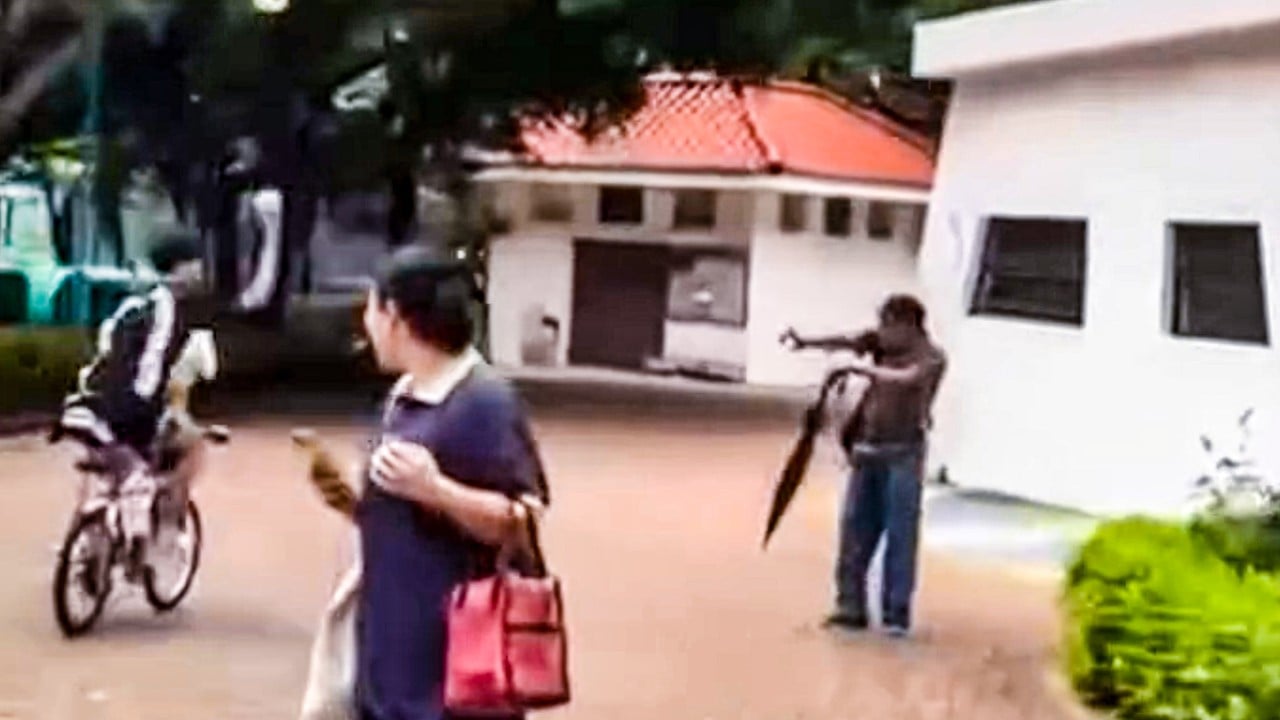
Hong Kong police recently arrested four boys aged 12 to 14 in Tsuen Wan following a series of harassing assaults targeting pedestrians with wet tissue balls and water. The arrests, made in late July, brought an end to a string of localized incidents near public housing estates and pedestrian walkways that had sparked widespread community frustration. While the immediate law enforcement response resolved the specific harassment campaign, the incident sheds light on a far broader challenge facing Hong Kong’s urban districts: the friction between changing youth dynamics, public space surveillance, and traditional neighborhood policing methods.
The trouble began in the densely populated neighborhood of Tsuen Wan, where residents reported recurring instances of young teenagers throwing water and soaking wet tissue bundles from elevated walkways and residential complexes. While initial reactions viewed the acts as minor juvenile mischief, the persistence and targeted nature of the attacks forced a formal police intervention. District crime units deployed surveillance teams to identify the group, ultimately arresting the four minors on suspicion of common assault and public nuisance. Read more on a related subject: this related article.
+-----------------------------------------------------------------------+
|                       TSUEN WAN JUVENILE INCIDENT                     |
+-----------------------------------------------------------------------+
|  Primary Location:      Public walkways & estates, Tsuen Wan          |
|  Suspects:              4 minors (Ages 12–14)                         |
|  Initial Offenses:      Common assault, public nuisance               |
|  Underlying Triggers:   Unmonitored public spaces, summer gaps        |
+-----------------------------------------------------------------------+
Beyond Simple Mischief
Crime data across Hong Kong indicates that petty offenses committed by young teenagers often surge during school breaks, particularly in districts built with complex, multi-layered pedestrian infrastructure. Tsuen Wan is famous for its extensive network of footbridges—a city-planning marvel designed to separate foot traffic from busy roads. However, these elevated corridors also create distinct blind spots. High foot traffic combined with easy escape routes gives individuals ample cover to commit low-level offenses without immediate detection.
Focusing strictly on individual behavior misses the systemic vulnerabilities built into modern urban design. When public walkways lack sufficient natural surveillance, minor misconduct escalates into organized harassment. Further reporting by NPR explores similar perspectives on this issue.
| Urban Design Factor | Impact on Public Safety | Vulnerability Level |
|---|---|---|
| Elevated Walkway Networks | Provides quick escape routes and overhead angles | High |
| Blind Corners & Alcoves | Prevents clear line-of-sight for security patrols | High |
| Estate-Adjoining Courtyards | Blurs boundary between private and public security | Medium |
The reaction from local residents highlights a growing intolerance for persistent nuisance behavior. In high-density housing environments, even minor disturbances ripple across hundreds of households. A wet paper ball thrown from a height is not merely an inconvenience; it carries physical risk to elderly residents and creates an atmosphere of insecurity in shared public zones.
Enforcement Dilemmas and Community Prevention
Police departments face a delicate balancing act when handling offenses involving young adolescents. Arresting a 12-year-old sends a strong deterrent message, yet long-term research demonstrates that pushing young teenagers into the formal criminal justice system for non-violent nuisance can yield mixed long-term results.
Hong Kong relies heavily on the Superintendent’s Discretion Scheme, an alternative measure allowing senior officers to caution juvenile offenders rather than proceeding directly to prosecution in court. Under this framework, youth are placed under police supervision for up to two years, often paired with support from social welfare agencies.
Effective deterrence requires three distinct pillars operating simultaneously:
- Targeted Spatial Monitoring: Increasing security personnel or closed-circuit coverage along high-risk pedestrian corridors.
- Rapid Social Work Intervention: Deploying youth outreach teams into identified congregating hotspots before behavior escalates into criminal acts.
- Community Reporting Channels: Giving residents direct, low-friction ways to report recurring neighborhood disturbances.
When one of these pillars collapses, law enforcement is forced to step in after the damage is already done. In Tsuen Wan, community complaints had circulated online for days before formal police action took place, showing a delay between public awareness and operational response.
Rethinking Public Housing Corridor Oversight
The management of public housing estates and adjacent walkways in Hong Kong falls under multiple jurisdictions, including the Housing Department, the Transport Department, and private estate management companies. This fragmented responsibility often slows down responses to localized anti-social behavior. Security guards stationed inside building lobbies rarely patrol upper walkways or footbridge intersections, leaving large stretches of pedestrian space essentially unmanaged during off-peak hours.
Fixing this gap does not require heavy-handed surveillance state tactics. Simple adjustments—such as realigning security patrol routes, improving lighting along overhead bridges, and integrating neighborhood outreach workers into district management committees—drastically reduce opportunities for juvenile harassment. The arrests in Tsuen Wan cleared a immediate disturbance, but without structural adjustments to how elevated public spaces are managed, similar incidents will simply migrate to the next unmonitored footbridge.


