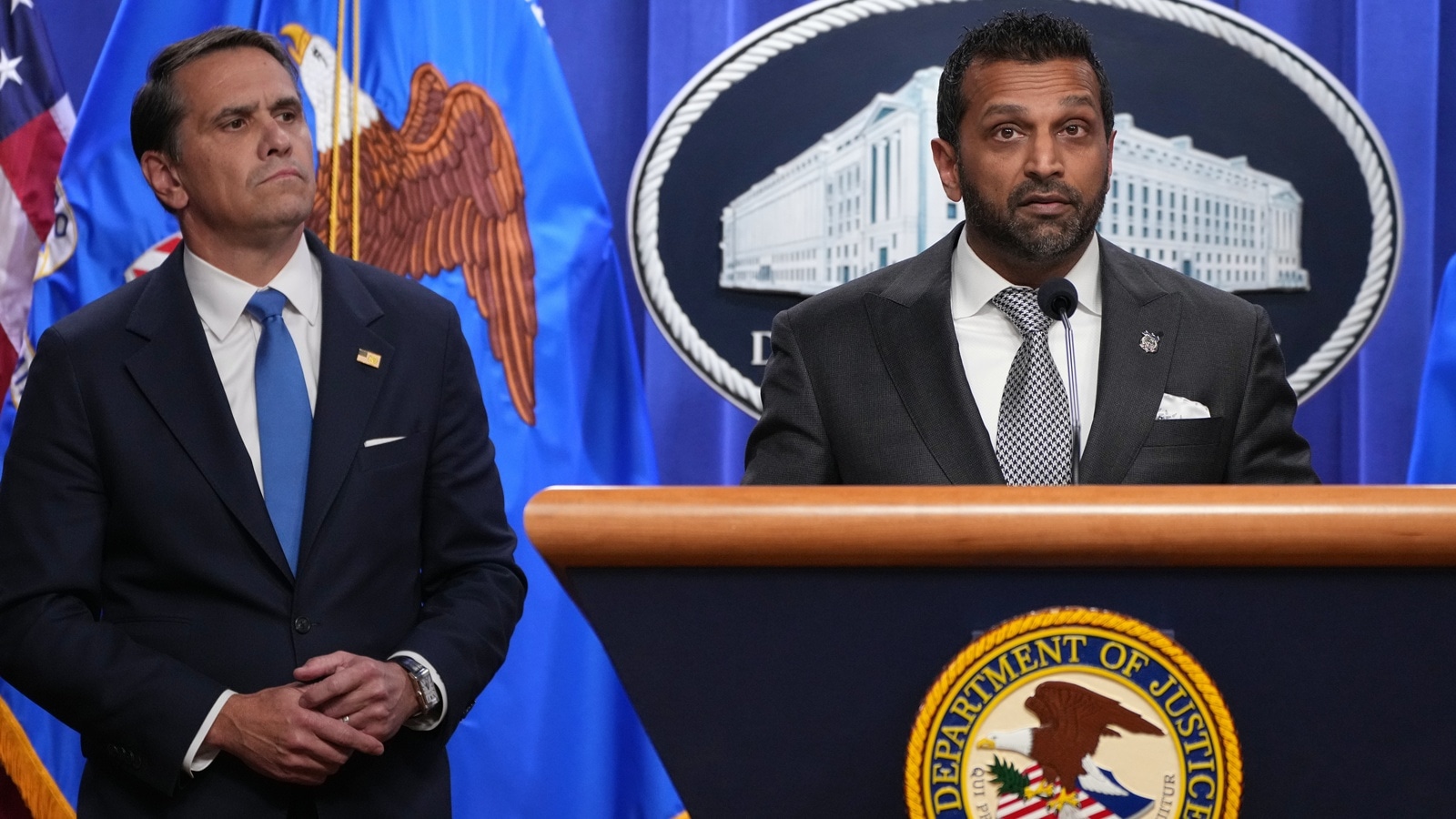
Kash Patel doesn't back down. When a journalist confronted him recently about his professional conduct at the FBI, the Director didn't just give a scripted "no comment." He called the report an absolute lie. This isn't just about one argument between a public official and a reporter. It’s a window into how the current FBI leadership views the legacy media and the internal battles over transparency and reform. If you've been following the tension between the Department of Justice and the press corps, this latest clash shouldn't surprise you. But it does raise serious questions about what’s actually happening inside the Bureau.
The Confrontation That Went Viral
The whole thing kicked off when a journalist brought up a story questioning Patel's track record and how he’s handled certain investigations. Patel’s response was immediate. He didn't blink. He called out the reporting as fundamentally flawed. It's rare to see a high-ranking official go for the jugular like that. Usually, these things are handled with polite denials from a spokesperson. Not this time. Patel’s directness is his brand. For an alternative perspective, consider: this related article.
People who like him say he’s finally standing up to biased reporting. Critics argue he’s being combative to avoid real scrutiny. Honestly, it’s probably a bit of both. We’re living in an era where the "official" version of events is constantly under fire, and Patel is leaned into that friction. He’s essentially betting that the public is tired of anonymous sources and leaked memos.
Why This Friction Matters for the FBI
The FBI has a trust problem. That’s not an opinion; it’s what the polling shows. When Patel spars with journalists, he’s speaking to a specific audience that believes the Bureau has been weaponized. By calling a story an "absolute lie," he’s signaling that the old ways of doing business—where the FBI and the press had a cozy, symbiotic relationship—are over. Similar coverage on the subject has been provided by TIME.
There’s a clear strategy here. Patel is trying to shift the narrative from "What did the FBI do?" to "Why is the media lying about us?" It’s a classic defensive move, but it’s effective because it taps into existing skepticism. You see this everywhere in D.C. now. The focus isn't on the facts of the case, but on the credibility of the person telling the story.
Examining the Claims of Professional Misconduct
The journalist’s questions weren't based on nothing. They centered on Patel's rise through the ranks and his involvement in high-profile political probes. Some former colleagues have voiced concerns about how he navigates the line between law enforcement and political loyalty. These aren't just minor gripes. They go to the heart of what the FBI is supposed to be—an independent agency.
Patel’s defense rests on his record of declassifying information. He argues that he’s the one actually bringing the truth to light, while the media tries to bury it under layers of "misconduct" allegations. It’s a high-stakes game. If he’s right, he’s a reformer. If his critics are right, he’s reshaping the agency in a way that could be hard to undo.
The Role of Declassification in Modern Politics
We’ve seen more documents hit the public eye in the last few years than in the previous decade. Patel has been at the center of that. He uses declassification as a shield. When someone attacks his conduct, he points to the papers he’s released. It’s hard to argue with a physical document, even if the context around it is still being debated.
The press, meanwhile, is struggling to keep up. When an official just calls you a liar to your face, the standard playbook of "he said, she said" reporting fails. It leaves the audience to pick a side based on who they already trust. That’s bad for the country, but it’s the reality of the current political climate.
Breaking Down the "Absolute Lie" Defense
What does it actually mean when a Director calls a story an absolute lie? It’s a total rejection. It’s not "the reporter got a few details wrong." It’s "this whole narrative is a fabrication." This kind of rhetoric is designed to shut down the conversation. It forces the reporter to either produce a smoking gun or look like they're just pushing a hit piece.
In this specific instance, the journalist was caught off guard. You could see the shift in energy. The room went from a standard Q&A to a battlefield. Patel knows how to control a room. He’s spent years in the trenches of the House Intelligence Committee and the Pentagon. He knows where the bodies are buried, and he’s not afraid to use that knowledge.
How the Media Should Handle Combative Officials
Journalists have to get better at this. If you’re going to confront someone like Kash Patel, you need more than just a vague story about "professional conduct." You need dates, names, and specific actions. When the questions are broad, it’s easy for the official to swat them away.
The public deserves more than a shouting match. They need to know if the people leading our top law enforcement agencies are acting with integrity. That requires a level of detail that was missing from this particular exchange. We’re seeing a shift where the "traditional" press is being bypassed or bullied, and they haven't found an answer for it yet.
The Impact on Bureau Morale
Imagine you’re an agent in a field office. You’re trying to do your job, and you see your Director fighting with the press every other day. For some, it’s inspiring. They feel like someone finally has their back. For others, it’s a distraction. The FBI is supposed to be the "quiet professionals." That’s getting harder to maintain when the top floor is a constant source of headlines.
Patel’s approach is fundamentally changing the culture of the FBI. It’s becoming louder. It’s becoming more public. Whether that’s a good thing depends entirely on your politics. If you think the Bureau needs a sledgehammer, Patel is your guy. If you think it needs a scalpel, you’re probably worried.
Real World Consequences of This Rhetoric
This isn't just "inside baseball" for people in the D.C. beltway. When the FBI Director and the press are at war, the flow of information to the public stops. Instead of getting facts, we get spin. We get accusations. We get "absolute lies."
This matters for things like national security and public safety. If the public doesn't trust the FBI, they won't report crimes. They won't cooperate with investigations. The "absolute lie" defense might win a news cycle, but it might lose the long-term war for public confidence.
Understanding the Background of Kash Patel
You can't understand this clash without knowing where Patel came from. He wasn't a career FBI guy. He came up through the ranks of the Republican staff on the Hill. He was the guy who helped write the memo that challenged the basis of the Russia investigation. He’s a veteran of political warfare.
That background explains why he treats a press conference like a deposition. He’s looking for the hole in the journalist's argument. He’s looking for the bias. He doesn't see the press as a neutral observer; he sees them as the opposition. That’s the key takeaway from this entire exchange.
Moving Past the Shouting Matches
The next time you see a headline about Patel "sparring" or "clashing," look past the drama. Look at what was actually asked and what was actually answered. Usually, the answer is "not much." We’re getting a lot of heat and very little light.
To get the real story, you have to look at the actions, not the words. Watch the policy changes. Watch the personnel moves. Watch who gets promoted and who gets pushed out. That’s where the real story of the FBI is being written, far away from the cameras and the "absolute lies."
If you want to stay informed, stop focusing on the clips that go viral on social media. They’re designed to make you angry, not keep you educated. Seek out the original documents. Read the transcripts. Make up your own mind about whether the Director is a reformer or a partisan. The truth is usually found somewhere in the boring details that don't make it into a 30-second soundbite. Start by looking into the actual declassified memos that started this whole mess. That's your best bet for seeing through the noise.