Look at the coffee cup on a provincial legislator’s desk on a wet Tuesday morning. It is chipped near the handle. The ring it leaves on the laminate is brown, circular, and stubborn—the exact shape of a habit nobody wants to admit has expired.
That is how political realignments actually start. Not with a trumpet blast or a manifesto printed on heavy stock, but with a quiet decision about which room you still feel comfortable sitting in.
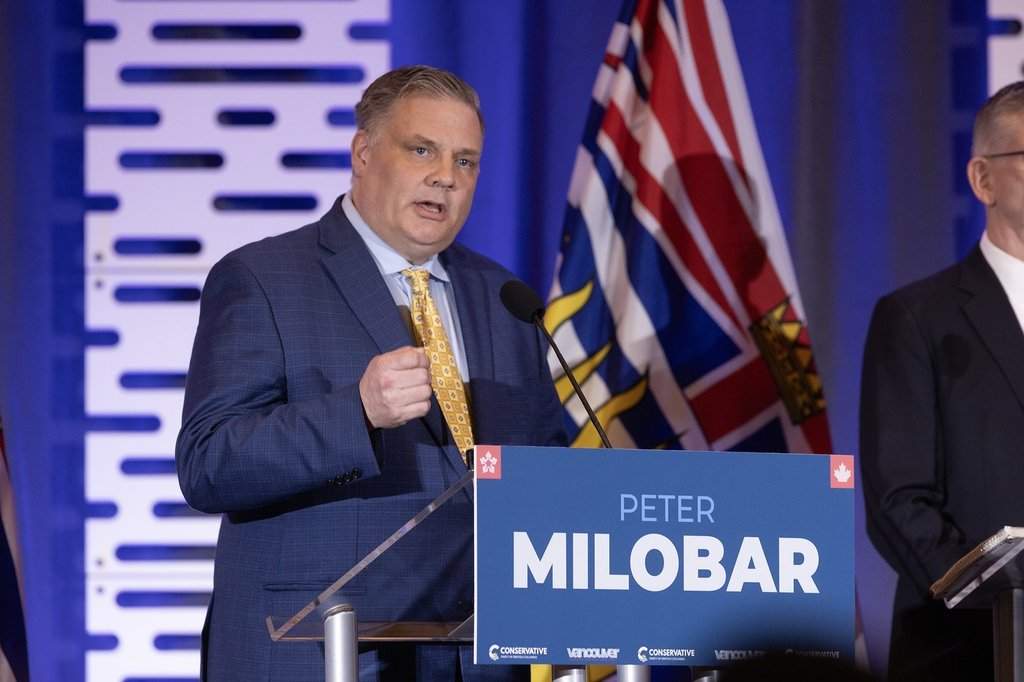
When Peter Milobar stepped forward as the leader of the CentreBC party—drawing former Conservatives into a banner that deliberately refuses to wear either of the old coats—the wire services treated it like a ledger entry. Name in. Name out. Party formed. Leadership claimed.
Cold. Clean. Forgettable.
Yet if you have ever watched a family house divide after decades of shared groceries, repaired roofs, and polite silences at Thanksgiving, you know the ledger misses everything that matters. The real story is not who signed the incorporation papers. The real story is what happens to ordinary people when the familiar walls start shifting under their feet, and a man from Kamloops decides to hold the door open for neighbors who no longer recognize their own living room.
The Architecture of a Restless Room
Politics in British Columbia has always had a strange, mountainous geography to it. Mountain ranges carve communities into valleys that look at the same sky and reach for different tools. For years, a broad right-of-centre coalition held that terrain together through sheer utilitarian grit: keep the lights on, keep the resource roads open, keep the budget from tipping into a ditch, and don’t ask too many philosophical questions over Tim Hortons.
Coalitions work until the glue dries out.
Over time, drift sets in. A party that once felt like a practical workshop starts sounding like a debate club. Some members want louder alarms; others want quieter exits. Voters who spent twenty years ticking the same box—not out of blind devotion, but out of neighborly trust—begin to feel like guests in a house where the furniture keeps getting rearranged at midnight.
To understand what that feels like on the ground, consider a hypothetical character named David, a mid-level logistics supervisor in the Okanagan who has never attended a party convention in his life. (This scenario is entirely hypothetical, built to illustrate a real pattern of voter fatigue.) David cares about three things: whether his daughter’s school bus runs on time in January, whether his property tax bill makes sense when interest rates bite, and whether the provincial government talks to him like an adult instead of a target demographic. When the old Conservative banner fractures and former Conservatives begin drifting toward Peter Milobar’s CentreBC project, David does not wake up shouting slogans. He wakes up feeling mildly estranged from a political home he assumed would always be there.
Political scientists call that "dealignment." On the street, it feels much simpler. It feels like standing on a porch in the rain, wondering whether to knock on a door that looks unfamiliar.
Why Peter Milobar Matters in the Room
Milobar is not a theatrical outsider promising to burn the place down. Anyone who has watched his career—from municipal politics in Kamloops, where pothole budgets and water mains leave zero room for poetry, to provincial cabinet and opposition benches—knows his instinct runs toward the mechanics.
Mechanics are unfashionable. Nobody puts a bumper sticker on a transmission rebuild.
Still, when a coalition cracks and former Conservatives look for somewhere to land without surrendering their practical instincts, temperament becomes the entire product. A party calling itself CentreBC is making a daring wager on the middle of the road—a place that commentators routinely mock as a ditch where cars go to die. Milobar’s leadership is an attempt to prove the middle is not a ditch at all, but a bridge.
Think of it as a metaphor. Imagine a suspension bridge stretched across a wide river canyon. For decades, traffic flowed across one deck with a single painted stripe down the center. Then the cables on one side began to fray—not all at once, just strand by strand, until drivers on the right lane started swerving nervously toward the middle. A builder steps forward, names the new span CentreBC, and invites drivers who used to travel under the Conservative flag to cross over onto a deck that promises steadier footing. (This bridge is a metaphor, not a literal structure, though anyone who has driven Highway 1 through the Fraser Canyon knows what real rockslides look like.)
Crossing a bridge requires trust in the engineer. Former Conservatives joining Milobar are not merely changing acronyms; they are betting that a centrist-leaning label can hold together voters who want fiscal discipline without cultural brinkmanship, and environmental realism without bureaucratic paralysis.
The Invisible Stakes Nobody Budgets For
Here is what gets lost when coverage stays glued to leadership announcements: voter homelessness.
When a party splits or sheds members, the immediate casualty is representation. Legislative committees thin out. Constituent offices field duplicate calls from people who aren’t sure which MLA speaks for their zip code anymore. Local volunteers—the people who put up signs in November sleet and knock on doors when nobody is home—suddenly have to explain why last year’s allies are this year’s competitors.
I have sat in church basements and community halls where local organizers tried to keep a straight face while boxes of outdated brochures sat stacked against a cinderblock wall. You can smell the damp wool of wet coats, hear the hum of a failing fluorescent tube, and watch grown adults try to pretend a broken partnership is just "a fresh chapter." It is exhausting work. People don’t volunteer for political parties because they love organizational charts; they volunteer because they believe their town deserves a voice in Victoria.
Now add the psychological weight on everyday voters. When former Conservatives move into CentreBC under Milobar, some longtime supporters feel vindicated—finally, a home that values competence over noise. Others feel betrayed, convinced that leaving the old brand hands advantages to rivals on the opposite side of the spectrum.
Both reactions are real. Ignoring either one is how a new party dies in its first year.
What People Actually Ask When the Map Redraws
Whenever a leader takes the reins of a centrist-styled breakaway or regrouping—and former Conservatives start walking through the door—three questions hang in the air like woodsmoke.
First: is this a permanent home, or a waystation? History is littered with middle-ground parties that functioned like airport lounges—comfortable for a layover, terrible for raising a family. Milobar’s challenge is proving CentreBC has an anchor, not just a welcome mat. That means articulating clear positions on housing affordability, healthcare delivery, and rural infrastructure that don’t sound like watered-down versions of what other parties already say.
Second: what happens to the Conservative brand itself? When former Conservatives join a rival or adjacent banner like CentreBC, it forces the remaining core to answer a brutal question: who are we when the centrist-minded wing walks out? Parties rarely shrink gracefully. They either sharpen their message for a narrower base or scramble to win back defectors with louder promises.
Third: can a party named CentreBC survive a polarized climate? Everything in modern politics rewards extremes. Algorithms reward outrage. Donors often reward purity. Leading a party built around the center requires discipline—saying no to easy applause lines and yes to slow, verifiable progress.
The Weight of a Name
Look closely at the words CentreBC. There is no romantic hero in that title. No grand historical grievance. Just geography and posture.
Yet posture is everything when trust is thin. For former Conservatives stepping into Milobar’s orbit, the appeal is likely relief as much as ambition. Relief from endless internal litmus tests. Relief from pretending every policy disagreement is a moral treason. Relief from watching practical governance take a back seat to performative combat.
Still, relief is a fragile foundation. Once the initial wave of defections and announcements settles, voters will judge Milobar on the oldest currency in politics: did life get slightly easier, fairer, and more predictable while you were in the room?
No.
Wait—let’s be honest about that. Even the best provincial leader cannot repeal global inflation, fix a shortage of family doctors overnight, or smooth out every supply chain kink. Anyone promising magic is selling snake oil. What a credible leader can do is lower the temperature, tell the truth about trade-offs, and gather people capable of running ministries without drama.
Standing at the Edge of the Map
Consider David again, back in that hypothetical Okanagan kitchen, looking at a municipal tax notice and a headline about Peter Milobar taking the helm of CentreBC as former Conservatives sign on. (Again, David is a stand-in, a composite sketch of thousands of quiet voters.) He doesn’t care about party bylaws. He cares whether the person sitting in power understands that a family budget is not a spreadsheet—it is groceries, gas, dental work, and sleep.
Political realignments always look tidy in hindsight, as if destiny drew the lines cleanly with a ruler. In the moment, they are messy, awkward, and deeply personal. Old friendships cool. New alliances feel provisional. A leader steps forward with a chipped coffee cup, a stack of briefing notes, and the awkward task of convincing neighbors that a new door is worth opening.
The house has split. The keys are on the table. And somewhere between the old flag and the new name, ordinary people are deciding whether to walk inside.