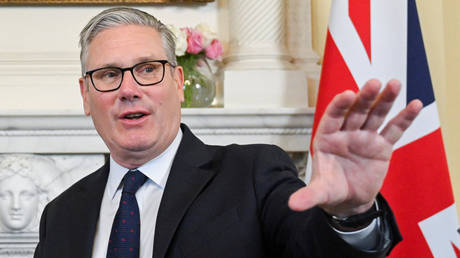
The honeymoon didn't just end early. It barely started. Keir Starmer managed to weather his first major waves of internal party mutinies and economic pushback, but the mood across Britain is turning sour. Voters aren't just watching anymore. They're waiting, timers in hand, and their patience is completely spent.
If you look at the polling numbers, the reality is stark. Winning a massive parliamentary majority masked a fragile core of public support. Labour won big because the Tories collapsed, not because the British public fell madly in love with Starmer’s vision. Now, that distinction is coming back to haunt No. 10. The government acts like it has a five-year blank check. The public is demanding results today.
The Gap Between Whitehall Promises and High Street Reality
British voters are dealing with structural rot. You see it when trying to book a GP appointment. You see it when looking at council tax bills that keep climbing while local services vanish. Starmer’s team keeps repeating the same script. They blame the previous administration for a fiscal black hole. They talk about difficult choices.
That excuse has a shelf life. It’s already expired for millions.
People don't live in macroeconomic spreadsheets. They live in communities where shoplifting goes unpunished and public transport is an unreliable mess. When the government spends weeks debating internal Downing Street staffing politics or freebie dresses, it looks horribly out of touch. The average voter doesn't care about Whitehall drama. They care about their energy bills.
Consider the winter fuel payment cuts. It wasn't just a policy decision; it was a defining political moment. By stripping the allowance from millions of pensioners to plug a budget deficit, Starmer signaled that his version of change involves immediate pain for vulnerable groups. The blowback was swift. It showed a strange blindness to how political optics work outside the Westminster bubble. You can't tell people to tighten their belts while accepting thousands of pounds in personal gifts. It kills your moral authority.
Why the Electoral Math Is Lying to Labour
Polling data from YouGov and Ipsos paints a brutal picture of the British electorate's mindset. Starmer's personal approval ratings took a massive nosedive faster than almost any modern prime minister post-election. The sheer size of the Labour majority creates a false sense of security.
Let's break down the actual mechanics of that victory.
- The seat count says landslide.
- The popular vote share says fluke.
- The voter turnout says apathy.
Labour captured around 34 percent of the vote. That is a historically weak foundation for a massive majority. It means two-thirds of the country voted for someone else or stayed home entirely. The electorate didn't give Starmer a mandate for endless austerity or slow, technocratic tweaking. They voted for an exit strategy from Tory chaos.
If the government fails to deliver visible improvements to the National Health Service and living standards within the next twelve months, that volatile electorate will shift again. The rise of smaller parties on both the left and the right proves that traditional party loyalty is dead. Voters will jump ship the moment they feel ignored.
Fixing the NHS Is the Only Metric That Matters
You want to know if Starmer survives long-term? Watch the hospital waiting lists. Everything else is secondary noise.
The NHS is the secular religion of Britain. Right now, it's broken. The government's current strategy relies heavily on the Darzi review, which diagnosed the health service's vast structural flaws. Acknowledging the problem isn't a solution, though. Starmer talks about shifting from treatment to prevention, analog to digital, and hospital to community.
Those are great buzzwords. They look neat in a policy pamphlet. But what do they mean for a person sitting in an A&E waiting room for eleven hours?
The Funding Versus Reform Trap
The government insists that money without reform is useless. They're right. Pumping billions into an inefficient system won't magically fix things. But reform takes years to show results. The public wants to see diagnostic hubs opening on their local high streets now. They want to see dental practices accepting new patients this month.
If the government keeps fighting with junior doctors or offering incremental changes, the frustration will turn into outright anger. Starmer needs quick wins. He needs to pick three specific, measurable healthcare targets—like cutting maximum waiting times for cancer scans—and hit them ruthlessly.
The Economic Tightrope No One Wants to Walk
Rachel Reeves promised to grow the economy. That’s the central pillar of Starmer’s entire platform. The theory is simple. Growth creates tax revenue. Tax revenue funds public services. Everyone wins.
The execution is proving incredibly messy.
Clamping down on non-dom tax status and introducing VAT on private school fees sounded great on the campaign trail. In practice, these measures don't generate enough revenue to fix the systemic issues facing public finances. They're drops in a very deep bucket. Meanwhile, businesses are spooked by changes to employment laws and potential hikes in capital gains taxes.
You can't tax your way to growth. You can't regulate your way to prosperity either. The government needs massive private investment to rebuild Britain's infrastructure, from green energy grids to new housing developments. But investors hate instability and mixed signals. When ministers spend one week courting global CEOs and the next week threatening new corporate windfall taxes, capital goes elsewhere.
How Starmer Can Turn Impatience Into Momentum
The British public's impatience isn't necessarily a death sentence for this government. It's an asset if Starmer knows how to use it. It gives him the political leverage to smash through bureaucratic roadblocks that usually stall big projects.
He needs to stop acting like a lawyer presenting a cautious case to a jury. He needs to start acting like a leader executing a crisis recovery plan.
First, drop the endless pessimism. The country knows things are bad; they don't need a daily reminder from No. 10. Start highlighting concrete, localized projects where government intervention is working.
Second, fix the planning system immediately. The biggest barrier to growth in Britain is the inability to build anything quickly. Whether it’s a new railway line, a laboratory, or a housing estate, local objections and red tape strangle development. Starmer must use his massive parliamentary majority to overrule the nimby factions and get shovels in the ground. Visible construction equals visible progress.
Finally, get a grip on the immigration debate. The small boats issue hasn't gone away. It remains a potent symbol of a state that has lost control of its borders. The public doesn't expect an overnight miracle, but they do expect a functional processing system and enforcement of the law. Vague statements about smashing the people-smuggling gangs won't cut it when the arrivals numbers keep ticking upward on the evening news.
The clock is ticking louder every day. Starmer has the power, he has the seats, and he has the time on paper. What he lacks is the public's benefit of the doubt. If he wants to survive the next wave of voter anger, he needs to stop managing decline and start delivering undeniable, physical results that people can see outside their front doors.