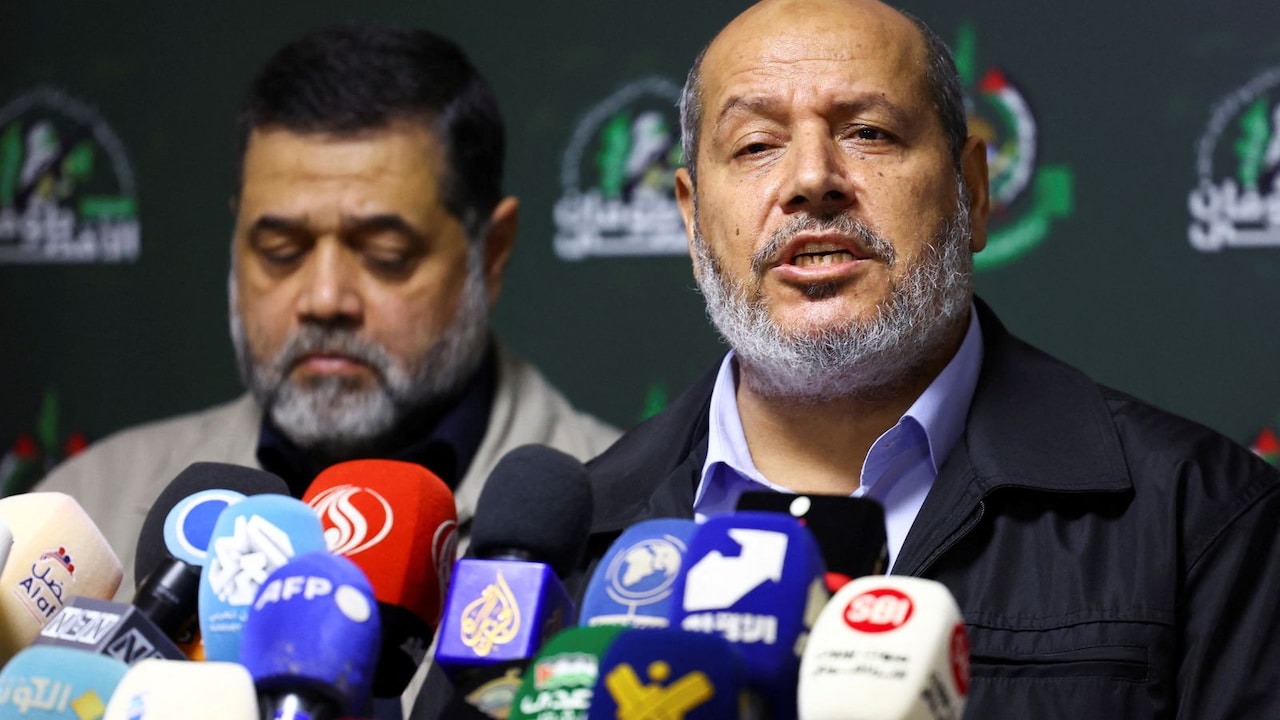
You’ve seen the headlines. Jared Kushner, acting as a special envoy, sat down in Egypt this weekend to talk shop with a man who has suddenly found himself at the epicenter of the Middle East’s most volatile conflict. That man is Khalil al-Hayya. If you’re wondering who he is and why he’s shaking hands with high-level American diplomats, you aren’t alone.
Most people recognize Hamas as a singular, monolithic entity. Reality is messier. Khalil al-Hayya isn't some fresh face drafted into the spotlight; he’s a veteran operator. He’s been in the trenches of Palestinian politics for decades, serving as the chairman of the Hamas political bureau since July 2026. He stepped into the top spot following the vacuum left by the death of Yahya Sinwar. For a different perspective, read: this related article.
The Pragmatic Radical
You have to understand the distinction between the battlefield and the boardroom. While Hamas is primarily known as a militant organization, it functions with a political wing that requires someone who can navigate the cutthroat world of regional diplomacy. That’s where al-Hayya shines.
He isn't just a military figure. He’s an academic. He holds a PhD in hadith studies from the University of Jordan and Sudan. This intellectual background makes him a different type of adversary than the typical field commander. He knows how to negotiate, how to frame a narrative, and more importantly, how to communicate with mediators from Egypt, Qatar, and Turkey. Related analysis on the subject has been shared by BBC News.
I’ve followed Middle Eastern political shifts for a long time, and the transition to al-Hayya’s leadership signals a move toward a more "diplomatic" face for the movement—at least on the surface. When you’re dealing with a guy who has been arrested by the IDF multiple times since the 1980s and has lost his own family members to the conflict, you’re dealing with someone who has nothing left to lose. That makes him incredibly dangerous, but also, in the eyes of negotiators, someone you actually have to talk to.
The Kushner Connection
The meeting in Cairo this past Sunday wasn't just a casual coffee chat. It was a calculated, high-stakes move. Kushner is pushing a 15-point peace plan that centers on a brutal trade-off: Hamas disarming in exchange for a full Israeli withdrawal.
Here’s where it gets interesting. Both sides are playing a game of chicken. Israel is skeptical of the plan, and Hamas has historically been dead-set against disarmament. But al-Hayya is now the one sitting at the table to discuss it. He’s the person who determines if the "road map" goes anywhere or hits a dead end.
Why talk to him? Because he has the internal authority to actually command compliance. He was a trusted associate of the previous leadership, and his rise to the chair wasn't a coup—it was a managed transition. If a deal is going to be made, it doesn't happen without his signature.
What Everyone Gets Wrong About His Strategy
People often assume that leaders in his position are just waiting for the next round of violence. That’s lazy analysis. Al-Hayya is focused on legitimacy. He wants the Palestinian issue back on the international agenda, and he’s using the current ceasefire talks to do exactly that.
He isn't looking for a "win" in the traditional Western sense. He’s looking for survival and political standing. He frames the resistance as a way to shatter the myth of Israeli strategic deterrence. When you hear him talk, he’s not speaking to the diplomats in the room; he’s speaking to the population in Gaza and the wider Arab world.
Why You Should Pay Attention
You’re going to hear his name a lot more over the coming weeks. Whether this Cairo meeting yields a lasting truce or just another temporary pause depends on his next move.
If you want to understand how this conflict might end, stop looking for a "good guy." Look at the incentives. Al-Hayya needs to prove he can provide stability for his people while maintaining his core ideological commitments. That’s a tightrope walk that usually ends in disaster.
If the talks fail, the region heads back into a cycle of total escalation. If they succeed, it’s because al-Hayya decided that his political future is better served at a negotiating table than in an underground bunker.
Watch the details of the 15-point plan he’s currently debating. The friction point isn't just about weapons; it’s about timing. Who withdraws first? Who disarms first? The order of those two steps will decide the fate of the next decade in the region.
Don't buy into the idea that this is just another diplomatic exercise. This is a cold, hard test of whether a group defined by war can actually pivot to peace when the person at the helm has spent his entire life building that war.
Keep an eye on his statements in Cairo. If he starts talking about "transition" and "governance" rather than just "resistance," the status quo is changing for good. If he sticks to the status quo, the conflict is just getting started.