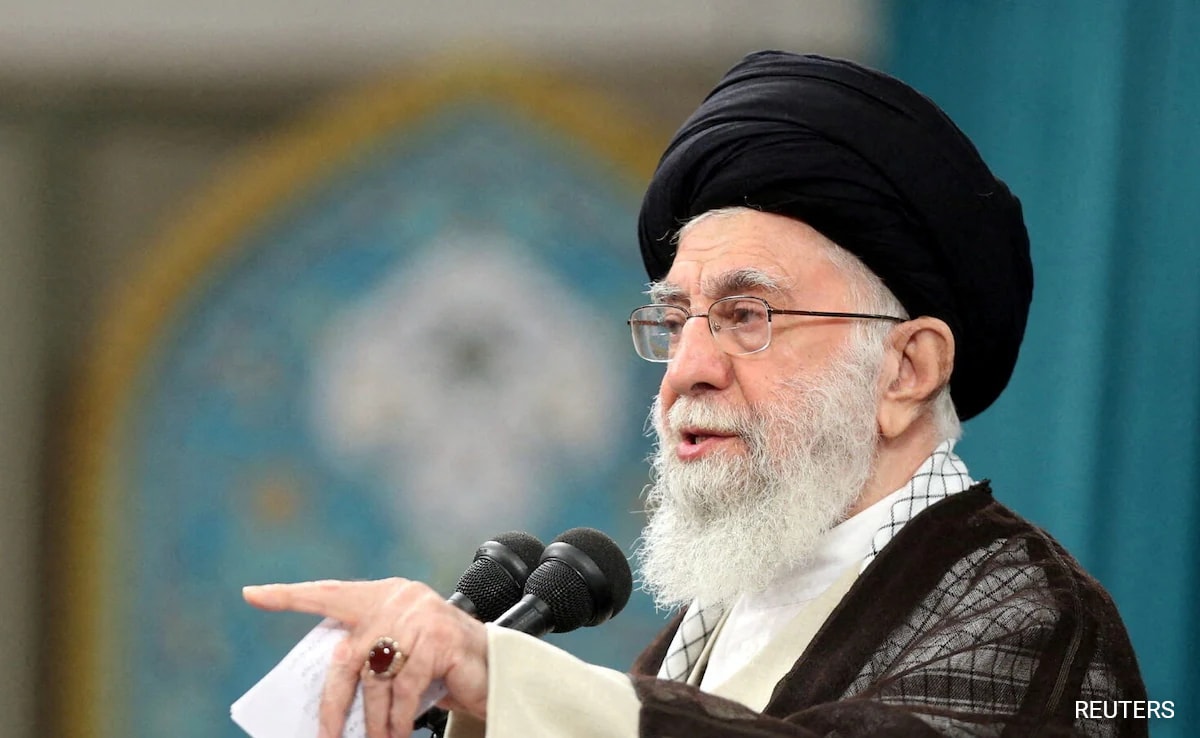
The rumors of Ali Khamenei’s death are the ultimate geopolitical Rorschach test. Every few months, Benjamin Netanyahu or a faceless intelligence source leaks a "definitive" sign that the Supreme Leader has shuffled off this mortal coil. The West holds its breath, waiting for the Iranian state to crumble like a house of cards. They are waiting for a movie-style collapse that will never come.
The obsession with Khamenei’s pulse misses the point of how modern autocracies actually function. Whether he is currently breathing or a taxidermied figurehead in a basement in Mashhad is irrelevant to the trajectory of the Islamic Republic. We are witnessing the world’s first "Post-Leader State," and the more we focus on the man, the more we ignore the machine he built to survive him.
The Succession Myth
The lazy consensus in Washington and Jerusalem is that Khamenei’s death triggers a power vacuum. They imagine a chaotic scramble between the IRGC and the clerics, leading to a glorious democratic uprising. This is wishful thinking disguised as strategy.
In reality, the succession isn't a "who," it’s a "what." The Office of the Supreme Leader (Beyt-e Rahbari) has morphed from a personal advisory board into a shadow government that manages every cent of the Iranian economy and every bullet in the arsenal. This entity doesn't need a heartbeat; it needs a seal.
- Institutional Inertia: The IRGC (Islamic Revolutionary Guard Corps) doesn’t want a strong successor. They want a weak one. A dead or incapacitated Khamenei is the perfect cover for a military junta to finalize its takeover while maintaining the religious veneer of the Velayat-e Faqih.
- The Legal Trap: The Assembly of Experts is often portrayed as a deliberative body of scholars. It isn't. It’s a rubber-stamp committee that has likely already selected the next name—or three. The transition won't be a riot; it will be a press release.
If you are waiting for a funeral to change the regional map, you’ve already lost the game.
The Netanyahu Paradox
Netanyahu’s frequent signaling of Khamenei’s demise serves a domestic Israeli purpose, but it’s a tactical blunder on the global stage. By framing the Iranian threat as a singular, aging man, he accidentally validates the idea that the regime is fragile.
It isn't.
The Iranian regime has survived the death of its founder, Ruhollah Khomeini, a grueling eight-year war with Iraq, decades of "maximum pressure" sanctions, and the systematic assassination of its top scientists and generals. If a state can survive the loss of Qasem Soleimani—the actual architect of its regional influence—it can survive the loss of a 1939-born cleric who spends his days writing poetry and receiving curated briefings.
The "Signs of Death" narrative is a sedative for Western hawks. It allows them to avoid the hard work of long-term containment by promising a deus ex machina that never arrives.
The Economy of a Ghost
The most dangerous misunderstanding involves the Iranian economy. Analysts often argue that the "instability" of succession will cause the Rial to collapse and the streets to explode. They forget that the Iranian elite have perfected the art of the Siege Economy.
Much of Iran's wealth is held in Bonyads—massive, opaque charitable trusts. These organizations don't care about the Supreme Leader’s health. They care about the illicit oil routes to China and the smuggling networks through the UAE. As long as the money flows through the IRGC’s hands, the identity of the guy wearing the turban is a branding issue, not an existential one.
Imagine a scenario where the Supreme Leader dies and the regime doesn't announce it for six months. What changes?
- The drones still fly to Russia.
- The centrifuges still spin in Natanz.
- The proxies in Lebanon and Yemen still receive their wire transfers.
The regime is now a self-correcting algorithm. It no longer requires a visionary; it requires a manager.
Why the Resistance Fails
The "Zan, Zendegi, Azadi" (Woman, Life, Freedom) movement showed the world the bravery of the Iranian people, but it also showed the cold efficiency of the security apparatus. The assumption that a leadership transition provides a "window" for revolution ignores the fact that the security forces are at their most paranoid and lethal during these periods.
The IRGC doesn't view the Supreme Leader's death as a moment of weakness. They view it as an exercise in "Stability Ops." They have spent forty years preparing for this specific week. Every street corner has a plan. Every internet switch has a kill-code.
When the news finally breaks, don't expect a Bastille Day. Expect a city-wide curfew and a pre-emptive wave of arrests that will make previous crackdowns look like a rehearsal.
The Digital Supreme Leader
We are entering an era where AI and deepfake technology make the physical presence of a leader optional. For a regime that relies on "divine" legitimacy, a digital Khamenei—issuing fatwas and appearing in grainy, pre-recorded videos—could theoretically rule for years after his heart stops.
The obsession with "signs" of his death is an analog solution to a digital problem. While we look for tremors in his hands or paleness in his skin, the regime is building a system that is entirely indifferent to his biology.
The Brutal Reality
If you want to dismantle the Iranian threat, stop looking at the obituary section.
- Focus on the Cash, Not the Cleric: The regime dies when the IRGC can’t pay its mid-level officers. That happens through maritime interdiction and secondary sanctions on Asian buyers, not through the biological expiration of an 85-year-old man.
- Kill the Succession Myth: Stop preparing for a "post-Khamenei" Iran as if it’s a different country. It’s the same country, just with a younger, potentially more radicalized military class at the helm.
- Acknowledge the Resilience: Calling the regime "fragile" or "on its last legs" is the most dangerous misinformation in the Middle East. It leads to under-preparedness and strategic laziness.
Khamenei’s death will be a spectacle, a funeral, and a week of headlines. But it will not be the "end" that the pundits have promised you for twenty years. The ghost of the Supreme Leader will be just as difficult to negotiate with as the man himself, and far harder to kill.
Stop waiting for the miracle of a natural death to do the work of actual diplomacy and defense. The man is a symbol; the machine is the enemy. And the machine is in perfect health.