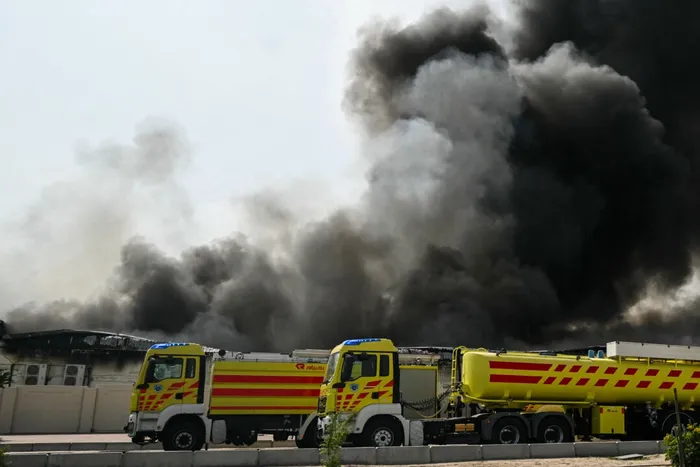
The sirens didn't need to wail for people to feel the tension. When the Kuwaiti Ministry of Defense confirmed that the Kuwait Army shoots down a number of hostile aerial targets, the news hit like a physical weight. It wasn't just another military drill. This was a live engagement in a region that's increasingly looking like a powder keg. If you’ve been following Middle Eastern geopolitics, you know that "hostile targets" is often code for drones or cruise missiles, the favorite tools of non-state actors and regional proxies.
Kuwait has spent decades trying to play the role of the "neutral sibling" in the Gulf. They mediate. They host talks. They keep their heads down. But when objects violate your airspace, neutrality doesn't mean much if you can't defend your borders. This recent interception proves that the threat isn't just theoretical anymore. It’s at the doorstep.
Why this engagement changes the conversation
Most people think of air defense as a big, cinematic "Iron Dome" moment. In reality, it’s a grueling game of cat and mouse involving radar signatures that are sometimes no bigger than a large bird. The Kuwaiti military hasn't been sitting idle. They've been integrating advanced systems for years, and this successful shoot-down suggests those investments are finally paying off.
We aren't just talking about old-school fighter jets chasing shadows. Modern threats in the Gulf usually involve Unmanned Aerial Vehicles (UAVs) that fly low and slow to evade traditional radar. By successfully neutralizing these "hostile targets," the Kuwaiti Army sent a clear message. They’re capable of identifying and killing threats before they hit critical infrastructure like oil refineries or desalination plants.
The tech behind the shield
Kuwait relies on a layered defense strategy. You can’t just have one type of missile and hope for the best. They use a mix of American-made Patriot systems and shorter-range tactical defenses.
The Patriot Advanced Capability-3 (PAC-3) is the heavy hitter here. It’s designed to intercept tactical ballistic missiles and advanced cruise missiles. But for the smaller "hostile targets"—likely drones—the army uses smaller, more agile systems. Think of it like using a flyswatter for a fly and a shotgun for a home intruder. You don't want to waste a multi-million dollar Patriot missile on a $20,000 cardboard drone unless you absolutely have to.
The geography of the threat
Look at the map. Kuwait sits in a tight corner, squeezed between Iraq, Saudi Arabia, and the Persian Gulf, with Iran just a short hop across the water. When things go sideways in the region, Kuwait is often in the flight path.
Historically, the threat came from conventional armies. Today, it’s "asymmetric." That’s a fancy way of saying cheap weapons used by smaller groups to cause massive headaches for wealthy nations. During the 2019 attacks on Saudi Aramco facilities, the world saw how vulnerable oil infrastructure is to coordinated drone swarms. Kuwait saw it, too. They’ve been quietly beefing up their surveillance ever since.
Why the "hostile" label matters
Notice the wording used by the Ministry of Defense. They didn't immediately point fingers at a specific country. That’s intentional. In diplomacy, saying "hostile targets" instead of "Iranian drones" or "Iraqi-launched missiles" leaves room for de-escalation. It gives the politicians space to talk while the generals keep their fingers on the triggers.
If Kuwait had named a source immediately, it would’ve forced a diplomatic crisis. By focusing on the act of interception, they highlight their competence without necessarily starting a war. It’s a delicate dance. You show strength to deter the next attack, but you don't show so much aggression that you invite a full-scale escalation.
What this means for the average citizen
If you're living in Kuwait City or working in the northern oil fields, this news is rattling. But honestly, it should also be somewhat reassuring. The fact that the systems worked means the "shield" is active.
- Increased Military Presence: Expect to see more movement around the northern borders. This isn't a sign of panic; it’s a sign of readiness.
- Stricter Airspace Monitoring: Private drone hobbyists are going to find things much tougher. If you’re flying a DJI near a sensitive area, don't be surprised if it gets jammed or confiscated.
- Regional Coordination: Kuwait doesn't work in a vacuum. They’re part of the GCC (Gulf Cooperation Council), and you can bet their radar data is being shared in real-time with Saudi and US forces in the area.
The invisible war in the skies
Beyond the physical missiles, there’s a massive electronic warfare component to these interceptions. To shoot down a "number of targets," you first have to see them. Drones are notoriously difficult to track because they have a low radar cross-section.
Kuwaiti operators have to distinguish between a flock of migrating birds, a civilian plane off-course, and a suicide drone packed with explosives. This requires high-end signal processing and, frankly, a lot of human intuition. The successful shoot-down tells us that the training levels within the Kuwaiti Air Defense Force are significantly higher than some critics suggested in years past.
Misconceptions about air defense success
Don't fall for the "100% success rate" myth. No air defense system is perfect. If a swarm of fifty drones is launched, a few might get through. The goal of the Kuwait Army isn't just to stop every single target, but to make the "cost" of attacking Kuwait too high for the enemy. If an attacker knows 90% of their expensive hardware will be turned into scrap metal before it hits a target, they might think twice.
Moving forward in a tense Gulf
This incident isn't an isolated event. It's part of a broader pattern of instability that has plagued the region for the last decade. As long as regional powers use proxies to settle scores, Kuwait will remain on high alert.
The next step for Kuwait isn't just buying more missiles. It’s about domestic resilience. This means hardening power grids and ensuring that the public knows what to do in an emergency without panicking. The government has been relatively transparent about this specific interception, which helps build trust.
If you want to stay informed, stop looking at sensationalist social media accounts. Follow the official Kuwait News Agency (KUNA) for the baseline facts, but keep an eye on regional maritime tracking and "open-source intelligence" (OSINT) analysts. They often spot the movement of hardware before the official press releases go out. Watch the northern border and the sea lanes. That’s where the real story is written.
Keep your emergency notifications on and pay attention to civil defense drills. The "hostile targets" may have been downed this time, but the underlying tension that sent them into the air hasn't gone away. Readiness is the only real currency in the Gulf right now. Use it.