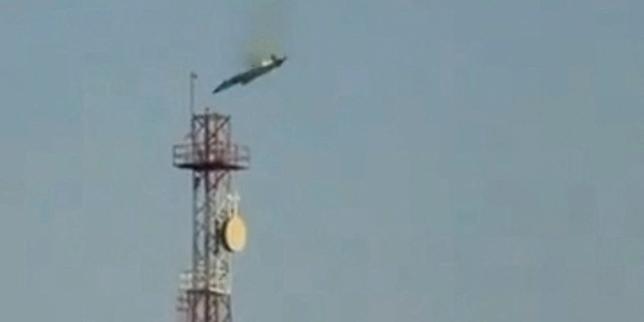
The headlines are screaming about a "mistake." They want you to believe that Kuwaiti air defenses accidentally swatted three American fighter jets out of the sky like a tragic clerical error. They are calling it a "misunderstanding" in the heat of an Iranian standoff.
They are lying to you. Or worse, they are so blinded by the doctrine of the last fifty years that they can’t see the tectonic plates of warfare shifting beneath their feet. You might also find this similar story interesting: Strategic Asymmetry and the Kinetic Deconstruction of Iranian Integrated Air Defense.
When three top-tier American airframes go down to friendly fire from a regional ally, you aren’t looking at a "glitch." You are looking at the total collapse of the IFF (Identification Friend or Foe) hegemony and the terrifying reality that Western stealth is now a liability in a crowded, multi-polar battlespace.
The "error" isn't that Kuwait fired. The error is the assumption that high-tech connectivity makes us safer. As reported in latest reports by BBC News, the implications are notable.
The IFF Fallacy and the Ghost in the Machine
For decades, the Pentagon has sold the world on the idea of the "Network-Centric" battlefield. The pitch is simple: everything is connected, everyone sees the same map, and therefore, nobody shoots the wrong guy.
I have spent years looking at the telemetry data that these systems spit out during "Red Flag" exercises. The truth is much uglier. These systems are held together by digital duct tape. When you introduce a high-intensity electronic warfare (EW) environment—the kind Iran has been perfecting with Russian and Chinese hardware—that "perfect" network turns into a hall of mirrors.
Kuwait didn’t just "forget" where the Americans were. Their sensors were likely fed a cocktail of ghost signals and spoofed transponder codes that made those F-35s or F-22s look like incoming Iranian strikes.
Why Stealth is Actually the Problem
We have obsessed over Radar Cross Section (RCS) for thirty years. We’ve spent trillions making planes that look like marbles on a radar screen. But here is the contrarian truth: Stealth makes friendly fire more likely, not less.
- Reduced Visibility for Allies: When you operate a "stealth" asset, you are intentionally limiting your electronic footprint. You aren't broadcasting. You are a shadow.
- The Hair-Trigger Response: If a battery commander in Kuwait sees a faint, intermittent "blip" that shouldn't be there—because the stealth coating is doing its job—they don't have the luxury of waiting. In a theater where ballistic missiles land in minutes, "ambiguity" equals "target."
- The Data Link Gap: We assume our allies have the same level of integration we do. They don't. Export versions of tracking software often lag behind. When the US flies "dark," they are effectively invisible to the very people supposed to be covering their backs.
The Myth of "Accidental" Competence
The media is framing this as a Kuwaiti failure. That is a comforting narrative for Washington because it implies the hardware is fine, but the people are flawed.
Reverse the lens. If a Gulf nation's air defense—largely equipped with US-made Patriot or NASAMS hardware—can successfully intercept and destroy three of the most advanced aircraft in history, it proves that the "invincibility" of Western air power is a marketing gimmick.
We have spent decades bullying insurgencies and third-tier nations with no air defenses. We got arrogant. We started believing our own brochures. This "mistake" is a live-fire demonstration that the gap between a $150 million jet and a $2 million interceptor missile has closed. The math of attrition is now officially against the United States.
Stop Asking if it was a Mistake
The "People Also Ask" sections of the internet are currently flooded with variations of: How could Kuwait make such a big mistake?
That is the wrong question. You should be asking: Why did the US tactical link fail to override the engagement?
In theory, the Link 16 network should prevent this. If it didn't, it means one of two things, and both are catastrophic for US interests:
- Scenario A: The Iranian EW suite is so advanced it can "de-couple" US assets from their local allies, creating digital silos where everyone is an enemy.
- Scenario B: The US command structure is so paranoid about their own data being hacked that they didn't share the "keys to the kingdom" with Kuwait, leaving the Kuwaitis to guess who was who.
I've seen defense contractors hand-wave these integration issues during PowerPoint presentations in D.C. They call them "interoperability challenges." In the real world, "interoperability challenges" result in pilots floating in the Persian Gulf and airframes worth half a billion dollars sitting at the bottom of the sea.
The Hard Truth About Regional Alliances
We treat nations like Kuwait as "gas stations with a flag" that will simply do what they are told and push the buttons we tell them to push. This incident exposes the friction of the new era.
Regional powers are terrified. They are caught between a declining superpower (the US) and a resurgent, aggressive local power (Iran). When the "Big Dog" (the US) can’t even coordinate with its closest partner on the ground, the partner is going to shoot first and ask questions after the pilot ejects.
What You Should Be Watching Instead
- The Signal to Russia and China: They are laughing. They see that Western stealth is not a magic cloak. They see that Western alliances are a technical and tactical mess. They see that the US-led order is held together by paper-thin protocols.
- The End of "Zero Attribution" Operations: For a long time, the US could operate with plausible deniability. You can’t do that anymore. If your allies are shooting you down, you can’t hide your movements.
- The Pivot to "Expendability": This should be the death knell for the trillion-dollar "Super-Platform." Why build a $150M jet that your own ally will kill? The future is swarms of $5M drones. The Pentagon knows this, but the lobbyists for the big contractors won't let them say it out loud yet.
The "Koweït reconnaît une erreur" story is a distraction. It's the cover story for a massive, systemic failure in how we think about war in the 21st century.
There are no mistakes on this level. There are only systems that fail because they were built on the arrogant assumption that the network is God.
The network is dead. Long live the missile.


