Decades ago, the sun beat down mercilessly on the dusty hills of the Santa Susana Mountains, baking the wooden movie sets of Spahn Ranch into something resembling a ghost town before its time. There, amidst the props and the scrub brush, a collective delusion took root. It was fed by cheap wine, apocalyptic prophecies, and the charismatic magnetism of a man standing five feet and two inches tall. That man had a guitar, a messianic complex, and a stare that made people forget their own names.
When the machinery of the state finally ground forward in the wake of the 1969 Tate-LaBianca murders, it swept up a handful of young believers. They traded their youth, their freedom, and the California sun for concrete cages. And then, for more than half a century, time did what time always does: it marched on. It built strip malls, buried witnesses, and turned the terrifying summer of love into yellowed paperback history.
Yet the prison doors remained locked. Until now.
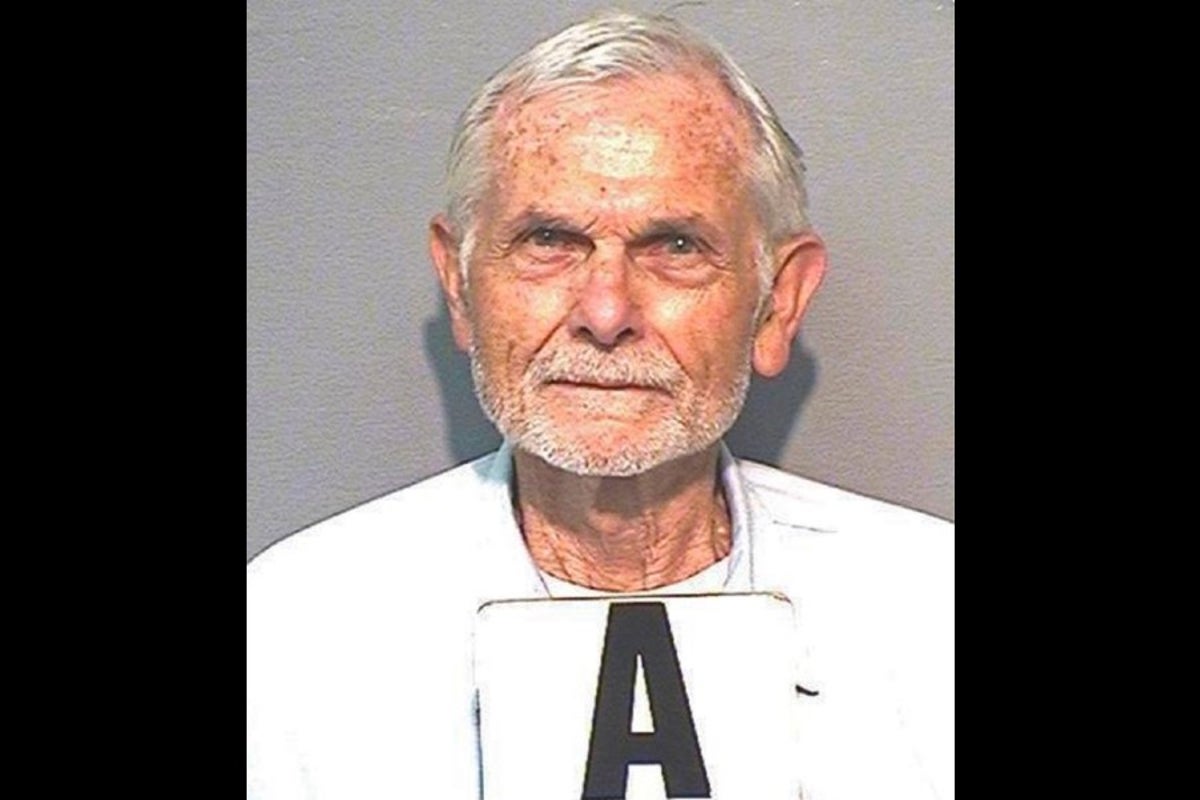
One of those original followers has drawn their final breath behind those steel bars, quietly passing away in a state facility without ever stepping foot back into free society. It is a quiet punctuation mark on a chapter of American history that most people prefer to keep sealed shut. But death in prison does not erase the ledger. It only forces us to look back at the mechanics of how ordinary human beings cross an invisible line from living rooms to slaughterhouses, and why some of them never find their way back, even after the spell is broken.
Consider the architecture of belonging.
In the late nineteen-sixties, the cultural ground was shifting violently beneath the feet of a generation. Traditional anchors—religion, government, the nuclear family—seemed hollowed out by the Vietnam War and social upheaval. Into that vacuum stepped a drifter who possessed an uncanny, predatory instinct for human loneliness. He did not recruit intellectuals or hardened criminals. He recruited the drifting, the alienated, the daughters of middle-class families looking for a father figure who promised absolute truth in a world of lies.
When a follower like Susan Atkins, or Leslie Van Houten, or Bruce Davis, or whichever disciple crossed that final threshold, sat cross-legged in the desert dirt listening to guitar strumming, they were not thinking about murder. They were thinking about salvation. The transition from searching for peace to writing names in blood on a living room wall is the darkest alchemy known to criminology. It happens incrementally. It begins with the surrender of critical thought. It ends with the abdication of soul.
The tragedy of the Manson family is rarely understood through its body count alone. The true horror lies in its absolute banality. These were not supervillains from a gothic novel. They were teenagers and twenty-somethings with sunburned noses, frayed jeans, and vacant eyes who had simply stopped believing that their individual choices mattered.
When the trials concluded and the death sentences were commuted to life imprisonment in the nineteen-seventies due to a brief abolition of the death penalty, a strange thing happened. The cult dissolved, but its prisoners aged. They grew gray hair. They read books. They learned trades. Decades bled into one another behind razor wire.
Periodically, the parole board would convene. The aging inmate, now wearing glasses and orthopedic shoes, would sit before a panel of strangers and explain that they were no longer the person who held a knife or stood watch in the canyon dark. Sometimes, the boards granted recommendations for release. Sometimes, governors intervened, knowing that the name Manson carried a political electricity that no parole officer wanted to handle.
For the follower who just died in custody, the legal system decided that the debt could only be settled by dying in a cell.
There is an eerie symmetry to dying in prison after a life defined by a man who claimed to hate the establishment. They spent fifty years sustained by the very taxpayers, walls, and guards of the system their leader wanted to burn to the ground. Every sunrise filtered through reinforced glass. Every meal served on a plastic tray. Every breath drawn in a room that smelled of industrial disinfectant and old paper.
We are fascinated by true crime because we want to believe that monsters are a different species. We want a neat line separating the civilized from the savage. We want Charles Manson to be a demon from the pit, and his followers to be soulless automata incapable of human feeling.
That is a comforting lie.
The reality is far more terrifying. The people who committed those murders were made of the same flesh, bone, and longing as anyone sitting in a coffee shop today. They wanted to be loved. They wanted to feel significant. They wanted to belong to something larger than themselves. They simply handed their moral compass to a madman who pointed it toward an abyss.
As the last echoes of that era fade into the archive, the physical anchors are already gone. Spahn Ranch burned down long ago. The Los Feliz murder house has new occupants who paint the walls and plant hydrangeas. The prosecutors are gone. The victims are immortalized only in family albums and courtroom transcripts.
Now, another follower is gone too.
The cell door closes for the final time. The paperwork is filed. The news cycle ripples for a moment, then smooths over like water dropped from a stone. But the question remains, hanging in the quiet spaces between generations: how easily do we surrender our minds when the world outside gets too loud?
In the end, there are no answers waiting in the prison yard. Only the silence of concrete, the weight of wasted decades, and the cold, unyielding truth that choices, once made, echo far beyond the span of a single human life.