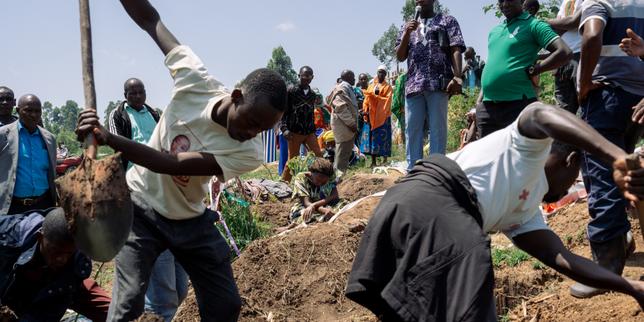
The Democratic Republic of Congo is no stranger to Ebola, but the latest numbers out of the country show we're entering dangerous territory. The death toll from the current outbreak has officially reached 600, with total infections climbing to 1,759. If that isn't alarming enough, the virus just jumped into a major new urban center.
Health officials confirmed that suspected cases have emerged in Kisangani, the capital of Tshopo province. Kisangani isn't a remote mining village; it's one of Congo's largest cities, acting as a massive transit hub. If the virus takes root here, containing it will be a nightmare.
What makes this situation terrifying is that we're dealing with the Bundibugyo strain of the virus. This isn't the Zaire strain you usually hear about. There is no approved vaccine for Bundibugyo. There's no standard treatment. Health workers are fighting this blind, and the virus is winning the race against containment.
The Bundibugyo Problem
Most people assume that an Ebola outbreak means deployment of the highly effective Ervebo vaccine. That vaccine works wonders against the Zaire strain, but it's completely useless here. The Bundibugyo strain is rarer, and the medical community simply hasn't developed the same defenses for it.
Because the outbreak went undetected for weeks after it started in mid-May, the virus got a massive head start. It quietly spread through the mining towns of Ituri province, like Mongbwalu and Rwampara, before anyone realized what was happening. Now, it's firmly entrenched across three eastern provinces: Ituri, North Kivu, and South Kivu.
The two new suspected cases in Kisangani show exactly how fast things are moving. One case links back to the Niania health zone in Ituri, which makes sense given local travel. But the second case has no apparent geographic connection to known outbreaks. That means there are undetected chains of transmission moving through the population right now.
Frontline Workers are Striking
You can't fight an epidemic without a motivated workforce, but Congo's health response is fracturing from within. In Ituri province, the absolute epicenter of the crisis, frontline health workers are walking off the job.
They haven't been paid. Doctors and epidemiologists have gone without wages or hazard bonuses since the outbreak was declared on May 15. Expecting people to risk their lives handling one of the world's deadliest pathogens without paying them is a recipe for disaster.
Worse, these teams don't even have basic protective gear. Doctors are running out of personal protective equipment (PPE), forcing them to ration supplies or expose themselves to infected bodily fluids. Treatment centers are currently running at 90% capacity, leaving almost no breathing room as 51 new cases and 20 deaths were recorded in a single 24-hour window.
Conflict and Mistrust Block the Response
The geography of this outbreak makes containment nearly impossible. Eastern Congo is a war zone. Armed groups, including the Rwanda-backed M23 militia, are actively fighting the Congolese military in South Kivu. This violence displaces thousands of civilians daily, forcing people to flee into new areas and taking the virus with them.
Then there's the deep-seated mistrust. Local communities are terrified, and that fear often turns into anger directed at the response teams. We're seeing tracking teams attacked and safe burial crews blocked.
The World Health Organization states that tracking teams need to monitor at least 95% of known contacts to stop an outbreak. Right now, because of insecurity and community resistance, they're hovering around 82%. That missing 13% is why the virus keeps expanding.
What Needs to Happen Now
This isn't a localized crisis anymore; it's a regional threat. Uganda has already reported 20 cases and two deaths tied to this outbreak. To turn the tide, international and local authorities must pivot immediately.
- Pay the health workers today: The government and international donors must clear the back pay for frontline staff in Ituri to stop the strikes and get medical teams back into communities.
- Flood the zone with PPE: Treatment centers cannot operate safely without an immediate influx of protective gear, especially with 300 more beds desperately needed to handle the overflow.
- Accelerate clinical trials: On July 2, scientists finally launched clinical trials in Bunia evaluating the monoclonal antibody MBP134 and the antiviral drug remdesivir. These trials must be protected and funded aggressively, as they represent the only real hope for a targeted weapon against the Bundibugyo strain.
The international community needs to wake up to the reality in Tshopo and Ituri. If the Kisangani cases validate as positive, the window to prevent a catastrophic urban epidemic will slam shut.