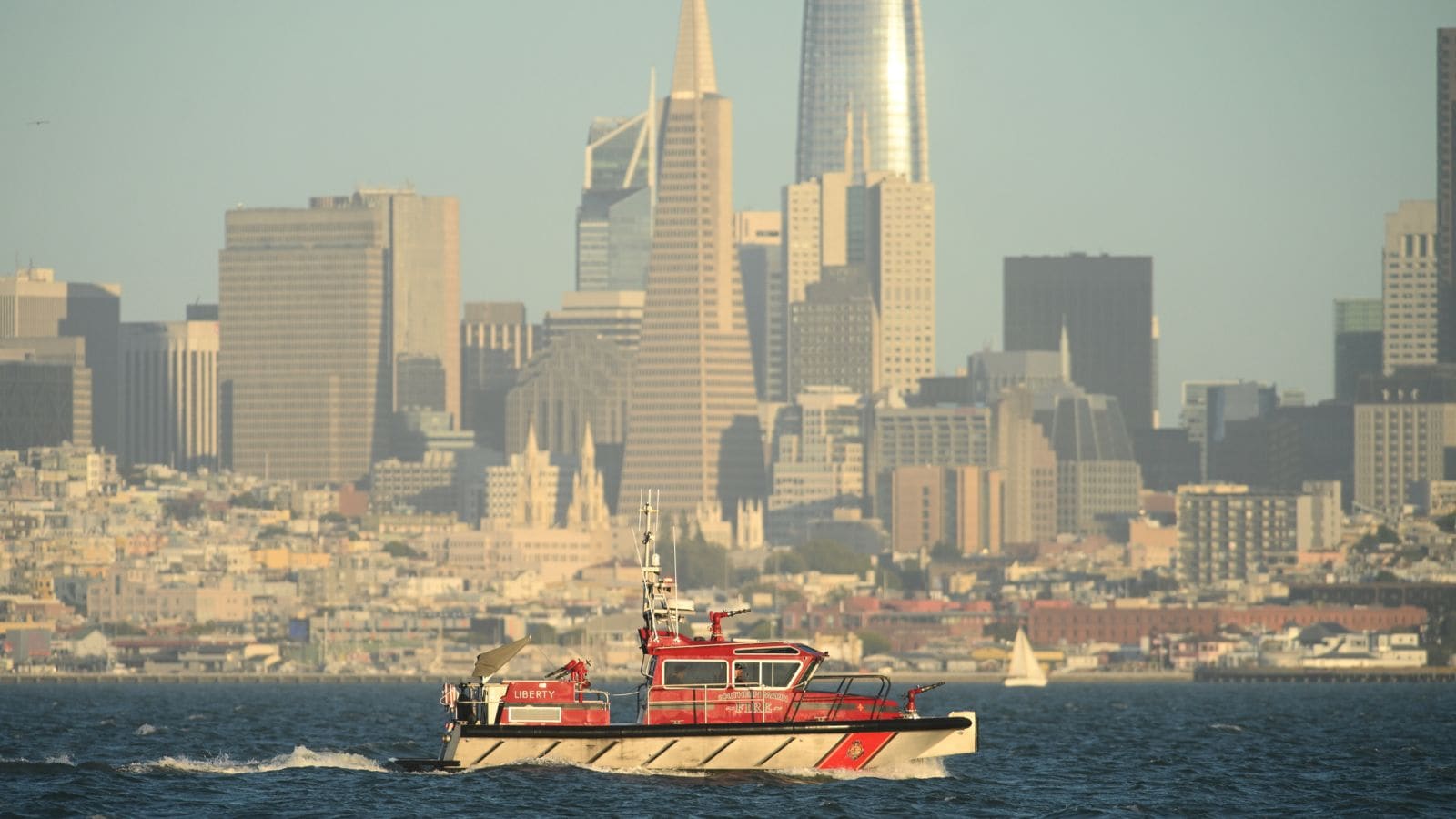
A recreational vessel carrying 19 people overturned in the treacherous waters of the San Francisco Bay, leaving one person dead and two missing. While local authorities scramble to execute search-and-rescue operations near the Golden Gate, the incident exposes a far deeper systemic crisis in maritime safety. This was not a freak act of nature. It is the predictable result of outdated stability calculations, regulatory blind spots regarding passenger capacities, and the unforgiving hydrodynamics of the bay.
The tragedy occurred during what should have been a routine weekend outing. Instead, it turned into a frantic survival scenario as the hull flipped, throwing nearly a score of passengers into some of the most perilous currents on the West Coast.
The Illusion of Capacity on Open Water
Most boaters view passenger limits as loose guidelines. They look at a physical deck, see open fiberglass, and assume that if people can stand side by side, the vessel can handle the load. This is a fatal misconception.
Maritime architecture relies on a delicate balance between the center of gravity and the center of buoyancy. When a vessel is loaded to its absolute maximum, that margin of safety shrinks to nothing. The San Francisco Bay does not tolerate thin margins.
The bay functions as a massive, liquid funnel. Millions of gallons of water force their way through the narrow strait beneath the Golden Gate Bridge every time the tide shifts. When a rushing ebb tide collides with strong afternoon winds coming off the Pacific, it creates steep, erratic, closely spaced waves known locally as a chop.
For an overloaded boat, this environment is a trap. The added weight of 19 passengers lowers the vessel's freeboard, which is the distance from the waterline to the upper deck. With mere inches of clearance left, even a moderate wave can wash over the bow or gunwales. Water on the deck adds instant, shifting weight, triggering a phenomenon known as the free surface effect. The water sloshes to one side, the boat lists, and within seconds, the vessel capsizes.
Outdated Metrics and the Weight Dilemma
Federal safety standards have historically failed to keep pace with human reality. For decades, the United States Coast Guard calculated average passenger weight at 140 to 160 pounds. This metric dated back to mid-twentieth-century statistics.
While commercial passenger vessels saw updates to these rules after high-profile disasters like the 2004 capsizing of the Lady D water taxi in Baltimore, recreational boats and smaller uninspected vessels frequently operate under older, less stringent guidelines. The math simply does not add up anymore.
Historical vs. Reality Weight Calculations
--------------------------------------------------
Classic USCG Baseline:     140–160 lbs per person
Modern Reality Baseline:   185–200 lbs per person
Discrepancy for 19 People: Up to 1,140 lbs of uncalculated stress
When 19 modern adults board a craft built or rated under legacy calculations, the boat is effectively carrying the weight equivalent of 24 or 25 people from the era when safety formulas were conceived.
Compounding the problem is the human element during an emergency. When a boat takes on water or hits a sudden wave, passengers do not sit still. They panic. They run to the high side or crowd together away from the incoming spray. This sudden movement shifts the center of gravity laterally. If a boat is already sitting low in the water, this mass migration seals its fate. The hull rolls over instantly, trapping occupants underneath the canopy or within the cabin structure.
The Unregulated Boom of Peer to Peer Charters
The investigation into this specific capsizing will inevitably look at the legal status of the voyage. The maritime industry has been upended by the rise of peer-to-peer boat rental platforms. These services allow private boat owners to rent out their vessels, often with a captain provided or hired separately.
This model creates a massive regulatory gray area.
True commercial vessels undergo rigorous, annual Coast Guard inspections. Their hulls are tested for stability, their captains are heavily licensed, and their safety equipment is meticulously logged. Private recreational vessels do not face these hurdles.
Many operators run what the industry calls illegal charters. They pack paying passengers onto boats designed strictly for family use, bypassing the strict oversight meant to prevent precisely this kind of disaster. To the untrained eye of a tourist or a casual weekend boater, a sleek vessel looks entirely safe. They do not ask to see a Coast Guard Certificate of Inspection. They do not know that the captain might only hold a basic recreational license, lacking the specialized training required to manage a heavily loaded vessel in heavy chop.
Cold Water and the Real Timeline of Survival
When a boat capsizes in the San Francisco Bay, the clock does not tick in hours. It ticks in minutes.
The water temperature in the bay rarely climbs above 55 degrees Fahrenheit. At this temperature, the human body undergoes immediate, involuntary physiological changes. The first phase is cold shock response. The moment a person hits the water, they experience a gasping reflex. If their head is underwater during that initial gasp, they inhale fluid and drown immediately.
The Physiological Timeline of Cold Water Immersion
* 1 Minute: Cold shock, hyperventilation, and intense panic.
* 10 Minutes: Swim failure. Muscles stiffen, and fine motor skills disappear.
* 60 Minutes: Hypothermia sets in, leading to unconsciousness.
This explains why rescue crews often find casualties even when victims are wearing life jackets. A life jacket keeps a body afloat, but it cannot stop the paralyzing effects of localized hypothermia or swim failure.
The search for the two missing passengers highlights the immense difficulty of bay rescue operations. The currents do not just move water horizontally; they create powerful vertical eddies and undertows near underwater topography and bridge pilings. A person swept into the current near Alcatraz or the Golden Gate can be carried miles into the open ocean or pushed deep into the North Bay within an hour. Thermal imaging cameras and helicopter sweeps are hindered by the region's notorious fog banks, turning search efforts into a race against impossible environmental odds.
Shifting the Onus of Safety
Relying entirely on post-disaster enforcement is a failed strategy. The Coast Guard routinely issues hefty fines to illegal operators, but the profit margins of weekend charters keep the market thriving. True reform requires a structural shift in how vessel capacities are communicated and enforced at the marina level.
Harbormasters and marina operators see these vessels depart. Yet they often lack the legal authority or the personnel to intervene and stop an obviously overloaded boat from leaving the dock. Until there is a coordinated framework that holds rental platforms, owners, and operators accountable before the lines are cast off, the waters outside San Francisco will continue to claim lives.
The investigation will take months to analyze the hull design, reconstruct the passenger manifest, and determine the exact sequence of the roll. But the underlying lesson is already clear. The bay demands absolute respect, and its physical laws cannot be negotiated away by wishful thinking or crowded decks.