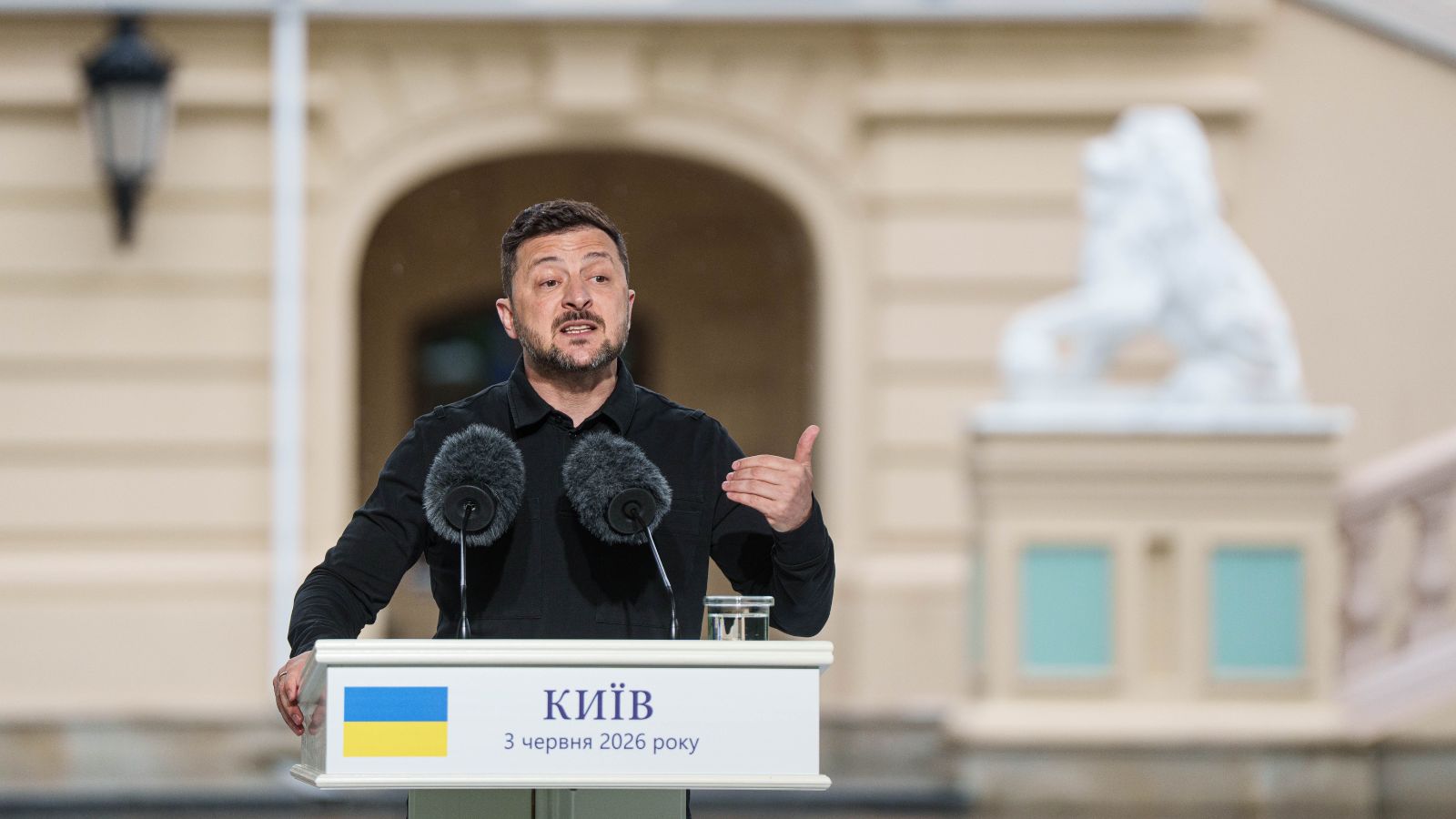
The room is too quiet. Outside the reinforced windows, Kyiv breathes in a tense, rhythmic hush, the kind of silence that feels heavy, like the air right before a thunderstorm breaks. Inside, a man sits under the harsh glare of desk lamps, staring at a blank page. He is not just a president anymore. He is a proxy for millions of terrified, defiant souls, trying to find words that might stop steel from tearing through flesh.
Volodymyr Zelenskyy’s open letter to Vladimir Putin was not a standard diplomatic memo. It was a calculated gamble wrapped in desperation, a public plea fired into the void of a geopolitical chasm. When a leader bypasses the backchannels and publishes an open letter to an invading adversary, it is an admission that the traditional machinery of peace has failed. It is an act of theatrical vulnerability.
Consider the physics of a voice trying to cross a active frontline. On one side, you have a leader who traded the stage for the bunkers, whose daily existence is defined by the immediate, visceral reality of his people’s survival. On the other, a man ensconced in the deep, historical echoes of the Kremlin, viewing the world through the cold lens of maps, imperial legacy, and strategic depth. The letter was an attempt to force those two realities to collide.
The Geography of a Plea
To understand the stakes of this message, look at the map not as a collection of borders, but as a grid of human lives. Zelenskyy’s call for a ceasefire and direct talks was grounded in a brutal, undeniable truth: every hour of bureaucratic delay is measured in funerals.
The letter did not beg. It framed the proposition of a ceasefire not as a concession, but as the only logical exit ramp from a mutual catastrophe. Zelenskyy spoke of borders, yes, but he anchored the political argument in the language of shared exhaustion. He challenged the Kremlin to face him not through artillery fire, but across a table, where the illusions of propaganda crumble under the weight of direct eye contact.
But a letter requires a recipient willing to read it.
The silence from Moscow in the immediate aftermath of the letter's release was louder than any official press rejection. It is a specific kind of tactical silence, meant to diminish the sender, to signal that the plea is beneath the dignity of a response. Yet, by making the letter public, Zelenskyy shifted the audience. He was no longer just speaking to Putin; he was speaking to the Russian public, to the global community, and to history.
The Anatomy of the Ultimatum
What happens when the ink dries and the missiles keep falling?
The core of the open letter focused on three non-negotiable pillars: an immediate halt to hostilities, the withdrawal of forces, and a structured pathway to discuss the status of disputed territories without a gun to Ukraine's head. To the casual observer, it sounds like standard wartime rhetoric. Look closer.
The strategy here is deeply psychological. By offering a clear, structured way out, Zelenskyy strips away the justification for continued aggression. If an adversary is offered peace on reasonable terms and chooses to keep firing, their true objective is laid bare to the world. It ceases to be about "security interests" or "historical grievances." It becomes about erasure.
The document serves as a historical marker. Decades from now, when analysts pore over the digital archives of this conflict, this letter will stand as the moment where one path diverged from another. It answers the question that always arises in the aftermath of tragedy: Did anyone try to stop it?
The Invisible Balance
We often view these geopolitical chess matches through statistics. We read about troop movements, sanctions, and economic forecasts. But the real cost is paid in smaller, quieter currencies. It is paid by the grandmother in Kharkiv who refuses to leave her apartment because her memories are anchored to the wallpaper. It is paid by the young soldier who writes his blood type on his uniform before stepping into a trench.
Zelenskyy’s prose, while draped in the necessary formality of statecraft, carried the undertone of this human collateral. He reminded his counterpart that the names written on casualty lists belong to families, not spreadsheets.
The difficulty of this approach is the inherent asymmetry of empathy in wartime. A leader who values individual human life above all else operates at a distinct disadvantage against an opponent who views individuals as expendable fuel for a grander historical narrative. The letter was a desperate attempt to bridge that cognitive divide, to find a sliver of common pragmatism, if not common humanity.
The ink on the page has long since dried. The sirens in Kyiv continue to wail, their rising and falling tones a constant, grim metronome for a city under siege. The open letter remains on the table, unanswered, a testament to a moment when words tried to do the work of shields, and the world held its breath, waiting for a reply that never came.