The teacup on the windowsill doesn't rattle until it is far too late.
By the time a ceramic cup begins its frantic clatter against porcelain, the violent release of energy has already begun miles beneath your feet. The ground has torn. Stress accumulated over decades or centuries of locked tectonic plates has snapped, sending shockwaves outward at speeds that leave human reflexes in the dust. For generations, seismology has been a science of aftermaths—a discipline of measuring the wreckage, cataloging the magnitude, and racing against collapsing concrete to pull survivors from the dark.
Prediction? For decades, it was treated as a fool's errand. A siren song for charlatans and well-meaning dreamers.
A China-led research team recently reported an 83% success rate anticipating earthquakes by studying subtle phenomena described as "seismo-ripples." A figure like 83% stops a person cold. It sounds almost miraculous in a field notorious for false alarms and blind spots. Yet if we stop at the headline—if we treat that percentage like a lottery ticket number or a simple scoreboard—we miss the quiet, trembling drama unfolding beneath the crust of the earth and inside the lives of everyone who sleeps above a fault line.
To understand why this research matters, you have to feel the weight of what uncertainty does to a human being.
The Weight of Living Above a Question Mark
Consider a hypothetical family—let's call them Mei and her ten-year-old son, Leo—living in a mid-rise apartment in a seismically active basin. This scenario is invented to illustrate a very real emotional geometry, though millions of people live variations of it every single night.
Mei does not think about geology when she packs Leo's school lunch. She thinks about whether his sneakers still fit, whether he finished his math worksheet, and whether she remembered to pay the electric bill. Yet in the back of her mind, there is a thin, permanent wire of tension. When a heavy truck rumbles past the building at two in the morning, her eyes snap open. She counts seconds. Was that a truck? Was that the pipes? Is the floor shifting?
For people in high-risk zones, earthquakes aren't single events. They are an atmosphere.
A warning system that cries wolf too often erodes trust until people ignore the sirens. A warning system that stays silent until the shaking starts is really just a post-mortem clock, giving you perhaps a few dozen seconds to dive under a sturdy table or bolt for open air before the world turns to dust and rebar. True anticipation—catching the subtle shift before the catastrophic rupture—has long been the white whale of earth science.
Why has it been so stubbornly elusive? Because the earth does not send a neat, polite telegram before it breaks. Tectonic stress builds slowly, unevenly, in dark, inaccessible depths where no human eye can see and no single sensor tells the whole story. Traditional seismic monitoring has excelled at recording waves once a slip begins, or mapping long-term hazard probabilities over decades. Bridging the gap between "someday a major quake could hit" and "the crust is entering a heightened state of instability right now" is where good intentions usually go to die.
Ripples in the Quiet
When researchers talk about "seismo-ripples," it helps to step back from the jargon and ask what is actually happening in the ground before a major tremor strikes.
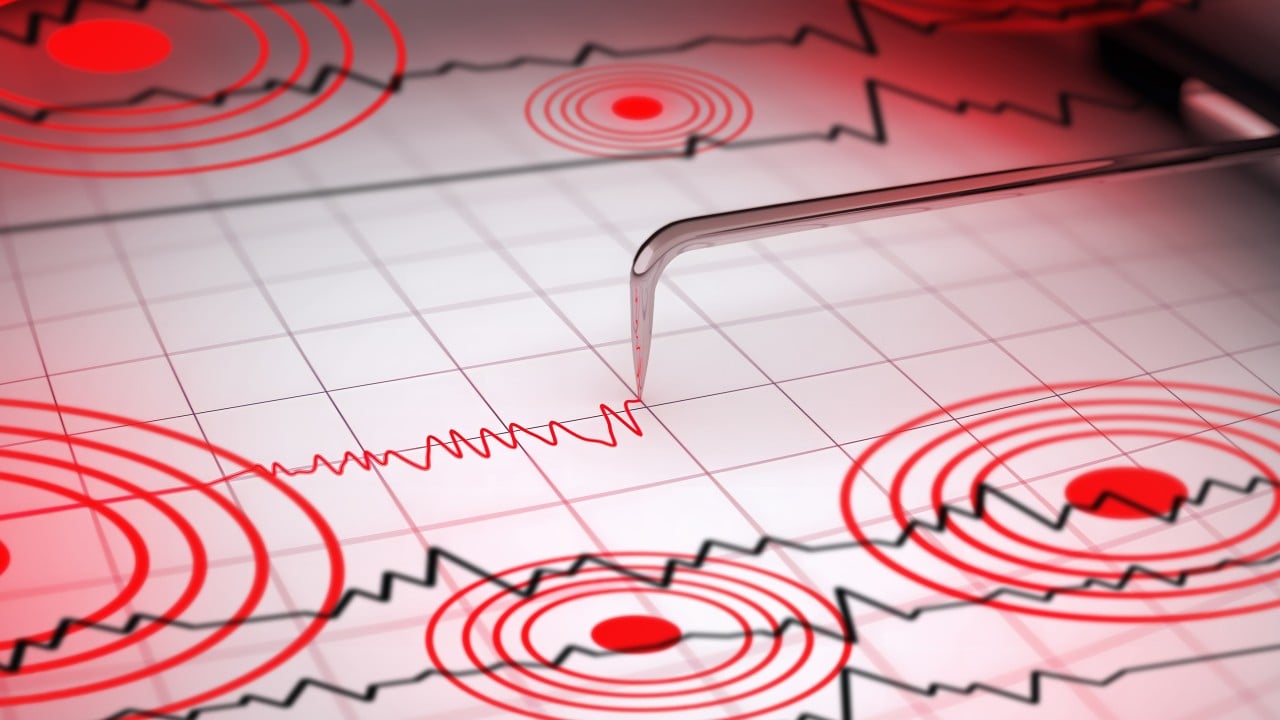
I am going to use a metaphor here, because the mechanics of stressed rock are notoriously counterintuitive. Imagine bending a thick green branch slowly with both hands. From the outside, for a long time, nothing dramatic looks like it's happening—just a gradual curve, a tightening in your forearms, a quiet pressure building along the fibers. Then, right before the snap, tiny micro-fractures begin to form. Microscopic vibrations travel through the wood. A faint creak escapes. If you have sensitive enough instruments pressed against the bark, you might detect subtle ripples of stress and micro-seismic activity moving through the structure moments or days before the whole thing gives way.
The earth's crust is vastly more complex than a tree branch, of course—composed of heterogenous rock, fluids under immense pressure, fault gouge, and shifting stress fields. Still, the core idea behind tracking seismo-ripples is that precursors exist if we know how to listen for subtle wave patterns, micro-signals, or propagating disturbances in the seismic field rather than waiting for the loud roar of the mainshock.
Numbers can flatter us if we aren't careful. An 83% anticipation rate in a study is compelling, even exciting, especially when compared against decades of skepticism.
Wait.
Before anyone treats 83% as a guarantee that the next big quake will arrive with a polite calendar invite, we have to ask the uncomfortable questions that separate rigorous science from wishful thinking. What defines a "success" in a study like this? What is the time window—hours, days, weeks? How many false positives occur alongside the hits, and what happens if a model performs well on historical or specific regional datasets but faces a different geological setting?
In earthquake science, false alarms aren't harmless hiccups. Evacuating a city of millions—or keeping families huddled in cold parks overnight—carries steep economic, social, and psychological costs. If you ring the bell every time the wind blows hard, eventually nobody runs for cover when the storm arrives. Conversely, if a system catches four out of five events in a controlled framework, that is a serious scientific signal worth investigating deeply, not a license to declare the riddle of earthquake prediction solved.
What Happens When the Ground Speaks
I have stood in rooms after a tremor when the silence afterward felt heavier than the shaking itself.
You hear the hum of emergency generators. You smell crushed plaster and damp earth. People stand on cracked sidewalks holding whatever they grabbed in three seconds of panic—a passport, a baby's blanket, a dead phone—staring back at buildings they walked into hours earlier without a second thought. Nobody cares about academic debates in those moments. Everyone cares about one brutal question: Is it over, or is the worst still coming?
That is the human stake that turns an abstract paper about seismo-ripples into something visceral.
If subtle seismic ripples or wave anomalies can reliably flag periods when fault systems are crossing a critical threshold, the value isn't just about predicting an exact second on a clock. Even probabilistic or window-based anticipation can change how emergency crews stage equipment, how critical infrastructure operators monitor vulnerable lines, and how communities prepare mentally and logistically.
Imagine emergency response teams positioning rescue gear before disaster strikes rather than fighting gridlock afterward. Imagine hospitals running quiet readiness checks. Imagine engineers watching real-time seismic ripple data the way meteorologists watch barometric drops and wind shear before a severe squall line forms.
Meteorology went through its own dark ages. For centuries, weather forecasting relied on folk wisdom, red skies at night, and barometers that told you pressure was falling without reliably telling you what was coming next. Satellites, radar, and numerical models didn't make the atmosphere tame or eliminate every surprise, yet modern forecasts save countless lives every year because we learned to read the subtle precursors in the air.
Seismology is trying to read the subtle precursors in the rock.
Skepticism as a Form of Respect
It is tempting to swing wildly between two extremes whenever a headline like this surfaces. One camp scoffs: Earthquakes can't be predicted; we've heard this before. The other camp cheers: Breakthrough! We finally cracked it!
Neither extreme serves truth well.
Science advances through stubborn testing, replication, transparent methodology, and fierce peer scrutiny. A study reporting an 83% success rate with seismo-ripples deserves attention precisely because earthquake anticipation has resisted clean answers for so long—and it deserves rigorous skepticism for the exact same reason. Extraordinary claims in geophysics require ironclad validation across varied fault types, clear definitions of lead times and error rates, and honest accounting of what the data cannot yet see.
Uncertainty is scary. Admitting that the earth remains partly opaque—that even promising signals come with caveats, margins of error, and unanswered questions—can feel unsatisfying when what we really want is certainty.
Yet honesty is the only foundation strong enough to build real resilience upon. A warning system built on hype collapses at the first missed event. A scientific approach built on careful observation, refined detection of subtle seismic ripples, and clear communication of probabilities can actually endure.
Beneath the floorboards
Think back to Mei and Leo in our hypothetical apartment, or to anyone living along the Pacific Rim, the Himalayas, Anatolia, or California.
The ground beneath them does not care about our deadlines, our headlines, or our longing for peace of mind. Plates grind. Fluids migrate. Stress gathers in the dark, millimeter by millimeter, year after year, waiting for the friction threshold to fail.
For most of human history, we have been deaf to the quiet tremors that precede the storm, able only to feel the fury once it arrived and count the cost when it passed. Research into seismo-ripples is an attempt to strain our ears toward the dark—to catch the faint, telltale cadence in the earth before the floorboards begin to shake.
And the next time a teacup sits motionless on a quiet sill, the real question isn't whether the earth is silent, but whether we are finally learning how to hear what it's muttering underneath.