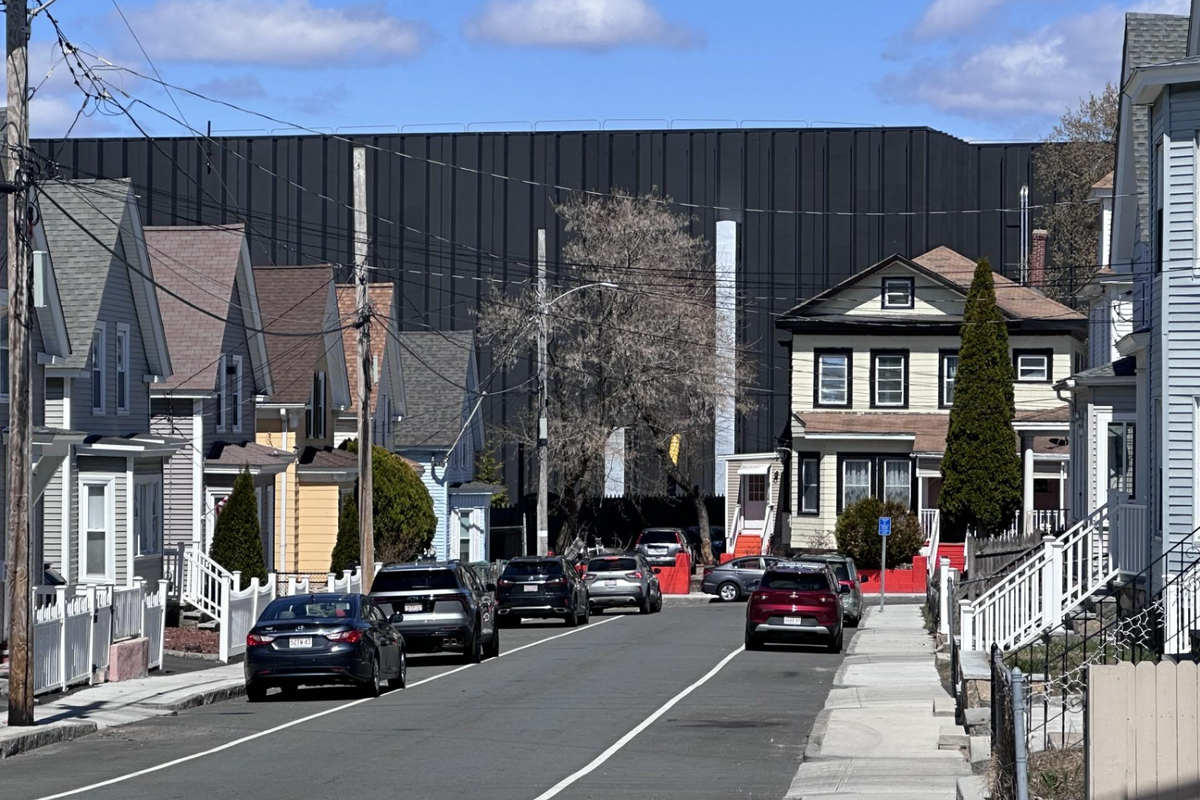
The modern NIMBY narrative has a new favorite villain: the data center. Neighbors in Boston and across suburban America look at these massive, windowless concrete structures and see a dystopian "dungeon" blotting out the sun and ruining property values. They complain about the hum of industrial chillers, the scale of the architecture, and the sudden shift from quiet suburban enclave to digital powerhouse.
They have it completely backward.
The outrage driving the local news cycle is based on a fundamental misunderstanding of municipal economics. The "towering dungeon" isn't a threat to the neighborhood. It is a financial lifeline. In an era where local governments are drowning in pension liabilities and failing infrastructure, rejecting a data center because it looks imposing is the height of civic financial illiteracy.
The Lazy Consensus of Visual Outrage
Local opposition groups almost always rely on emotional, aesthetic arguments. They point to a five-story windowless building and claim it destroys the character of the neighborhood.
Let's look at the actual trade-offs.
Every municipality needs tax revenue to fund schools, pave roads, and maintain public parks. Historically, towns relied on heavy manufacturing or sprawling retail complexes to fill those coffers. But manufacturing has fled, and big-box retail is a volatile, dying breed that creates massive, unpredictable strains on local infrastructure.
A data center is the cleanest, most predictable taxpayer a town can ask for. It demands virtually no municipal services. It does not put children into the school system, adding hundreds of thousands of dollars in educational overhead. It does not generate thousands of daily car trips, destroying local asphalt and creating gridlock. It sits quietly, consumes power, processes data, and writes massive property tax checks.
I have seen towns reject these developments out of aesthetic pride, only to face severe budget shortfalls two years later. They ended up raising residential property taxes anyway. That is the real cost of protecting a view.
The Infrastructure Delusion
A common critique leveled against data centers is their massive energy and water consumption. Critics act as if these facilities are draining local resources into a void, leaving residents with brownouts and dry taps.
The reality of infrastructure scaling tells a different story.
When a major technology infrastructure provider moves into a region, they do not just hook up to the existing, fragile local grid. They force a massive utility upgrade. Data center operators routinely pay for the construction of new substations, high-voltage transmission lines, and water treatment facilities.
A Case in Point: In major tech corridors across Virginia and Ohio, the arrival of enterprise-grade facilities led to utility companies burying older overhead power lines and upgrading grid resilience for the entire surrounding community.
Imagine a scenario where a town needs a $20 million grid overhaul to prevent summer blackouts, but the municipal budget is empty. A data center developer steps in, finances the substation upgrade to secure their own uptime, and inadvertently stabilizes the power supply for every home within a five-mile radius.
Yes, they use an immense amount of electricity. But they pay premium rates for it, funding the very grid modernization that protects the community from future energy instability.
The Myth of the Jobless Drain
"They don't even create jobs." This is the standard refrain from activists who note that a 200,000-square-foot facility might only employ 50 to 100 permanent staff on-site.
This argument ignores how modern economic ecosystems function.
The value of a data center is not found in a high headcount of low-wage retail workers clocking in every morning. It is found in the highly specialized, high-paying engineering, cybersecurity, and facilities management roles required to keep the internet running. These are six-figure positions filled by people who buy homes, pay local income taxes, and patronize local businesses.
Furthermore, the construction phase alone injects hundreds of millions of dollars into the regional economy. Hundreds of union pipefitters, electricians, and steelworkers spend months on-site, driving massive revenue to local hospitality and service sectors.
Compare this to the alternative. If that plot of land isn't a data center, what is it? A fulfillment warehouse. A fulfillment warehouse brings hundreds of diesel trucks tearing through local streets every single day. It brings low-wage, high-turnover employment that strains local social services. It creates a genuine logistical nightmare for the neighborhood.
Choosing a warehouse over a data center because you prefer windows is an economic tragedy.
Real Costs and Honest Downsides
To be absolutely clear, data centers are not invisible magic boxes. They have real, physical impacts that developers often try to minimize, and communities have every right to police those impacts aggressively through zoning.
- Acoustic Footprint: The cooling towers and backup generators make noise. If a developer uses cheap, low-frequency attenuation systems, the surrounding neighborhood will hear a constant, low-grade drone.
- Thermal Output: Discharging heat from massive server banks requires careful management to avoid creating localized microclimates or impacting local water bodies.
- The Concrete Wall Effect: For homeowners directly adjacent to the property line, a massive wall is a massive wall, no matter how much tax revenue it generates.
The solution to these problems is not rejection; it is rigorous, transactional negotiation.
Smart municipalities do not block construction. They demand massive acoustic barriers. They mandate architectural wrappers—advanced facades that make a data center look like a contemporary office building or university library rather than a military bunker. They require operators to invest heavily in liquid cooling systems that drastically reduce both noise and power consumption.
Stop Asking if It's Ugly
The premise of the entire debate is flawed. When residents ask, "Does this building look pretty from my driveway?" they are asking a superficial question that leads to bankrupt public policy.
The correct question is: "What is the most efficient way to fund our community's future without bankrupting its residents?"
If you want well-funded schools, paved roads, functional public parks, and stable residential property taxes, you need industrial taxpayers. If you reject the cleanest, quietest, highest-paying industrial taxpayer available simply because it lacks windows, you are choosing aesthetic vanity over fiscal reality.
The next time a massive digital infrastructure project is proposed in your backyard, stop looking at the architectural renderings. Look at the balance sheet. Accept the concrete. Demand the tax revenue. Let the servers hum.