The cargo hold of a commercial airliner is cold, pressurized, and utterly indifferent to grief.
Up in the cabin, passengers complain about legroom, scroll through downloaded movies, and check the flight map creeping southward across the Caribbean Sea toward the Andes. Down below, wedged between suitcases packed with duty-free perfume and gifts for cousins, rests a heavy zinc-lined coffin. When the wheels finally touch the tarmac at Mariscal Sucre International Airport in Quito, high in the thin mountain air, a routine arrival becomes a quiet national reckoning. You might also find this related article interesting: The Quiet Hum of a Homemade Engine and the Night the Refineries Burned.
A wire report sums it up in twelve sterile words: Remains of Ecuadorian killed in New York building collapse arrive in Quito.
Read that headline again. Notice how clean it is. Notice how quickly your eyes slide right past it. In the modern news cycle, a fatal construction accident in New York and the subsequent repatriation of a body to South America are treated like two disconnected logistics updates—a tragedy filed under local municipal failure, followed days or weeks later by an administrative footnote at an airport terminal. As extensively documented in recent articles by TIME, the implications are significant.
That distance is a lie. Behind those twelve words lies an invisible architecture of sacrifice, structural neglect, and economic survival that binds the boroughs of New York City directly to the mountain towns and coastal provinces of Ecuador.
The Arithmetic of Leaving
To understand what actually landed in Quito, you first have to understand why a person gets on a plane going the other direction.
Consider a hypothetical young man—let us call him Mateo, standing in for the hundreds of thousands of Ecuadorians who have made the trek north over the past decade. Mateo does not leave Cuenca or Loja or Guayaquil because he hates his country. He leaves because he can do basic math. In Ecuador, a month of backbreaking labor might barely cover rent, groceries, and a sick parent’s medication. In New York, a single week of framing drywall, hauling concrete, or working the back line of a Queens kitchen can send home more money than a local salary yields in thirty days.
Remittances are not abstract economic figures on a central bank spreadsheet. They are concrete poured for a mother’s new roof. They are school uniforms, dental work, and small storefronts opened on dusty corners.
By 2023 and 2024, remittances sent back to Ecuador surged past five billion dollars annually, rivaling oil and bananas as one of the lifeblood pillars of the national economy. Every single dollar in that torrent was earned by someone trading their physical safety, their youth, and their proximity to everyone they love for an hourly wage.
When Mateo boards a flight—or endures a far more perilous overland journey—he enters an unspoken contract. He agrees to become invisible in America so that his family can become visible at home.
Gravity Does Not Check Immigration Status
New York City is built by hands that rarely appear in the architectural brochures.
Walk down any block in Manhattan, Brooklyn, or the Bronx, and look up at the scaffolding. The city’s skyline is a monument to vertical ambition, held together by aging brick, hurried renovations, and relentless real estate pressure. Behind the plywood fences and green netting, the workforce skews heavily immigrant, often undocumented, and routinely pushed into the most hazardous corners of the construction and maintenance trades.
When a building collapses in New York—whether from a decades-old structural flaw, an unpermitted renovation, a failing facade, or a heavy roof load giving way without warning—the dust does not discriminate.
Think about the mechanics of a structural failure. Unlike a sudden storm, a building collapse is almost always a slow betrayal. Mortar erodes over forty winters. Load-bearing walls are notched to make room for new plumbing. Warning cracks are painted over because halting a project costs thousands of dollars a day in carrying fees and lost rent. Like a bridge quietly rusting beneath a fresh coat of asphalt, a compromised structure looks entirely solid right up until the second gravity wins.
And who is standing beneath that ceiling when the timber snaps?
Statistically, it is disproportionately an immigrant worker. Data from the New York Committee for Occupational Safety and Health has repeatedly shown that Latino and immigrant workers account for a staggering majority of construction fatalities across New York State, often working on non-union sites where safety harnesses are scarce, OSHA inspections are rare, and speaking up about a bowing wall means losing your job before lunch.
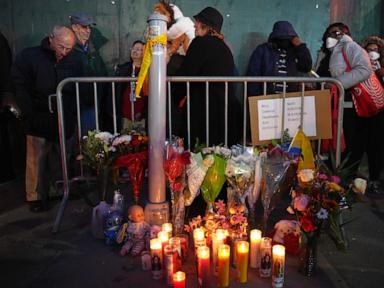
I have stood outside cordoned-off blocks in New York after walls have come down. You never forget the smell. It is a sharp, chalky stench of pulverized plaster, ancient dust, and snapped pine that coats the back of your throat and refuses to wash out of your clothes. You watch rescue crews in heavy turnout gear digging through jagged slabs of masonry while dozens of workers in paint-splattered boots stand silently behind the yellow tape, staring at their phones, trying to figure out which cousin, neighbor, or bunkmate went inside that morning and never walked out.
Silence falls over those crowds faster than the brick did. Because everyone standing on that sidewalk knows the exact same terrible truth: it could have been any of them.
The Bureaucracy of Grief
When an American citizen dies at work, a predictable machinery of insurance, legal representation, and local burial swings into motion. When an Ecuadorian migrant dies under three tons of New York rubble, the tragedy only enters its second act.
Death abroad is an administrative nightmare wrapped in heartbreak.
First comes the identification, often delayed by missing paperwork, borrowed names, or families thousands of miles away scrambling to transmit birth certificates over spotty WhatsApp connections. Then comes the shock of the bill. Repatriating human remains from the United States to South America is a complex, expensive ordeal involving specialized embalming protocols, hermetically sealed zinc caskets required by international aviation law, apostilled death certificates, consular clearances, and air cargo fees that easily climb between six thousand and twelve thousand dollars.
For a family that relied on the deceased worker’s weekly wire transfers just to buy groceries, twelve thousand dollars might as well be twelve million.
So the community mobilizes. In neighborhoods like Corona and Jackson Heights in Queens, styrofoam coolers appear on street corners. Women sell plates of hornado and llapingachos out of apartment kitchens. Fellow day laborers—men who themselves skip meals to save five dollars—empty their pockets into cardboard boxes taped shut with a printed photograph of the man who died. Ecuador’s Ministry of Foreign Affairs and Human Mobility frequently steps in to assist vulnerable families with consular repatriation funds, navigating the labyrinth of cargo manifests and customs clearances so a mother does not have to bury her child in a potter's field on Hart Island.
Stop and consider the bitter irony of that journey.
In life, crossing borders required visas, savings, risk, and years of longing. In death, the paperwork is stamped swiftly, the cargo space is reserved, and the man finally goes home—sealed inside metal, unable to feel the cool Andean breeze he spent every lonely night in Queens dreaming about.
What Happens at the Arrival Gate
At the airport in Quito, there are no television cameras from New York networks. The news cycle in Manhattan has already moved on to the next transit delay, the next political scandal, the next real estate opening.
In Quito, however, time stops at the cargo terminal.
Family members arrive hours early, dressed in black jackets against the highland chill, clutching white roses that begin to bruise in their hands. Many have not seen the person inside that crate for five, eight, or twelve years. They know his voice only through tinny voice notes sent after twelve-hour shifts. They know his face only from grainy video calls where he always smiled, always insisted the work was safe, and always promised he would come back next December—just as soon as he saved a little more.
When the forklift rolls the wooden shipping crate out of the warehouse doors, the sound that rises from a mother’s chest is not something journalism has a polite vocabulary for. It is the sound of a future collapsing in real time.
Every plan built on those weekly remittances—the finishing of the second floor, the younger sister’s university tuition, the quiet retirement in a house with a garden—vanishes into the thin mountain air. A household loses not just a son, a husband, or a father, but its entire economic engine. Grief and financial ruin arrive on the exact same pallet.
The Price Tag We Pretend Not to See
We like to tell ourselves comfortable stories about how our cities work. We like to believe that cheap renovations, fast turnaround times, and gleaming new storefronts are simply the natural magic of urban hustle.
They are not. Someone always pays the real cost of cutting corners.
When a city fails to enforce structural codes, when developers treat worker safety as an optional expense, and when an entire economy depends on undocumented labor while denying those workers basic protections, a building collapse is not a freak accident. It is a predictable invoice coming due.
The next time you walk past a renovation site in New York and hear Spanish or Kichwa drifting through the dust behind a plywood barrier, pause for two seconds. Look at the scaffolding. Look at the boots covered in dried concrete. Those workers are carrying the weight of two countries on their shoulders—building one city block by block while keeping another alive thousands of miles away.
And somewhere in the high valleys of Ecuador, a mother is lighting a candle beside a framed photograph, waiting for a phone call that will never come, listening to the distant hum of an airplane descending through the clouds.