The concrete floor of the factory vibrates before you hear anything at all. It is a low, rhythmic thrum that starts in the arches of your feet and climbs straight up your spine.
If you have spent enough years standing on shop floors in places like Tucson, Arizona, or Camden, Arkansas, you learn to read that vibration like a weather report. You know the exact cadence of a milling machine chewing through titanium. You know the breathless, whistling hiss of pneumatic lines venting after a twelve-hour shift.
Right now, that vibration is changing.
It is heavier. It is faster. It is echoing through assembly bays that have operated on quiet, predictable rhythms for decades.
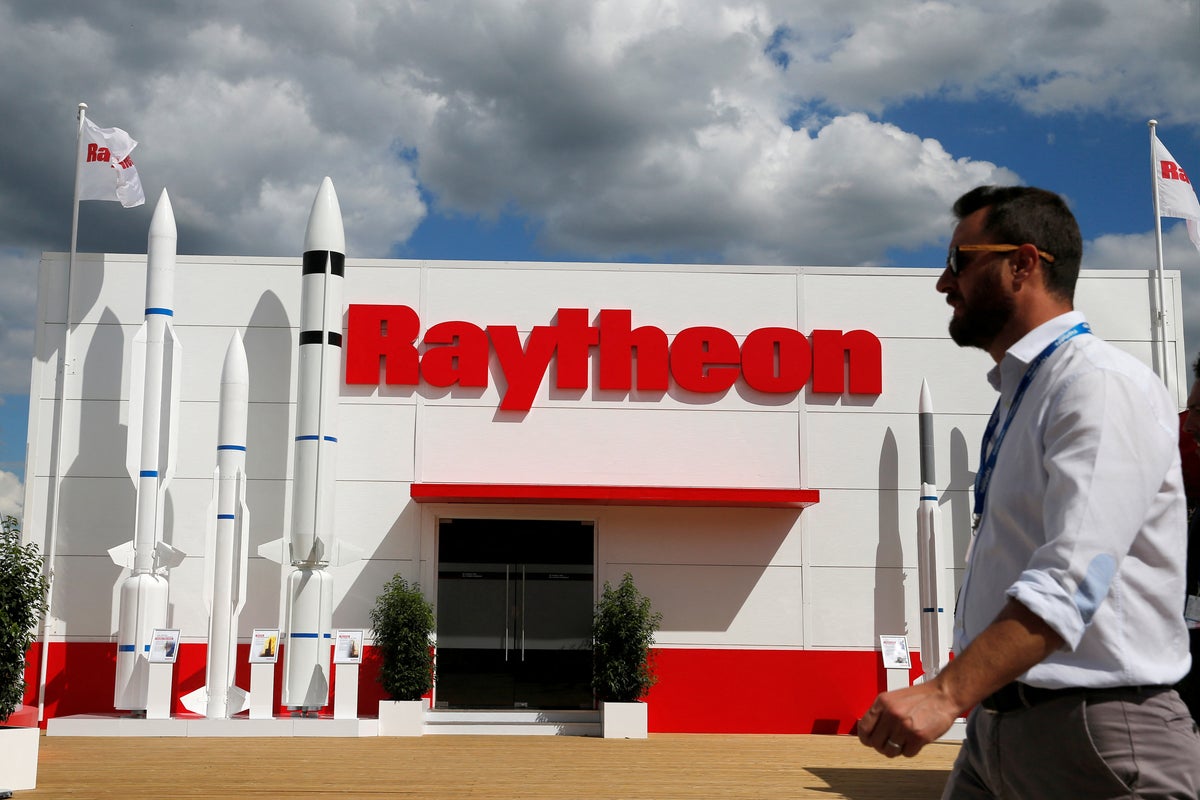
We talk about defense acquisition in cold, antiseptic numbers. We throw around acronyms like DOD and FMS, and we print headlines that look like balance sheets from an interstellar bank. Recently, the wire services blinked and spat out a dry little bulletin: Raytheon secured a twenty-two-point-nine billion dollar contract to boost Tomahawk cruise missile output for the United States Navy.
Twenty-two billion. Nine hundred million.
It sounds like Monopoly money. It sounds like a row of zeros engineered to glaze the eyes of any reader scrolling past on a glowing phone screen at two in the morning.
Look closer. Strip away the corporate press releases. Behind those monstrous figures lies a very human story of old steel, tired hands, supply chains that stretch across half the globe, and a fundamental recalculation of what it means to keep a superpower armed in a fracturing world.
Consider what happens next: a metal tube, twenty feet long, packed with a thousand pounds of high explosives and guided by inertial navigation systems that can read the grain of a dirt road from five hundred miles away, rolls down a newly minted assembly line.
Who built it?
Let us introduce a hypothetical machinist named Dave. Dave is fifty-eight years old. He has grease under his fingernails that has outlived two cars and a marriage. When Dave started at the plant in the late nineteen-eighties, the Cold War was drawing its long, wheezing breath, and the Tomahawk was a shiny new miracle of microchip guidance and turbofan propulsion. Back then, they built them slowly, deliberately, as if crafting expensive violins for a war that everyone hoped would never break out.
Dave remembers the Gulf War. He remembers sitting in front of a flickering cathode-ray tube in a suburban living room in 1991, watching grainy, green-tinted footage of a missile turning a concrete bunker in Baghdad into a cloud of pulverized dust.
He didn't cheer. He just looked at the serial number flashing in the corner of the screen and wondered if it was one of the ones he had spent forty hours sweating over, torquing bolts until his wrists ached.
Now, Dave is training kids who were born after the turn of the century. They grew up scrolling TikTok, yet here they are, squinting through magnifying visors, soldering circuit boards that will eventually guide a multi-million-dollar kinetic argument across an ocean.
They are rushing. That is the invisible stakes of this massive new contract. It is not just about writing a check; it is about velocity.
For years, the defense industrial base operated on what economists call "just-in-time" manufacturing. It was efficient. It was lean. It saved shareholders money. It was also dangerously brittle. When geopolitical tensions simmered and boiled over in Eastern Europe and the Middle East, the stockpiles began to shrink. Every time a destroyer in the Red Sea launched a salvo of Tomahawks to clear the skies or silence a radar site, an invisible clock started ticking.
You cannot simply walk into a hardware store and buy a turbofan engine capable of pushing a missile at subsonic speeds just above the wave-tops for a thousand miles. You cannot order inertial measurement units off Amazon Prime.
That is what twenty-two billion dollars is actually buying. It is buying time, space, and sweat. It is buying the raw physical reality of industrial resurrection.
To understand why the Navy needs so many of these weapons right now, you have to look at a map of the Pacific Ocean and swallow hard.
Imagine standing on the bridge of a guided-missile destroyer riding the swells of the Philippine Sea. The water is a bruised, ink-dark blue. The horizon stretches out in every direction, terrifyingly empty and terrifyingly vast. To the west lies a coastline where adversary nations have spent the last twenty years building anti-access and area-denial bubbles—vast overlapping networks of radar, surface-to-air missiles, and fast attack craft designed to keep American aircraft carriers far, far away.
How do you punch a hole in a bubble like that?
You reach deep into the vertical launch system cells buried in the deck of the ship. You pull out a Tomahawk.
For decades, the Tomahawk was pigeonholed as a land-attack weapon. It was the thing you fired at terrorist training camps or strategic command centers inland. But naval warfare has evolved, or perhaps devolved, back into a brutal game of maritime chess. Recent variants of the missile can track moving targets at sea. A ship steaming a hundred miles away can suddenly find itself hunted by a low-flying, carbon-composite shadow that does not care about electronic countermeasures or decoy flares.
This is why the Pentagon's accountants are emptying the vault. They are looking at the vast, watery chessboard of the Indo-Pacific, calculating the sheer scale of the distances involved, and realizing a terrifying truth: we do not have enough arrows in the quiver.
Building more arrows sounds simple. It is anything but.
Walk through the supply chain with me. It starts not in a high-tech cleanroom in Massachusetts or Arizona, but in a foundry in Ohio where workers shovel scrap metal into furnaces that burn bright enough to blind you. It moves to a chemical plant that synthesizes the solid rocket boosters and specialized fuels required to kick-start the missile out of its launch canister. It winds its way through subcontractor workshops where independent machinists forge tiny, specialized valves that must not fail, not once, under extreme gravitational G-forces.
If a single mom-and-pop machine shop in Indiana that makes one tiny titanium bracket goes out of business because of labor shortages or soaring inflation, the entire multi-billion-dollar missile line stalls.
That is the fragility of modern power. We are a digital society clinging to an analog industrial spine.
When people read about defense budgets, they often react with moral outrage or political fatigue. It is easy to look at a twenty-three-billion-dollar price tag and think of schools unbuilt, roads crumbling, healthcare systems strained. That moral tension is real. It is a heavy, bitter pill to swallow. Every dollar poured into a missile is a dollar not spent patching the roof of a community hospital or funding public education.
Yet, the leaders who sign these contracts live in a universe governed by a different kind of arithmetic. They look at the alternative—at the smoking ruins of cities in Ukraine, at the tense patrols in the Taiwan Strait—and they calculate that the ultimate cost of being caught unprepared is infinitely higher than the price of steel and silicon.
We are living through an awkward, dangerous hinge of history. The era of globalization, where everyone assumed trade would permanently outpace conflict, is over. In its place has risen an era of armed paranoia, where nations are frantically re-armor plating themselves.
Back on the factory floor in Tucson, the shift change siren wails.
Dave wipes his hands on a greasy rag, pulls off his safety glasses, and rubs his eyes. He is tired. His knees ache from standing on concrete for eight hours. He looks down the long, brightly lit aisle where technicians are delicately wiring the nose cone of a guidance system.
He knows what that machine is designed to do. He doesn't need a briefing from a four-star general or a congressional hearing to understand the stakes. He knows that somewhere out there on the dark water, young sailors are betting their lives on the fact that when they push a button, that metal tube will leave its canister, find its way across oceans and mountains, and do its grim work without hesitation.
The shift ends. The machines power down, their vibrations slowly fading into the ambient hum of the desert night. But outside, the loading docks are already lit by floodlights. The trucks are idling, waiting for the morning run.
The work continues.