The air in Biarritz during late August carries a specific, heavy humidity. It smells of salt from the Bay of Biscay and the faint, expensive scent of old-world European hospitality. For decades, this French seaside resort has been a playground for the wealthy, a place where the Atlantic crashes violently against rugged stone cliffs while people sip wine in quiet defiance of the elements.
But when the Group of Seven arrives, the seaside romance evaporates.
The security perimeter hardens. Concrete barriers slice through historic avenues. The silence of the coast is replaced by the relentless, rhythmic thud of helicopter blades overhead. It is a transformation from luxury to fortress, all to host a gathering of seven individuals who collectively hold the strings to the global economy.
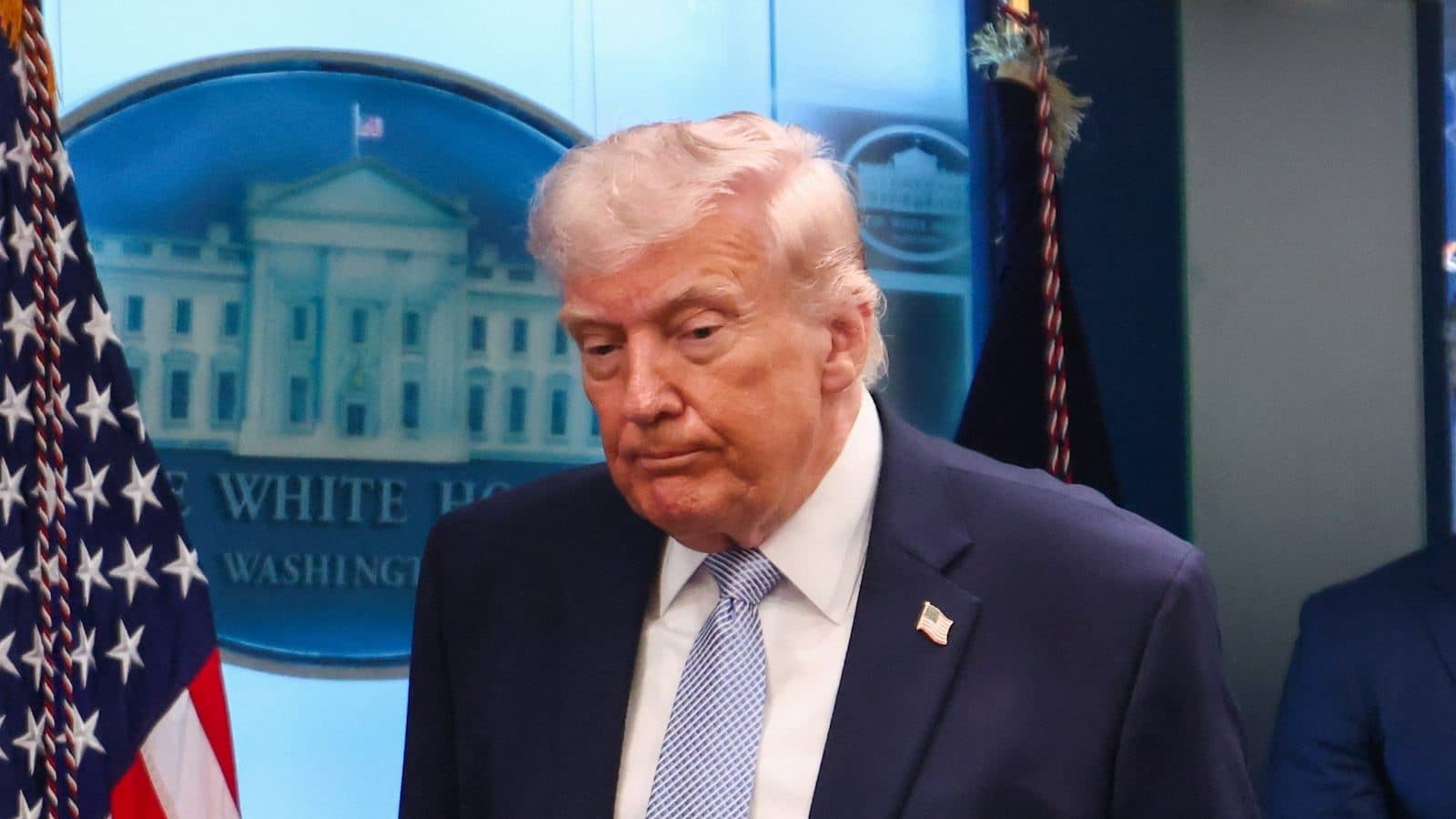
A senior White House official recently confirmed what many had anticipated: Donald Trump will attend this year’s G7 summit in France. To the casual observer tracking headlines on a smartphone during a morning commute, it reads like standard bureaucratic scheduling. A president goes to a meeting. Pictures will be taken. Communiqués will be drafted.
That interpretation misses the entire point.
Behind the dry press releases lies a brewing psychological drama, a clash of fundamentally opposing worldviews played out not in abstract policy papers, but over dinner tables and in tense, closed-door bilateral sessions. To understand the true stakes of Biarritz, one must look past the podiums and into the quiet friction of human ego, national pride, and the fragile architecture of the modern West.
The Ghost at the Table
Consider the perspective of a career diplomat. Let us call him Jean-Pierre—a hypothetical composite of the dozens of exhausted sherpas and attachés currently sleepless in Paris. For six months, Jean-Pierre has lived on espresso and cold catering. He has negotiated every semicolon of the preliminary agreements. He has argued over the phrasing of climate commitments and trade definitions until his eyes blurred.
In the traditional theater of international relations, this preparation matters. The summit is supposed to be the final act of a carefully scripted play.
But Jean-Pierre knows, with a knot in his stomach, that the script is largely irrelevant now.
When the American president walks into the room, the calculus changes instantly. Trump does not view the G7 as a sacred fraternity of shared democratic values. He views it through the lens of a balance sheet. To him, the multilateral system is not a shield that protects Western dominance; it is a web of bad deals where traditional allies have spent decades freeloading on American military might and economic generosity.
This is the central tension of the modern summit. You have one side operating on the legacy of the post-WWII consensus, believing that institutions like the G7 are essential for global stability. On the other side, you have a leader who believes in radical bilateralism—one-on-one negotiations where the stronger power can squeeze the weaker one without the interference of global committees.
The friction is palpable. It affects the way leaders hold themselves in the photographs. It changes the cadence of the conversations in the hallways.
The Anatomy of an Alliance in Crisis
We have grown accustomed to thinking of international relations as a game of chess, cold and calculated. It isn't. It is much closer to a family dinner where everyone is pretending the divorce isn't happening.
The G7—comprising the United States, Canada, France, Germany, Italy, Japan, and the United Kingdom—was born out of the economic shocks of the 1970s. It was designed as an informal club where leaders could sit by a fireplace, without staff, and speak candidly about the world's problems. It relied on a shared language of liberal democracy and free markets.
That shared language is gone.
Now, the fractures are deep and visible. French President Emmanuel Macron, the host of this year’s gathering, faces a daunting task. Macron is the ultimate product of the European institutional elite—eloquent, philosophical, and deeply committed to multilateralism. He wants the Biarritz summit to tackle global inequality, digital taxation, and the climate crisis.
But those priorities run headfirst into a wall of American skepticism.
Take the issue of the digital tax. France recently passed a law taxing tech giants like Google and Amazon on their local revenues. The U.S. views this as a direct attack on American corporate dominance and has threatened retaliatory tariffs on French wine. Imagine the dinner in Biarritz: Macron pouring a glass of Bordeaux for Trump, while both men know that very wine might soon face a hundred percent tariff at American ports.
It is a delicate dance of public politeness and private threats.
Then there is the shadow of Iran. European powers are desperately trying to keep the 2015 nuclear deal alive, viewing it as the only barrier to a disastrous conflict in the Middle East. The Trump administration walked away from that deal, choosing instead a campaign of maximum economic pressure. In Biarritz, these two irreconcilable strategies will sit in the same room, separated by only a few feet of polished mahogany.
The Human Element Behind the Headings
It is easy to get lost in the jargon of tariffs, intellectual property rights, and carbon offsets. The human brain naturally tunes out when the language becomes too dense. But beneath the policy jargon is a raw human reality.
Decisions made in these rooms cascade down to people who will never see France.
A soy farmer in Iowa looks at the news of the summit and wonders if a breakthrough with Europe might alleviate the pain of the ongoing trade war with China. A steelworker in Germany fears that American tariffs on European automobiles could cost him his job by Christmas. A fisherman in Brittany worries that shifting global alliances will alter the fishing quotas that have sustained his family for generations.
The leaders themselves are hyper-aware of these audiences back home.
Trump’s political strength is built on the promise that he will always put America first, even if it means alienating historic allies. Every time he takes a hard line against European leaders, his base cheers. Conversely, Macron needs to show his domestic audience that France can stand up to Washington and lead Europe on the global stage, especially after months of bruising domestic protests from the Yellow Vest movement.
The summit is not just a diplomatic event; it is a piece of political theater where every participant is performing for a different crowd back home.
The Unwritten Rules of the Game
In past summits, the ultimate goal was the "communiqué"—a lengthy, consensus-driven document released at the end of the weekend, detailing everything the leaders agreed upon. It was a symbol of unity.
But the very concept of the communiqué has become dangerous terrain.
Everyone remembers the image from the G11 summit in Canada the previous year: Angela Merkel leaning over a table, surrounded by other world leaders, while Donald Trump sits with his arms crossed, looking entirely unmoved. It was a photograph that captured the geopolitical reality of our era better than a thousand essays ever could. That summit ended in chaos when Trump withdrew his signature from the joint statement via a tweet from Air Force One, citing comments made by Canadian Prime Minister Justin Trudeau.
To avoid a repeat of that public humiliation, Macron has made a radical decision for Biarritz: there will be no final joint communiqué.
It is a stunning concession to the new reality. The host country has judged that the disagreement among the world's most powerful democracies is so profound that attempting to force them to sign a single piece of paper could cause the entire structure to collapse.
Instead, France will focus on creating smaller coalitions of willing countries to tackle specific issues. It is a pragmatism born of survival. It is an admission that the old ways of doing business are dead, and we are now living in a fragmented, pick-your-own-ally world.
The Real Stakes
The true significance of Trump’s attendance in France cannot be found in the official schedule of events. It is found in the fundamental question that will hang over every meal, every walk along the beach, and every bilateral meeting.
Does the West still exist?
For three generations, the concept of "the West" was the bedrock of global geopolitical stability. It wasn't just a geographic designation; it was an alliance of values, a shared belief that open societies, free trade, and international institutions were the best way to prevent the world from sliding back into the horrors of the early twentieth century.
Now, that bedrock is shifting.
The differences between Washington and its European allies are no longer just disagreements over policy details; they are disagreements over the very nature of global order. The Europeans look at the United States and see an unpredictable partner that is walking away from its historic responsibilities. The United States looks at Europe and sees a continent unwilling to defend itself or pay its fair share, hiding behind high-minded rhetoric while exploiting American market access.
When the limousines pull up to the Hôtel du Palais in Biarritz, and the leaders step out into the brisk Atlantic air, they will smile for the cameras. They will shake hands. They will comment on the beauty of the French coast.
But as the heavy doors close behind them, cutting off the press and the public, the illusion of unity will drop. Seven people will sit down in a room, surrounded by history, tasked with navigating an era where the old rules no longer apply and the new ones have yet to be written.
The ocean outside will continue its relentless, indifferent assault on the cliffs of Biarritz, a stark reminder that even the most solid structures can be eroded away by a steady, unyielding tide.