The air in northern Israel carries a specific, metallic tension. It is the scent of ozone and dry earth, mixed with the low-frequency hum of a region that has forgotten how to sleep. For the families huddled in shelters in Kiryat Shmona or the farmers in southern Lebanon watching their olive groves from a distance, the geopolitical chess moves of leaders in Tel Aviv and Beirut aren't just headlines. They are the heartbeat of survival.
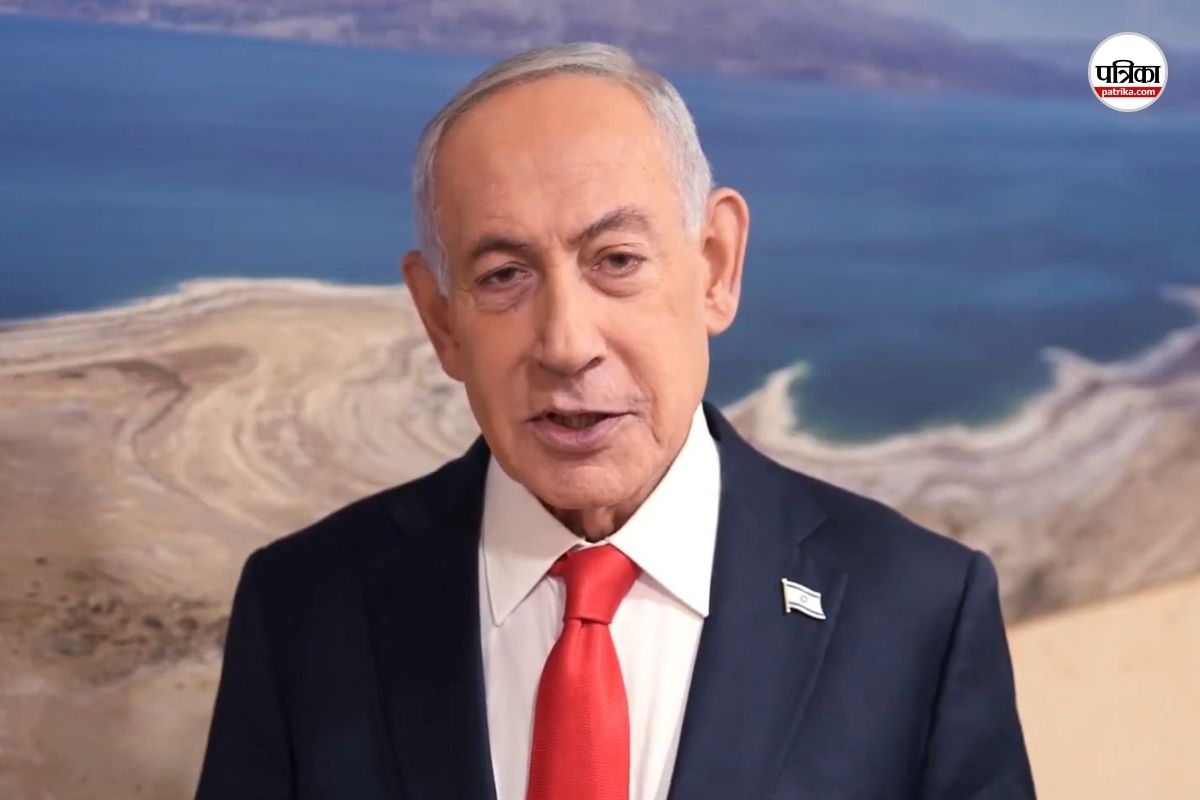
Benjamin Netanyahu’s recent "peace card" wasn't delivered with a handshake. It was delivered with the weight of a final warning. By inviting Lebanon to direct negotiations, the Israeli Prime Minister didn't just open a door; he built a narrow corridor with a single, massive obstacle at the end. The demand is simple on paper, yet monumental in its implications: the total withdrawal of Hezbollah forces beyond the Litani River.
The River That Divides Two Worlds
To understand why a river matters, you have to look at the geography of fear. The Litani River snakes through southern Lebanon, roughly 18 to 20 miles north of the Israeli border. For Israel, this isn't just a body of water. It is a psychological and tactical boundary. If Hezbollah remains south of this line, their anti-tank missiles can reach the bedrooms of Israeli civilians. If they move north, that immediate, visceral threat retreats into the distance.
Imagine a father in a border kibbutz. He doesn't care about Resolution 1701 or the intricacies of Lebanese cabinet politics. He cares that his daughter can play in the yard without a three-second warning for an incoming Kornet missile. This is the "human geography" that Netanyahu is leveraging. By framing the demand as a choice for the Lebanese people—peace and prosperity or the "path of destruction" seen in Gaza—he is attempting to bypass the militants and speak directly to a nation exhausted by economic collapse and shadow wars.
A Nation Held Hostage by a Proxy
Lebanon is a country of breathtaking beauty and heartbreaking fragility. For the average citizen in Beirut, the choice Netanyahu offers feels like being asked to choose between two different ways of drowning. On one hand, the status quo maintains a state within a state, where Hezbollah holds the keys to war and peace. On the other, demanding Hezbollah’s withdrawal could spark a civil internal conflict that Lebanon’s scarred society might not survive.
The "peace card" is, in reality, a high-stakes psychological operation. Netanyahu is essentially saying, "We will treat you as a sovereign nation if you act like one." But acting like a sovereign nation requires Lebanon to disarm or displace the most powerful non-state military actor in the world. It is an invitation to a conversation that one side might not be allowed to attend.
The stakes are invisible until they aren't. They are the silence in a classroom that should be full of children. They are the empty chairs at dinner tables on both sides of a line drawn on a map in 1923. When Netanyahu speaks of "direct negotiations," he is testing the structural integrity of the Lebanese state. He is betting that the fear of becoming "another Gaza" is more potent than the loyalty to the "Resistance."
The Calculus of the Ultimatum
Diplomacy often wears the mask of a gift. By offering a "direct invitation," Israel is positioning itself as the rational actor seeking a way out of the cycle of escalation. If Lebanon refuses—or more likely, if the Lebanese government admits it lacks the power to enforce such a condition—Israel gains the international "moral high ground" to expand its military operations.
It is a maneuver designed for the theater of global opinion as much as for the bunkers in the north. If the world sees an olive branch offered and rejected, the subsequent firestorm is easier to justify. But for the people living in the crosshairs, there is no such thing as a "justified" firestorm. There is only the sound of the wind before the sirens start.
Consider the hypothetical case of Elias, a shopkeeper in Tyre. He knows the Litani River. He knows its currents. To him, the river is for irrigation, for beauty, for history. Now, it has become a geopolitical wall. He watches the news and sees his home being transformed into a bargaining chip. If Hezbollah stays, his town remains a target. If they are forced out, who fills the vacuum? The Lebanese Army, perpetually underfunded and politically hamstrung? Or a multinational force that has historically struggled to keep the peace?
The Heavy Price of "Almost"
We have been here before. History in the Middle East doesn't repeat so much as it echoes, a haunting refrain that keeps coming back to the same chords of territorial disputes and buffer zones. The 2006 war ended with the promise of a Hezbollah-free zone south of the Litani. That promise became a ghost. It lived in reports and UN briefings but died on the ground, where tunnels were dug and caches were built under the very noses of peacekeepers.
Netanyahu’s "biggest condition" is an attempt to exhume that ghost and give it teeth. He is demanding a reality where the Litani is not just a line on a map, but a hard border of security.
But the real problem lies elsewhere. It lies in the fact that peace negotiated through ultimatums rarely takes root in the hearts of those it is meant to protect. It feels like a surrender rather than a solution. For Lebanon, accepting the condition under the threat of Gaza-style destruction feels like a humiliation. For Israel, anything less than that condition feels like a death sentence for its northern communities.
The Silence Between the Words
What remains unsaid in these high-level invitations is the fate of the "third party"—the civilians who have no seat at the table but pay for every meal. The "peace" being offered is a cold peace. It is the peace of a standoff.
Direct talks would be a seismic shift. For decades, communication has happened through intermediaries, whispers in Cairo or Paris, and the grim language of rocket fire. Sitting across a table would mean acknowledging the legitimacy of the other side in a way that neither currently feels prepared to do.
Yet, the invitation stands. It hangs in the air like a flare over the Mediterranean. It is bright, it is visible, and it is burning out.
The Litani continues to flow, indifferent to the soldiers on its banks or the politicians in their offices. It moves toward the sea, carrying the silt of a thousand years. Nearby, a farmer watches the water and wonders if this is the year he finally stops planting. Not because the soil has failed, but because the world has decided that his land is no longer a farm, but a theater. He doesn't need a "peace card." He needs a world where a river is just a river.
The shadow over the Litani isn't cast by the mountains. It is cast by the heavy, lingering doubt that any words spoken in a negotiation room can ever be louder than the missiles waiting in the hills.


