The wind inside the wind tunnel at San Cesario sul Panaro does not roar. It hisses. It sounds like a giant intake of breath, a collective gasp from a room filled with people who are terrified to blink.
In the center of the room stands a shape. It looks less like a machine and more like a silver drop of water frozen mid-shatter, stretched out by the hand of someone who remembers what Le Mans felt like in 1966.
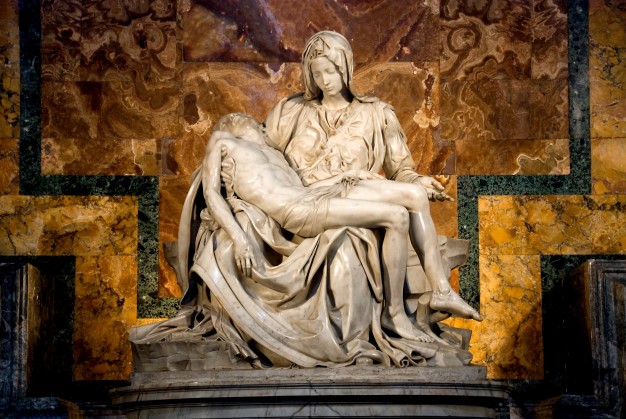
Horacio Pagani stands near the glass. He is a man who treats carbon fiber the way Michelangelo treated Carrara marble, looking for the soul trapped inside the material. For years, the automotive world has chased a specific kind of violence. Sharp angles. Aggressive wings that chop the air like meat cleavers. Visual noise meant to scream status from a smartphone screen.
But a few years ago, two collectors walked into Horacio’s workshop with a problem that money usually cannot solve. They were bored. They had the hypercars with the wings and the vents. They had the track times. What they lacked was poetry. They wanted something that felt like a breeze sliding off the hood of a Porsche 917 or a restomodded Alfa Romeo, stretched long to cheat the air at three hundred kilometers per hour.
They wanted a longtail. A Codalunga.
This is not a story about a car. It is a story about the absurd, beautiful, and slightly terrifying lengths humans will go to when survival is guaranteed and only beauty is left to fight for.
The Weight of Clean Air
To understand why five people spent over seven million dollars each on a machine that cannot carry a suitcase, you have to understand the cost of simplicity.
In modern automotive engineering, making a car look clean is the hardest thing you can do. It is easy to hide a lack of aerodynamic balance by bolting a massive carbon-fiber wing to the rear decklid. If the back end lifts at high speeds, you just push it down with brute force. It is the engineering equivalent of shouting to get your point across.
Now imagine trying to make that same car stable at two hundred miles per hour using nothing but the curve of its hips.
That was the challenge handed to the Grandi Complicazioni division—the special projects wing of Pagani where reality is suspended. The engineers spent more than two years refining the shape. They built a quarter-scale model, then a full-scale model, torturing the clay in the wind tunnel until the air stopped tripping over the rear wheels.
Consider what happens when you extend the tail of a car by 360 millimeters. You change the center of pressure. You change how the air detaches from the vehicle. If you get it wrong, the car becomes a wing in reverse, lifting off the tarmac and transforming the driver into a passenger in a very expensive airplane.
To prevent this, the rear engine cover hides four active aero flaps. They work independently. When the car enters a hard left-hand corner at high speed, the inner flaps rise by fractions of an inch, acting like the ailerons on a fighter jet to balance the load. The driver never feels them move. You only feel the sudden, uncanny sensation that gravity has taken a personal interest in your survival.
The Secret in the Matte Finish
Step inside the workshop where these five vehicles were assembled. The air smells of curing epoxy, fine Italian leather, and the bitter tang of machined titanium.
There is a specific technician whose entire job for three weeks was to ensure that the weave of the carbon fiber on the rear deck aligned perfectly with the weave on the central chassis. If a single thread was crooked by two millimeters, the entire piece was discarded. It is a level of scrutiny that borders on a clinical diagnosis.
And then there is the paint.
Modern supercar paint is thick. It has layers of clear coat designed to catch the sun and blinding metallic flake. The Codalunga uses neutral colors. Matte finishes. Sage greens and soft silvers that look like they belonged to a racing prototype resting in the pits at Monza sixty years ago. The paint is applied so thinly that under certain lights, you can see the ghost of the carbon weave beneath the surface.
It is an admission of what the car is made of. It is vulnerable.
Hypercars are usually exercises in isolation. They use dual-clutch gearboxes that shift in milliseconds, computers that mask your mistakes, and exhaust systems muffled by turbochargers and emissions equipment.
The Codalunga uses a six-liter Mercedes-AMG V12. It produces 840 horsepower. But more importantly, it does not use a hybrid system. There are no electric motors to fill the torque gaps. There is no heavy battery pack lining the floor. It is just twelve cylinders, two turbochargers, and a ceramic-coated titanium exhaust system that weighs exactly 4.4 kilograms.
When you start it, the sound does not rumble. It wails. The exhaust pipes are completely exposed at the back, stretching out of the long tail like the barrels of an anti-aircraft gun.
The Collector’s Paradox
We live in an era where performance has become cheap. You can buy a family sedan that accelerates to sixty miles per hour faster than a Ferrari from the turn of the millennium. Figures have lost their meaning. If everything is fast, nothing is fast.
That is why the five people who bought these cars did not care about the lap times at the Nürburgring. They were buying something far scarcer: time.
Every component inside the cabin is machined from a single block of aluminum. The toggle switches click with the heavy, mechanical finality of a camera shutter from the 1970s. The leather is aged, woven into inserts that mimic the seats of old fighter planes. There are no massive touchscreens to go obsolete in five years. There are no menus to scroll through to adjust the suspension.
It is an analog sanctuary built with digital precision.
One of the mechanics working on the third chassis pointed to a small bracket deep inside the engine bay, completely invisible unless the entire rear clamshell is removed for servicing. The bracket was polished to a mirror shine.
"Nobody will ever see this," I said to him.
He looked up, his fingers stained with grease and carbon dust, and smiled. "We see it."
That is the distinction. The standard article on this car will tell you the top speed. It will quote the torque figures. It will detail the carbon-titanium weave used in the monocoque. But those statistics miss the point entirely.
The Codalunga exists because five wealthy individuals realized that the ultimate luxury isn't adding more things. It is stripping away the noise until only the shape remains. It is the realization that a piece of metal and carbon can be shaped so precisely that it ceases to be an appliance and becomes a monument to human focus.
As the sun sets over the hills of Modena, the silver car sits on the tarmac outside the factory. The long tail casts a shadow that stretches twice the length of the vehicle itself. It looks impatient, even while standing still. It is waiting for someone to turn the key, to wake the twelve cylinders, and to disappear down a road that has no end, chasing a feeling that cannot be measured on a stopwatch.