The map of the world is drawn with ink that never dries, but sometimes, the hand holding the pen begins to shake.
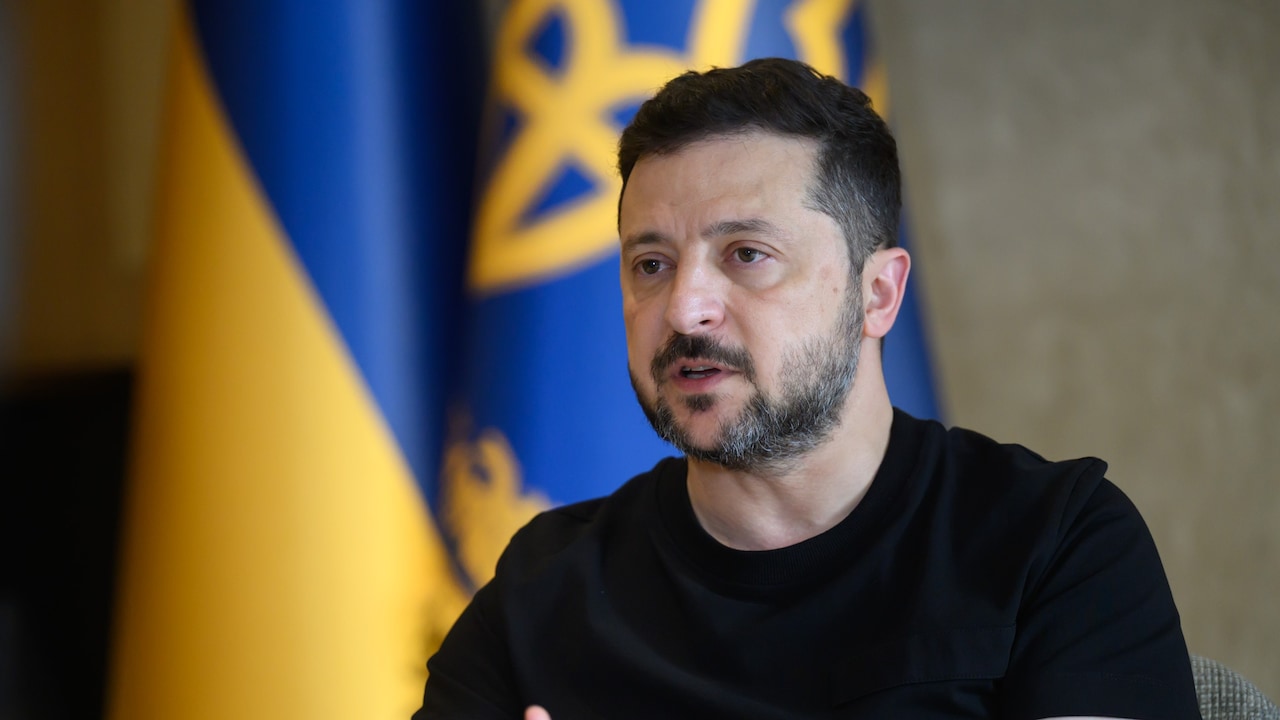
In a quiet dispatch room thousands of miles from the frontline, intelligence analysts lean over satellite feeds that show cargo carriages rolling across a frozen eastern expanse. These are not grain shipments. They are not heavy machinery bound for a distant factory floor. They are steel wagons packed tight with young men whose faces are obscured by distance and shadow, moving steadily westward. According to Ukrainian President Volodymyr Zelenskyy, another ten thousand soldiers are packing their rucksacks, checking their rifles, and preparing to deploy from North Korea to the blood-soaked soil of Russia.
Ten thousand.
Say the number out loud. It sounds like an abstraction. A statistic tossed across a conference table in Brussels or Washington, wrapped in diplomatic caution and parsed for strategic meaning. But statistics do not bleed. Statistics do not leave empty chairs at kitchen tables in Pyongyang or rural outposts where winter arrives early and stays too long.
To understand what this deployment means, we have to strip away the dry language of geopolitics. We have to look at the machinery of modern conflict not as a board game played by distant potentates, but as a grinding weight that crushes everything beneath it.
Imagine a nineteen-year-old conscript standing on a damp concrete platform somewhere in the Russian Far East. His duffel bag is heavy, stuffed with standard-issue winter gear that smells of mothballs and cheap oil. He has been told he is participating in training exercises. He has been told about brotherhood, about mutual defense, about a distant brotherly nation that requires assistance against an aggressive coalition. He does not speak Russian. He has never seen a drone drop a grenade from a cloudless sky. When he looks up at the gray morning sky, he does not see history unfolding; he sees only gray clouds and hears the heavy, rhythmic thrum of an Ilyushin transport plane warming its turbines on the tarmac.
He is currency.
That is the raw, unvarnished truth of this arrangement. For decades, Pyongyang has maintained a massive, heavily armed standing army, sustained by an ideology of absolute isolation and permanent wartime footing. But an army of that scale is an enormous economic drain. It consumes fuel, food, and industrial output without generating capital. Moscow, meanwhile, faces a severe attrition crisis. The grinding artillery duels and trench warfare of the eastern European plains have devoured hundreds of thousands of Russian soldiers. Vladimir Putin needs bodies to hold the line, to plug gaps, and to absorb the kinetic energy of Ukrainian defenses without triggering another deeply unpopular domestic mobilization.
So, a grim ledger is balanced. Men in uniform are traded for hard currency, missile technology, satellite guidance, and diplomatic protection on the world stage. Human lives converted into barrels of oil, advanced aerospace designs, and diplomatic vetoes at the United Nations.
History is filled with strange bedfellows forged in the crucible of desperation, but this partnership represents something darker: the transactional globalization of war.
Consider how we got here. In the early months of the 2022 invasion, the conflict was largely viewed through a regional lens—a brutal, tragic collision between two former Soviet republics fighting over sovereignty and European alignment. But wars have a gravitational pull. They demand resources, and when local resources run dry, the conflict reaches outward, pulling distant actors into its vortex like debris spiraling into a drain.
When Iran began supplying loitering munitions, it was treated as an escalation. When North Korea transitioned from sending artillery shells to sending ballistic missiles, it crossed another threshold. Now, with boots on the ground—first hundreds, then thousands, and now reports of another ten thousand preparing their departure—we are watching the scaffolding of a wider, fractured global order lock into place.
What happens when soldiers from the Korean Peninsula fire rifles in the trenches of Donetsk?
The immediate tactical impact is grimly straightforward. Ten thousand fresh troops, even if they require logistical integration and face massive communication barriers, represent a formidable reserve. They allow Russian commanders to rotate exhausted units out of the line, to launch localized assaults, and to maintain relentless pressure on Ukrainian positions that are already strained by manpower shortages and delayed aid shipments.
But the strategic implications dwarf the immediate tactical shifts.
By internationalizing the conflict, Moscow and Pyongyang are rewriting the rules of engagement for the twenty-first century. They are demonstrating that a heavily sanctioned state isolated from Western financial systems can still find immense value by monetizing its military labor. For North Korea, this is not just about financial remuneration or military hardware; it is an invaluable live-fire laboratory. For decades, the Korean People's Army has practiced for a war that never came. Now, their officers are observing modern electronic warfare, drone swarm tactics, counter-battery radar operations, and trench fortification under actual combat conditions. They are learning how Western-supplied weapons perform against modern defenses. They are taking notes. And those notes will be carried back across the border, hardening an already dangerous regime into a more technologically savvy adversary.
We must be honest about our own discomfort with this reality. In Western capitals, there is a tendency to view these developments through a lens of moral superiority mixed with profound complacency. We issue statements of condemnation. We summon ambassadors. We draft new packages of economic sanctions that target shipping lanes and financial intermediaries.
Yet sanctions are blunt instruments. They operate on the assumption that a government cares about the economic well-being of its population. When dealing with a regime that has historically prioritized military survival above all else—famously letting its citizens starve in the 1990s while maintaining its nuclear program—economic pressure has diminishing returns.
The young men boarding those trains do not care about sanctions. They care about survival. They care about whether their rations will arrive, whether their commanders are competent, and whether they will ever see their families again.
And that brings us back to the human core of this tragedy.
Every war is ultimately fought by individuals who would rather be somewhere else. In a quiet village in Ukraine, a civilian wakes up to the sound of air raid sirens, wondering if today is the day an Iranian-designed drone or a North Korean-supplied missile finds its way through the air defense grid and lands on a roof. Thousands of miles away, a mother in a remote Asian province watches her son pack his uniform into a canvas bag, her heart heavy with a silence born of an authoritarian state that does not permit grief, let alone protest.
They are bound together by lines of fire that stretch across continents.
We are living through a fracture point in the modern era. The post-Cold War architecture—imperfect, fragile, but broadly understood—is coming apart at the seams. When regional conflicts become clearinghouses for global alignments, the fire spreads faster than the firefighters can run.
President Zelenskyy’s warning is not merely a diplomatic plea for more artillery shells or air defense batteries. It is an alarm bell ringing in the night, signaling that the perimeter of the war is expanding whether we wish to acknowledge it or not.
The trains keep rolling westward. The steel wheels strike the rails with a rhythmic, indifferent beat, carrying thousands of souls toward a destination they cannot fully comprehend, guided by leaders who see them only as disposable units on a grand ledger of power.
The horizon in the east is dark. And the silence that follows the departure of the transport trains is not peace; it is simply the holding of breath before the storm breaks.