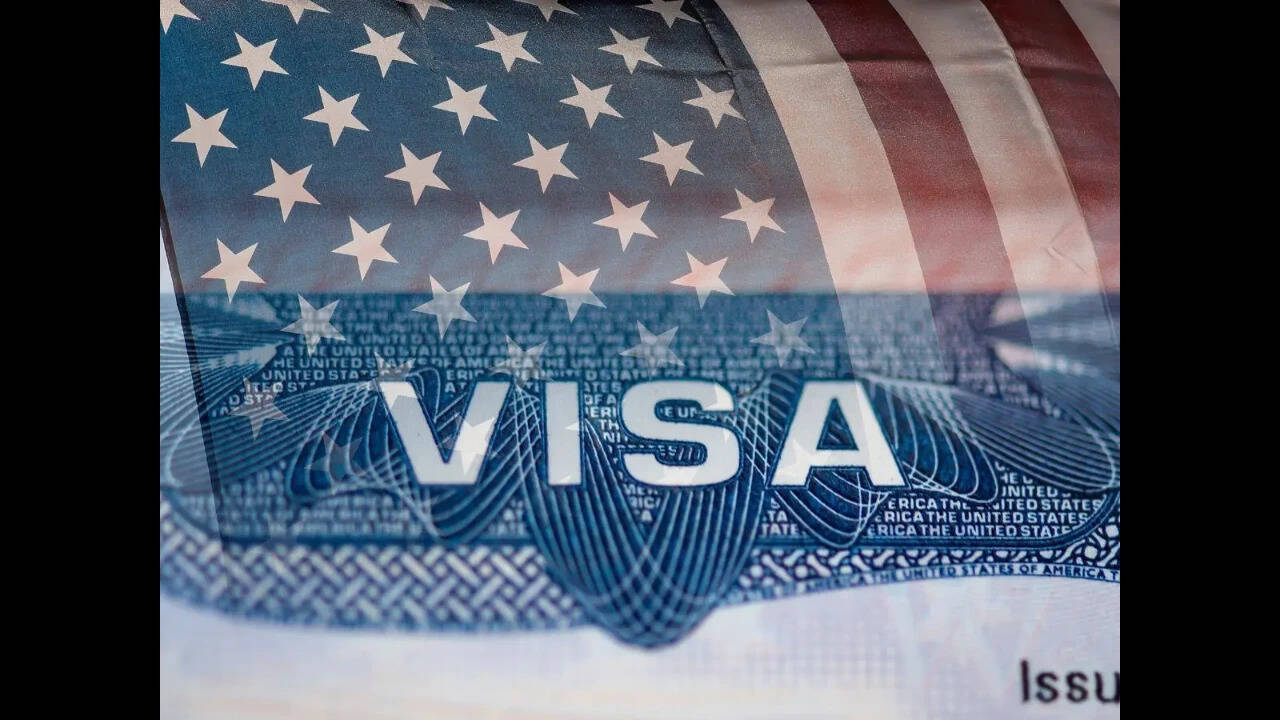
The air in the living room smells of cardamom tea and the faint, metallic scent of a laptop cooling fan. For my father, a retired civil servant who spent thirty years filing paperwork in triplicate, that laptop is a portal. He sits there for hours, his glasses sliding down the bridge of his nose, refreshing a webpage that refuses to change. He isn't looking for news or entertainment. He is looking for a date. Specifically, a green checkmark next to a calendar slot at the U.S. Embassy.
For thousands of Indian families, the B1/B2 visitor visa process hasn’t been a legal formality; it has been a test of endurance. We talk about "the backlog" as if it’s a weather pattern, something impersonal and vast. But when you are sitting in a suburb of New Jersey or a flat in Bangalore, the backlog is a missing face at a wedding. It is a grandmother who has never held her grandson. It is the silence on the other end of a WhatsApp call when a daughter asks, "When are you coming?" and the father has no answer. If you found value in this piece, you should look at: this related article.
The wait times for visa appointments in India recently stretched into the absurd—sometimes hovering around 500 to 800 days. That is two years of life suspended in a digital queue. But the gears of bureaucracy have finally groaned and shifted. In a move that prioritizes the fragile timeline of aging, the U.S. Consulate has opened priority interview slots specifically for parents aged 50 and above.
It is a policy change, yes. But for people like my father, it is a restoration of hope. For another angle on this development, check out the latest coverage from AFAR.
The Geography of Longing
Consider a hypothetical woman named Anjali. She moved to Chicago a decade ago. She has a career, a mortgage, and a toddler who only knows his Nana and Nani as flickering pixels on an iPad screen. Anjali represents a generation of the global Indian diaspora that has built lives across an ocean, anchored by the promise that home is only a flight away.
The barrier wasn't the flight. It was the gatekeeper.
Before this update, the scramble for visa slots felt like a lottery where the odds were rigged against the elderly. Navigating the portal required the reflexes of a day-trader. You had to be online at 3:00 AM, refreshing until your fingers cramped, hoping to catch a stray cancellation. For a 65-year-old in Chennai who isn't "tech-native," this was a wall of glass—transparent but impenetrable.
The new priority slots for the 50-plus demographic recognize a simple, human truth: time moves differently when you are older. A two-year wait for a thirty-year-old is a nuisance. A two-year wait for a seventy-year-old is a significant percentage of their remaining healthy travel years. By carving out this specific lane, the U.S. State Department isn't just "improving efficiency." They are acknowledging the emotional stakes of the family unit.
Decoding the Priority Slot
To understand why this matters, you have to look at the mechanics of the B1/B2 visa. Unlike work visas (H-1B) or student visas (F-1), the B1/B2 is the "bridge" visa. It is designed for temporary business or tourism. Most importantly, it is the vehicle for "family visits."
The consulate’s decision to open these priority slots for those over 50 targets the most consistent group of travelers: the parents. These are the individuals who aren't looking to immigrate or take American jobs; they are looking to spend three months helping their children settle into a new home, or simply sitting on a porch in Virginia watching the seasons change.
The logistics are straightforward but crucial. These slots are being released in batches, often with little fanfare. They require the applicant to meet the age threshold at the time of the appointment. For many, this also coincides with the "Interview Waiver" or "Dropbox" eligibility—a process where those who previously held a visa can simply submit their documents without a face-to-face meeting. However, for those whose visas expired more than 48 months ago, or those applying for the first time, the interview is still a mandatory hurdle. These priority slots are the fast-pass through that hurdle.
The Invisible Toll of the Queue
We often underestimate the psychological weight of being "in process."
When my father finally saw a slot open up for late 2024 instead of 2026, his entire posture changed. The tension in his shoulders, held for months, dissolved. He started talking about the winter coat he’d need to buy. He started asking about the price of milk in Philadelphia.
The "dry facts" of visa wait times don't capture the anxiety of the "what if." What if there is a medical emergency and I can't get there? What if my parents get too old to handle the fifteen-hour flight before the visa arrives? These are the questions that haunt the diaspora.
The U.S. Embassy in India has been transparent about the struggle. They’ve flown in extra staff from Washington, opened Saturday slots, and processed record-breaking numbers of applications—over a million in the last year alone. But numbers are cold. A million visas processed is a statistic. One visa for a father to see his daughter’s first home is a miracle.
A Shift in the Wind
There is a specific kind of light in the early morning in India, right before the heat of the day takes over. It’s the time when many seniors are out for their walks, discussing their children’s lives abroad with a mix of pride and melancholy. In these circles, the "visa update" is the primary topic of conversation.
"Did you hear?" they ask. "They are opening slots for us now."
This isn't just about travel. It’s about respect. It’s a signal that the system sees them. For a long time, the focus was entirely on the high-value tech workers and the students fueling the university systems. The parents were an afterthought, a secondary category in a congested system. By prioritizing the 50-plus demographic, the consulate is effectively thinning the "regular" queue while providing a dignified path for those who have the least time to waste.
But let’s be clear: the system is still under immense pressure. Opening priority slots is a pressure valve, not a complete fix. The demand for travel between India and the U.S. has reached a fever pitch, fueled by a decade of unprecedented migration and economic ties. We are living in a transcontinental reality where the "local" family now spans twelve time zones.
Preparing for the Threshold
If you are helping a parent navigate this new window of opportunity, the approach must be surgical. The priority slots appear and vanish like ghosts.
- Document Readiness: Ensure the DS-160 form is updated and the "Confirmation Page" is printed.
- The Age Gate: Verify that the applicant is truly 50 or older; the system is unforgiving regarding data entry errors.
- The Dropbox Catch: Many who qualify for the 50-plus priority slots may also qualify for an interview waiver. Check the expiration date of their previous visa. If it's within the last 48 months, the process is significantly faster.
My father still checks the portal every morning, but the desperation is gone. Now, it’s a matter of planning. He looks at the calendar not as a record of lost time, but as a map of what’s to come. He’s already started setting aside gifts—spices that can’t be found in American supermarkets, hand-knit sweaters, and old photographs.
The backlog is shrinking, one parent at a time. The distance between Bangalore and Newark is no longer measured in miles or even in hours of flight time. It is measured in the days remaining until an interview, and for the first time in years, that number is getting smaller.
The walk to the departure gate is long. It’s filled with security checks, heavy luggage, and the fatigue of age. But for the thousands of parents now holding a newly minted priority appointment, that walk has never felt lighter. They aren't just carrying suitcases. They are carrying the years they’ve waited to finally say, "I'm here."
He closes the laptop and smiles. The screen is dark, but the future is finally visible.


