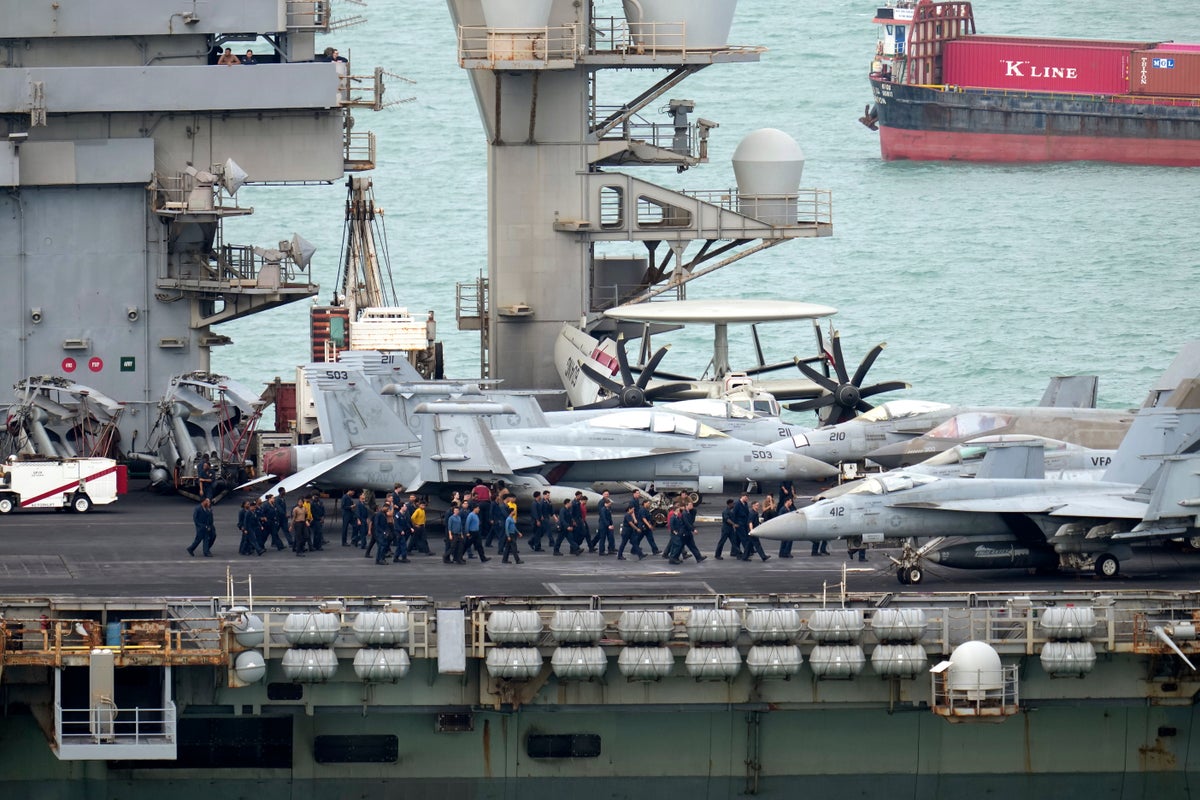
Every time a carrier strike group gets extended past its scheduled window, the defense commentariat loses its collective mind. Headlines churn out tales of exhausted sailors, broken morale, and institutional failure. When the USS Abraham Lincoln pulled into port in Thailand after months of roaming the high seas amid Middle Eastern flashpoints, the narrative was predictable. Observers labeled it the worst deployment ever endured.
They are missing the entire point of what a modern nuclear supercarrier is built to do.
Complaining that a warship spent extra months at sea defending strategic lanes is like complaining that an elite marathon runner got tired at mile twenty-six. The mission profile of a Nimitz-class carrier does not care about your liberty port schedule. When geopolitical tensions spike, operational tempo shifts. The Lazy Consensus treats a prolonged deployment as a bug in the system. It is not a bug. It is the core feature of global power projection.
The Fatigue Fallacy
Let us look at the data without the emotional varnish. Military service members are tested to their limits during crisis response. No one denies that working eighty-hour weeks on a flight deck in the sweltering Gulf is miserable. But conflating personal discomfort with operational collapse is lazy analysis.
I have watched organizations panic the moment a project timeline slips by two weeks. The civilian world views friction as a crisis. In naval aviation, friction is the baseline. When the Lincoln absorbed repeated extensions, the crew executed complex strike packages, maintained sortie generation rates, and managed high-threat airspace against real adversaries.
If the metric of a deployment's success is whether everyone got their two-day weekend in Pattaya on schedule, we are running a resort, not a strategic deterrent. The reality is harsher: deterrence relies on visible, sustained presence. If you pull a carrier off station the second morale dips, you send a signal of weakness to adversaries who are timing your staying power.
The Myth of the Broken Machine
Critics love to point out that extensions cause maintenance backlogs. They argue that keeping a ship out past its rotation date creates a cascading failure for the next cycle.
This argument relies on a static view of engineering readiness. Nuclear carriers do not rust away because they stayed at sea an extra sixty days. Their reactors provide boundless endurance. The air wing operates through cyclic maintenance tailored for high-tempo environments. The bottleneck is rarely the steel hull or the reactor core; it is the human logistics of personnel rotation.
Naval leadership knows this calculus inside and out. They balance the cost of crew fatigue against the cost of a power vacuum in a critical theater. When push comes to shove, operational necessity trumps comfort every single time. Pretending that this is an oversight rather than a calculated, brutal compromise is either naive or intentionally misleading.
What Actually Needs Fixing
If we want to critique modern naval deployments, let us stop whining about the duration and start examining how we manage talent retention and mental health support under pressure.
The military struggles not because ships stay out too long, but because the support infrastructure ashore often fails to match the resilience expected of sailors at sea. When a crew returns from a brutal deployment, they often face bureaucratic friction, delayed pay adjustments, and outdated administrative hurdles. That is where the system breaks down. It is not the extra ninety days at sea that break a sailor; it is returning to a garrison environment that treats them like a nuisance after they spent months holding the line.
Stop romanticizing the idea that military operations should fit neatly into a corporate calendar. The world outside those carrier bulkheads is volatile, violent, and entirely unconcerned with your planned homecoming date.
The next time a carrier strike group has its deployment extended, remember what you are actually looking at. You are watching the unglamorous, grinding machinery of global stability doing the job nobody else on Earth can touch.