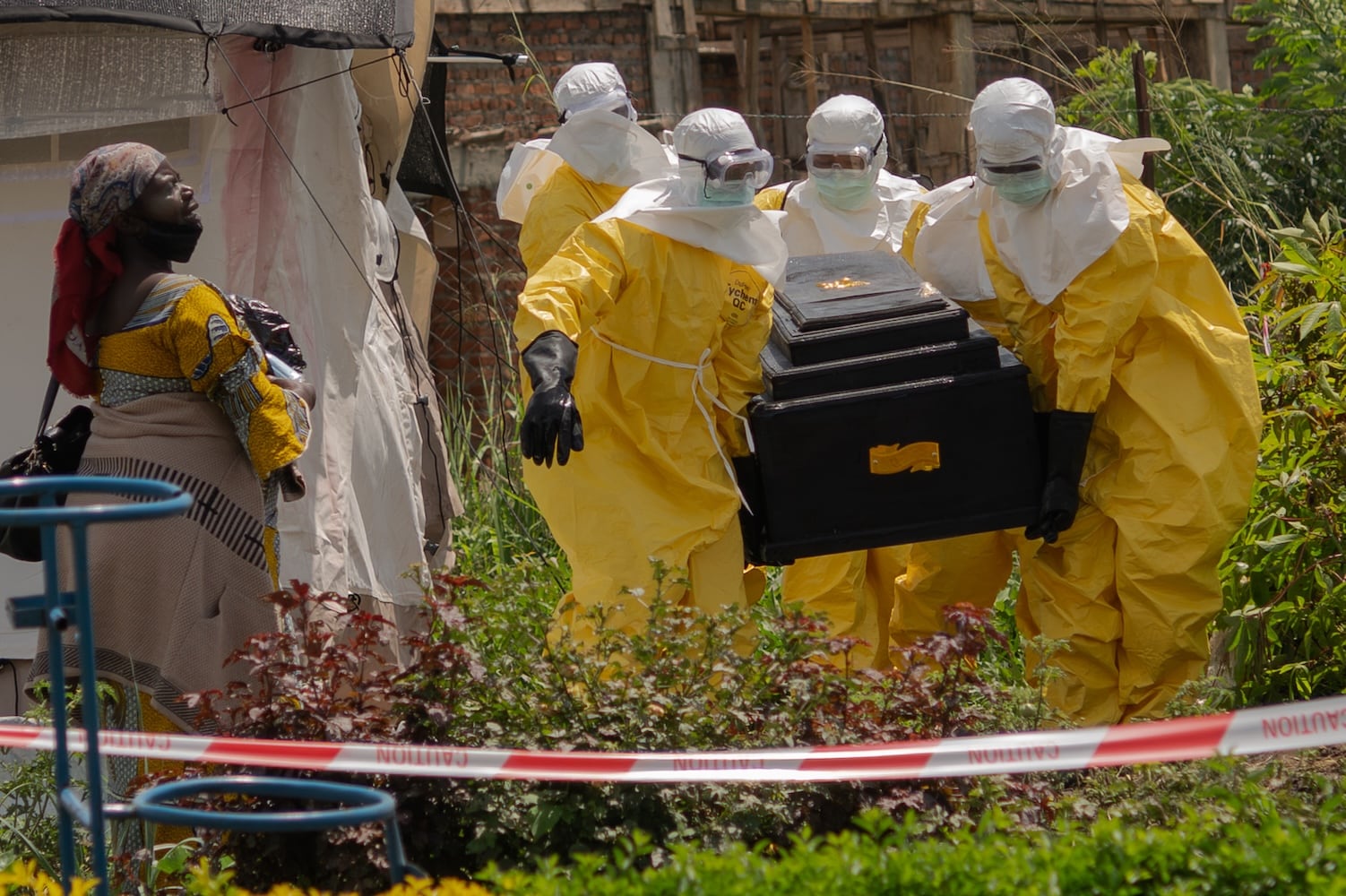
Pathogenic transmission operates on biological imperatives, entirely unconstrained by geopolitical borders. When a virulent pathogen like Ebola mutates or breaches containment, conventional political boundaries become friction points that delay intervention rather than barriers that halt transmission. The core systemic failure in global health security is not a lack of ethical intent; it is the absence of structural mechanisms capable of converting geopolitical cooperation into rapid, distributed industrial execution.
When a diagnostic protocol fails against a novel viral strain, standard containment models collapse. Mitigating this risk requires a fundamental shift from reactive, centralized distribution to a decentralized manufacturing and surveillance architecture.
The Biosecurity Bottleneck: Diagnostic and Therapeutic Friction
Epidemiological containment relies on a foundational baseline: a pathogen must be identified before it can be isolated. A mutation that invalidates existing diagnostic assays creates an immediate, unquantified blind spot in global surveillance. Without viable diagnostics, the reproductive number ($R_0$) of a pathogen cannot be accurately calculated or managed.
The traditional global response model relies on high-income nations developing medical countermeasures, which are then distributed via centralized mechanisms. This model introduces severe vulnerabilities across three distinct operational layers.
Regulatory and Ethical Asymmetry
During international clinical trials or emergency diagnostic deployments, institutional variations create significant operational lag. Historical data from multinational clinical interventions demonstrates that while certain nation-states can clear ethical and regulatory protocols within seven days, others require up to six months. This variance functions as an operational bottleneck, allowing a pathogen to cross multiple generations of transmission before any systematic validation of countermeasures can begin.
Supply Chain Centralization
The production of critical diagnostic components—such as real-time polymerase chain reaction (RT-PCR) reagents, primers, and specialized lateral flow assay enzymes—is concentrated within a small cohort of highly industrialized nations. When a public health emergency occurs, these nations routinely enact export restrictions or prioritize domestic requirements. This supply chain centralization guarantees that lower-resource regions, which frequently sit at the epicenter of emerging outbreaks, face immediate resource depletion.
The Misallocation of Scientific Capital
The global biomedical research ecosystem operates on a uncoordinated, decentralized funding model. During an active crisis, this leads to immense structural redundancy. For instance, during recent global health emergencies, hundreds of isolated clinical trials were launched simultaneously to evaluate identical, unproven therapeutics. This redundant deployment of research capital starves essential parallel workstreams, particularly in diagnostic adaptation and social-behavioral surveillance, which are vital for establishing community trust and operational adherence on the ground.
The Tri-Centric Infrastructure Model
Resolving the structural inefficiencies of global pathogen defense requires a shift toward a distributed industrial paradigm. Rather than treating lower- and middle-income countries (LMICs) as passive recipients of international aid, global health strategy must integrate these regions as active production nodes within a resilient, global supply network.
[Global Genomic Surveillance]
              │
              ▼
[Distributed Manufacturing Architecture] ──► [Accelerated Multi-Lateral Regulatory Framework]
1. Distributed Manufacturing Architecture
The primary defense against supply chain volatility is the regionalization of manufacturing capacity. Industrialized developing economies possess the advanced biotechnology infrastructure and high-volume manufacturing capabilities necessary to solve global supply deficits.
By scaling up production of diagnostics, therapeutics, and medical components within these regional hubs, the global health ecosystem can bypass long-distance supply chains and national export limits. This ensures that essential medical supplies are manufactured closer to the areas where outbreaks occur.
2. Global Genomic Surveillance and Data Cohesion
To utilize distributed manufacturing effectively, biological data must move faster than physical transmission. This requires an open-access, digital network for immediate genomic sequence sharing.
When a regional lab identifies a diagnostic failure or a novel mutation, the genetic sequence must be uploaded to a secure, global platform instantly. This digital asset allows decentralized manufacturers across the globe to adjust their production lines within hours, developing updated diagnostic kits or matching therapeutic protocols without waiting for physical samples to clear international customs.
3. Accelerated Multi-Lateral Regulatory Frameworks
To capitalize on rapid digital data and regional manufacturing, the regulatory approval pipeline must be standardized internationally. National regulatory agencies must establish pre-negotiated, cross-border protocols specifically reserved for public health emergencies of international concern.
By aligning clinical trial designs, ethics review metrics, and emergency use authorization standards prior to an outbreak, the operational lag from detection to deployment can be compressed from months to days.
Structural Constraints and Strategic Limitations
Implementing a distributed biosecurity framework introduces specific operational trade-offs and structural limitations that must be addressed analytically.
- Technology Transfer Barriers: The production of advanced diagnostics and biologics requires highly specific intellectual property and specialized technical expertise. Established pharmaceutical firms frequently resist transferring these assets due to concerns over long-term commercial erosion, quality control, and liability.
- Sovereign Compliance Vulnerabilities: International data platforms rely entirely on voluntary compliance. If a nation-state fears immediate economic fallout, such as border closures, travel bans, or trade sanctions, it faces a strong incentive to suppress or delay reporting novel epidemiological anomalies.
- Operational Funding Discontinuity: Global health infrastructure suffers from a boom-and-bust financing cycle. Capital surges during an active crisis but drops off sharply once containment is achieved. This erratic funding prevents the long-term maintenance of regional manufacturing facilities and ongoing genomic surveillance networks.
Operational Execution for Global Biosecurity
Building a resilient global pathogen defense requires moving past high-level calls for international solidarity. Instead, international health agencies and state actors must deploy specific operational protocols.
First, global health authorities must establish formal tech-transfer compacts during non-crisis periods. These agreements must legally bind participating entities to license critical diagnostic and therapeutic platforms to regional manufacturing hubs when a public health emergency is declared.
Second, international financing instruments must shift away from reactive emergency funds. Instead, they should utilize sustained capital structures, such as advanced market commitments. By guaranteeing procurement volumes for regionally produced medical supplies, these instruments provide the financial predictability required to keep decentralized production nodes operational during inter-epidemic periods.
Finally, international trade frameworks must treat essential biosecurity components as distinct medical assets. These items must be legally exempt from standard embargoes or national export restrictions during a declared health crisis. Ensuring the unrestricted movement of raw chemical components, genomic data, and finished medical products is the only way to build a functional global defense against an evolving pathogen.