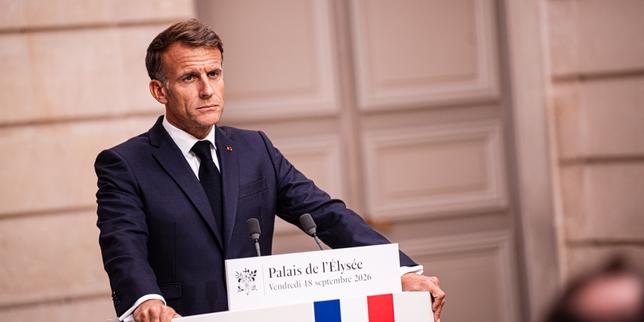
We love a good ghost story in Paris. Put a menacing label on a vague inconvenience, roll out the ministerial decree, and watch the national panic machine spin into overdrive. Emmanuel Macron has spent the last year warning anyone with a microphone that France is staring down an existential abyss of Russian hybrid warfare. Cyberattacks on hospitals, manipulated disinformation campaigns on social media, mysterious pallets of coffins dumped near the Eiffel Tower, and cable disruptions in the dead of night. The narrative is neat, cinematic, and entirely wrong.
By framing every annoyance, nuisance, and garden-variety crime wave as a synchronized masterclass in Kremlin subversion, the Élysée is committing a strategic blunder. They are laundering domestic incompetence and systemic institutional fragility through the glamorous lens of high-stakes geopolitical espionage.
I have watched state intelligence agencies scramble for a decade, and I can tell you the dirty secret nobody in the interior ministry wants to admit. Most of what gets breathlessly filed under hybrid warfare is actually just lazy opportunism, native political polarization, and public infrastructure that hasn't seen a substantive upgrade since the Mitterrand administration.
The Comfort of the Foreign Bogeyman
It is psychologically easier for a government to claim it is being targeted by a sophisticated foreign intelligence apparatus than to admit its own cybersecurity budget was written on a napkin or that its social fabric is fraying from internal pressures. When a regional hospital gets hit with ransomware, calling it a Russian hybrid attack lets the director off the hook for running unpatched Windows Server 2012. When polarizing rhetoric floods social media, blaming trolls in St. Petersburg spares politicians from confronting the reality that their own policies created the anger in the first place.
This is the lazy consensus. It assumes Moscow possesses a cartoonish omnipotence—a sprawling syndicate of hackers and saboteurs operating with flawless synchronicity across the European continent.
The data tells a completely different story. If you look at the actual mechanics of these operations, they are remarkably low-cost, low-tech, and opportunistic. They rely less on James Bond villainry and more on finding the open doors that Western democracies leave unlocked out of sheer administrative sloth. Moscow is not breaking our digital locks; they are walking through doors that are wide open, and then we stand in the courtyard and scream about black magic.
Dissecting the Hybrid Myth
Let us define terms, because the buzzword has lost all meaning. Hybrid warfare is supposed to describe a blend of conventional military threats, cyber sabotage, economic coercion, and information operations designed to destabilize a target state below the threshold of open armed conflict.
The mistake is assuming this is a new doctrine invented by Vladimir Putin. States have been playing this gray-zone game since the Peloponnesian War. The Roman Empire dealt with disinformation and proxy agitation. What has changed is our victimhood complex.
When a few hundred fake accounts amplify a protest in Marseille, media outlets treat it like a digital Pearl Harbor. They write breathless analyses about botnets and psychological operations. Meanwhile, local economic anxiety, generational disenfranchisement, and stagnant wages are treated as secondary details.
Here is the contrarian truth that will make defense contractors squirm. Most Russian hybrid operations are noise, not signal. They are designed to probe, to distract, and primarily, to make us overreact. Every euro we spend standing up bureaucratic task forces to monitor internet memes is a euro diverted from things that actually matter, like industrial resilience, energy independence, and municipal cybersecurity hygiene.
We are playing their game by taking the bait. By labeling every act of vandalism or low-level cyber nuisance as an existential hybrid threat, we validate their reach. We tell our adversaries that a couple of cans of spray paint and a hacked municipal database can paralyze the national conversation for a week. That is not deterrence. That is an invitation for an encore.
The Real Vulnerabilities We Ignore
While Paris obsesses over clandestine Kremlin operations, the real threats to French stability are homegrown and structural.
Our critical infrastructure is an aging patchwork. The vulnerability of our electrical grid, our logistics hubs, and our telecommunications backbones has less to do with Russian saboteurs and more to do with decades of deferred maintenance and fragile supply chains outsourced to the lowest bidder.
Take our reliance on external technology and cloud infrastructure. We lecture about digital sovereignty while running our most sensitive public data on servers owned by American tech giants. If a foreign power wants to disrupt French administration, they do not need a sleeper cell in the suburbs; they just need a favorable ruling in a foreign court or a disruption in global semiconductor supply lines.
Furthermore, our information ecosystem is structurally vulnerable because our traditional media has lost its monopoly on trust. When institutions fail to deliver basic public goods, citizens look elsewhere for explanations. The vacuum is not created by Russian trolls; it is created by elites who stopped listening to the working class thirty years ago. Blaming Moscow for domestic polarization is the ultimate political cop-out. It allows leadership class figures to avoid looking in the mirror.
A Better Playbook
If we want to survive the gray zone, we need to stop treating every inconvenience as a national security crisis. We need a complete operational reset.
First, lower the volume. Stop giving hostile intelligence services the satisfaction of front-page panic. When a cable is cut or a website is defaced, treat it like common crime or infrastructure failure. Fix it quietly, prosecute the perpetrators, and move on. Do not hand them a prime-time victory.
Second, redirect the capital away from rhetorical task forces and toward hard engineering. Spend money on resilient software, redundant power grids, and domestic manufacturing capacity. A patch on a server is worth a thousand policy papers on hybrid threats.
Third, rebuild institutional trust through competence. The best defense against foreign subversion is a society that actually believes its institutions work for them. If hospitals have secure backups, if public transport runs on time, and if young people see a path to prosperity, foreign disinformation bounces off them like rain on a windshield.
Macron wants to rally the nation against a shadow army. But the ghosts he is fighting are mostly our own reflections. Stop running from the mirror and fix the plumbing.


