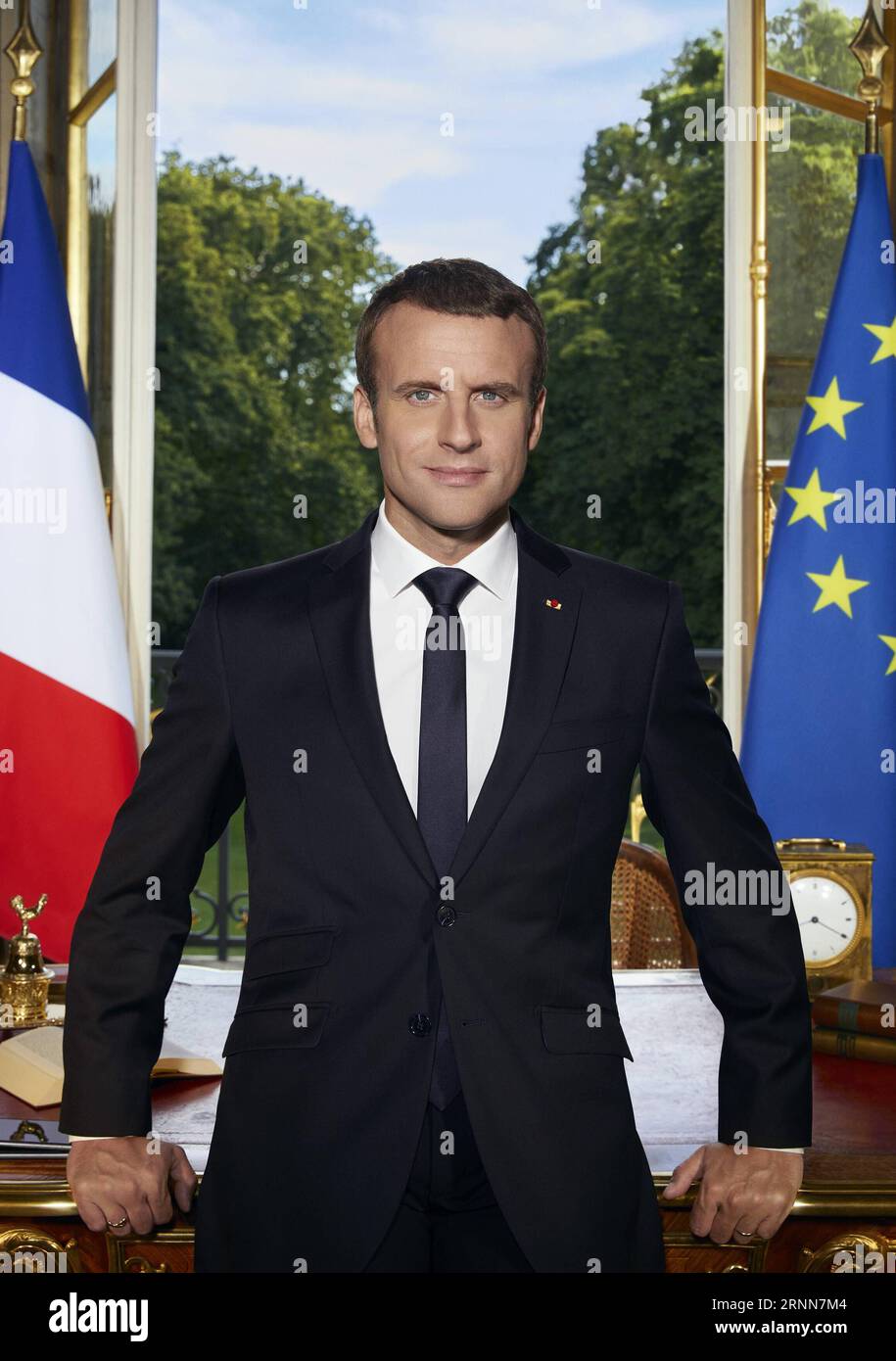
Global politics feels less like a negotiation table and more like a bar fight right now. On September 22, 2026, French President Emmanuel Macron stepped up to the podium at the 81st United Nations General Assembly in New York and asked a blunt question. Do we want to live in a civilized international society, or are we sliding straight back into the law of the jungle?
Most headlines treated it like standard diplomatic fluff. They missed the point. This wasn't just another polite plea for world peace from a European leader. It was Macron's final UN General Assembly address before his second presidential term ends in 2027, delivered right after U.S. President Donald Trump spent his own podium time focused heavily on America's war with Iran. When you look at the timing, the specific targets of his criticism, and the uncomfortable truths he forced Western allies to confront, his warning about the "law of the jungle" hits very differently.
Why Macron's Warning About the Law of the Jungle Matters Now
Let's strip away the diplomatic polish. When a head of state warns against the "law of the jungle" at the UN, they're talking about raw power replacing agreed-upon rules. Might makes right. Big countries carve up spheres of influence, ignore borders, and tell smaller nations to deal with it.
Macron wasn't speaking in hypotheticals. Look at the active crises dominating the 81st General Assembly in September 2026. Russia's war in Ukraine drags on, with relentless strikes crippling energy grids and civilian infrastructure. Conflict in the Middle East—spanning Gaza, the West Bank, and the U.S.-Iran confrontation—has disrupted global oil and gas markets while leaving humanitarian corridors blocked. Sudan and Myanmar remain engulfed in brutal violence.
If you've watched international diplomacy closely over the past decade, you know that UN speeches usually follow a predictable script. Leaders condemn bad actors, praise the UN Charter, and fly home without changing anything. Macron broke that pattern by admitting the system is actively failing to stop major powers from doing whatever they want. His closing line—"We will not yield"—was aimed directly at the growing fatalism among diplomats who privately whisper that the post-1945 international order is dead.
The Subtext Behind His Call for Multilateralism
Who exactly was Macron calling out? He didn't drop names from the podium, because that's not how French diplomacy operates at the General Assembly. Still, nobody in that room needed a translator to decode his targets.
First, there's Moscow. Macron explicitly called for a moratorium on airstrikes against energy and civilian infrastructure in Russia and Ukraine. By framing the protection of civilians as a non-negotiable baseline, he pushed back against the normalization of total warfare in Europe.
Second, there's Washington and Beijing. When Macron warned against leaving the future of the world—and specifically artificial intelligence—to a handful of major powers and private tech giants, he was pointing straight at the U.S. and China. Speaking immediately after Donald Trump's address only sharpened that contrast. While Washington leaned into unilateral military action and bilateral dealmaking, Paris pitched itself as the defender of collective rules.
The Double Standards Trap Western Leaders Usually Ignore
Here is the part of Macron's speech that genuinely surprised veteran UN observers—and the part that standard wire reports largely glossed over. He openly admitted that Western nations have a credibility problem.
"How many times have we heard that people's sovereignty has value in Europe, but if we look at the Middle East and Africa, it is less valuable?" Macron asked the assembly. "No, that is unacceptable. A life is a life. Peace and security are indivisible, and everyone has a right to them."
That's a massive admission from a G7 leader. For years, diplomats from the Global South have tuned out lectures from Washington, London, and Paris about international law in Ukraine because they saw those same capitals excuse or ignore violations elsewhere. You can't demand strict adherence to the UN Charter in Eastern Europe while shrugging when humanitarian aid gets blocked in Gaza.
Macron called out the situation in Gaza directly, earning rare applause in the General Assembly hall. He noted that while some claim peace has arrived, humanitarian corridors still haven't materialized—a reality he called "a sight that shames us all." By acknowledging Western "double standards" out loud, he tried to bridge the widening trust gap between wealthy Northern nations and the Global South. Whether countries across Africa, Asia, and Latin America actually buy it is another story, especially given France's own complicated history and recent diplomatic setbacks in West Africa. Trust isn't rebuilt in twenty minutes at a New York podium.
Why AI Sovereignty Landed Inside a Speech About War and Peace
If you only read the short news summaries about the "law of the jungle," you might think Macron spent the entire speech talking about tanks, missiles, and UN Security Council vetoes. He didn't. A huge chunk of his agenda in New York focused on technology—specifically artificial intelligence and protecting children online.
Why bring up AI during a speech about global security? Because in 2026, technological dominance is just another arena where the law of the jungle plays out.
Macron argued that AI development shouldn't be monopolized by the United States, China, and a handful of unregulated private companies. He warned that unchecked AI threatens "the security of our States, of our hospitals, of our banks." During the same UN trip, France joined Spain, Kenya, and Australia to unveil a roadmap backed by 26 countries and eight UN agencies aimed at protecting children's rights in the age of AI.
Think about what that coalition represents. It's a deliberate attempt to build cross-regional alliances—linking European states with countries like Kenya and Australia—so middle powers aren't forced to choose between American tech monopolies and Chinese state-backed platforms. If the UN can't set guardrails for AI, smaller nations become digital colonies. That's the 21st-century version of might making right.
What Critics Get Wrong About Macron's UN Strategy
Whenever Macron gives a sweeping philosophical speech on the world stage, two predictable criticisms pop up immediately. Both miss the bigger picture, though each holds a grain of truth.
The "All Talk, No Muscle" Argument
Skeptics love to point out that France doesn't have the military or economic weight to enforce international law on its own. At home, Macron has faced severe political fragmentation and a divided parliament that limits his domestic maneuvering room. Critics argue it's easy to preach multilateralism when you're in the final stretch of your presidency and don't have to face voters again.
There's some truth here. Speeches don't stop ballistic missiles, and UN General Assembly resolutions aren't legally binding. France alone can't force a ceasefire in Ukraine or open border crossings into Gaza.
Why Middle-Power Coalitions Actually Work
Dismissing Macron's speech as empty rhetoric ignores how international diplomacy is shifting right now. The old model—where the five permanent members of the UN Security Council (the U.S., China, Russia, France, and the U.K.) actually agreed on basic peacekeeping—is paralyzed by vetoes.
Does that mean the UN is completely useless? No. It means the action has moved from Security Council decrees to coalitions of middle powers. Look at what's happening on oceans, climate finance, and AI governance. The Biodiversity Beyond National Jurisdiction (BBNJ) agreement proved that countries can still negotiate binding global rules even when superpowers are at each other's throats. As former Observer international editor Steve Bloomfield noted in The Guardian following the speech, middle powers are realizing they don't have to sit passively on the sidelines while Washington and Beijing dictate terms.
Macron's real play wasn't trying to play world policeman. It was rallying every country that isn't a superpower to realize they have leverage when they act together. If you're a country of 10 million or 60 million people, the law of the jungle is a death sentence. Rules are your only shield.
How to Follow Global Diplomacy Without Getting Distracted by Noise
Watching world leaders trade barbs at the UN can make anyone cynical. If you want to track whether Macron's warning actually changes anything—or if the law of the jungle keeps winning—stop watching the soundbites and track three concrete indicators over the coming months:
- Watch the infrastructure moratorium talks. Pay attention to whether diplomatic backchannels produce any real limits on energy-grid strikes in Ukraine and Russia this winter. Words at the UN only matter if civilian power plants stay online.
- Track non-superpower coalitions on AI and climate. Look at who signs onto the France-Spain-Kenya-Australia AI framework and how maritime decarbonization talks progress at the International Maritime Organization. When middle powers build rules without waiting for U.S. or Chinese permission, multilateralism is working.
- Follow humanitarian access metrics, not ceasefire headlines. In Gaza, Sudan, and across conflict zones, ignore press releases claiming "peace has arrived." Look directly at UN Office for the Coordination of Humanitarian Affairs (OCHA) reports measuring actual aid trucks crossing borders.
The UN was built in 1945 precisely because the world had just seen what happens when great powers settle disputes through pure force. Eighty-one years later, the institution is bruised, gridlocked, and deeply flawed. Yet tearing down the rules because they're hard to enforce doesn't create freedom—it just hands the planet over to whoever has the biggest weapons.


