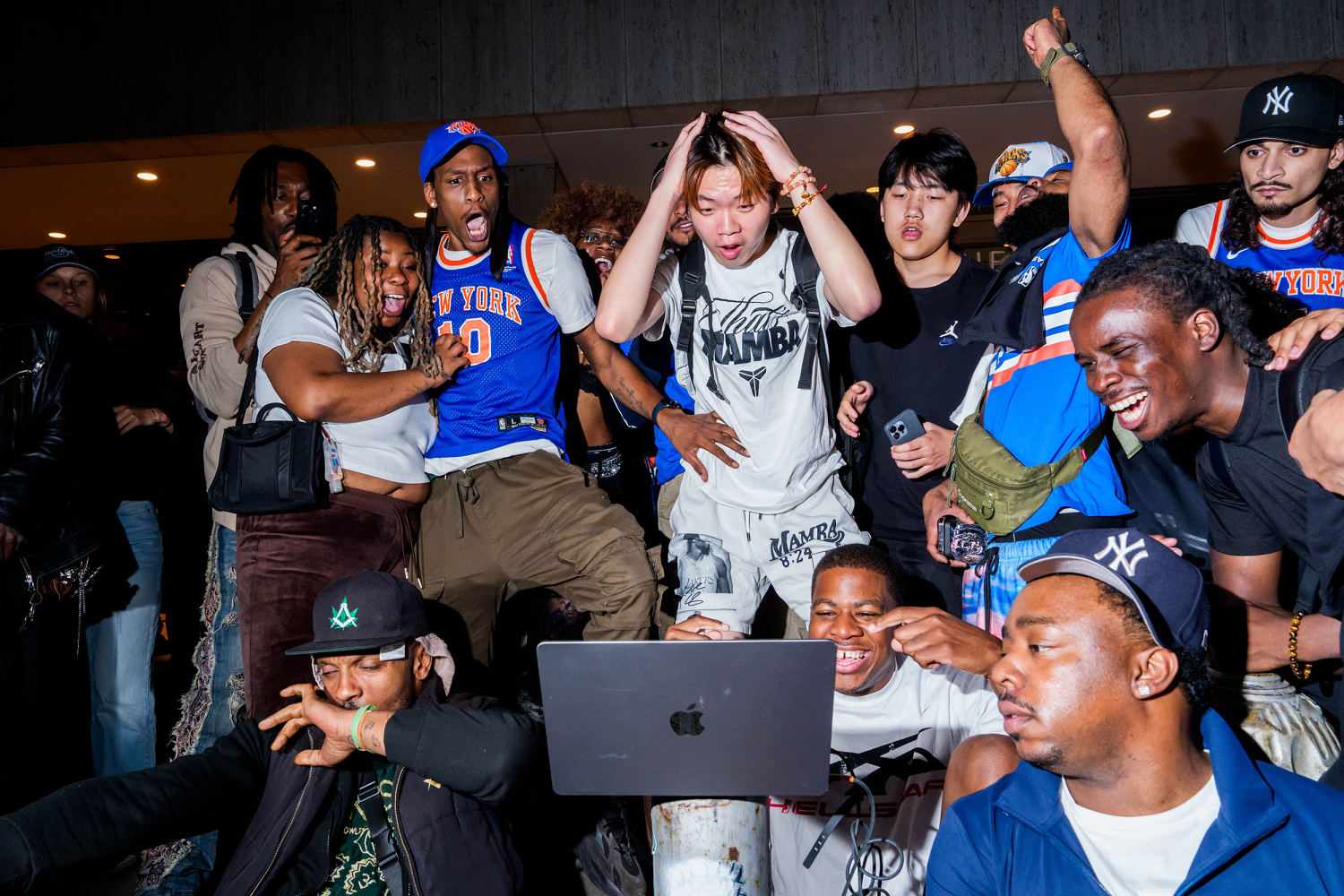
You can't replicate the absolute madness of Midtown Manhattan when a championship is on the line. It doesn't matter how great your home arena is, or how many millions of dollars a franchise spends on fancy laser light shows and comfortable seats. When the New York Knicks make the NBA Finals, the entire ecosystem around 33rd Street and Seventh Avenue transforms into something beautifully chaotic.
The historic run to the 2026 Finals against the San Antonio Spurs has turned the area into an absolute pressure cooker. If you walked anywhere near Penn Station during the first three games, you felt it immediately. The air smelled like hot pretzels, stale beer, and pure, unfiltered desperation. This city hasn't tasted an NBA championship since 1973. That is more than a half-century of pent-up sporting frustration exploding all at once.
Honestly, the action on the hardwood is only half the story. The real spectacle breathes right out on the pavement.
The Pavement Volcano Outside the Garden Arena
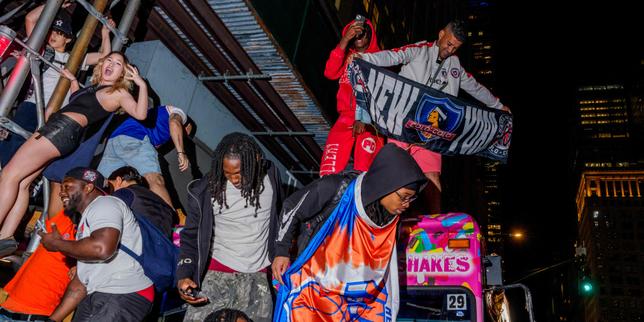
For decades, sports executives thought the game belonged exclusively to the people who could afford the ticket. The 2026 postseason completely broke that model. Thousands of fans who didn't have three grand to drop on a nosebleed seat gathered on 33rd Street just to watch the game on their phones together.
It grew so massive and raucous that it turned into a major logistical headache. During the Eastern Conference finals, the crowd swelled past 6,000 people outside the doors. Fans started scaling subway entrances and utility poles. The New York Police Department eventually had to stop supporting the official outdoor big-screen watch parties on 33rd Street because the fan zone quite literally burst at the seams.
But you can't cancel New York fandom. The crowd simply adapted, migrating up to Bryant Park or just packing the bars lining Seventh Avenue. When Jalen Brunson hits a contested three, the sound doesn't stay inside the building. It spills out of the arena doors, echoes down the block, and triggers a secondary explosion from the crowds waiting on the asphalt outside. It's a bizarre, beautiful feedback loop of pure adrenaline.
Inside the Most Expensive Cavern in Sports
Step past security and the vibe shifts from a street festival to a high-stakes theater. Madison Square Garden doesn't feel like a modern, suburban arena. It feels tight. The ceiling sits low, trapping the sound and bouncing it right back into your eardrums.
The crowd composition here is entirely unique. You have Wall Street executives sitting next to lifelong diehards who saved up for six months to buy one ticket. Then you look courtside and see Spike Lee screaming at the refs, alongside an absurd collection of Hollywood actors, musicians, and politicians. During Game 3, even Donald Trump showed up in the building, drawing a massive cascade of boos from the highly opinionated New York crowd.
That is the thing about a Garden crowd. They don't just sit there and consume entertainment. They participate. They lecture the coaches. They coach the players. When Victor Wembanyama came to town with the San Antonio Spurs for Game 3, the crowd tried to systematically dismantle his confidence with a relentless wall of noise.
Wembanyama still dropped 32 points to halt the Knicks' historic 13-game playoff win streak with a 115-111 Spurs victory. The building was furious, tense, and electric all at once. The loss didn't dampen the spirit; it just made the crowd angrier and louder for the next play.
What Other Cities Get Wrong About Sports Atmosphere
Most modern arenas are built in the middle of massive parking lots. You drive in, park your car, watch the game, and drive home. The experience is sanitized and isolated.
The Garden sits directly on top of Penn Station, the busiest transit hub in North America. Thousands of people are constantly pouring out of trains directly into the belly of the beast. The energy of the city is physically pumped into the arena.
- The Commute Factor: Fans are already hyped up from riding packed subway cars filled with orange and blue jerseys.
- The Post-Game Spillover: Win or lose, thousands of people hit the pavement at the exact same second, flooding local slice shops and bars.
- The Historical Weight: The ceiling features those iconic, radiating cables. You look up and realize you're standing in the same room where Willis Reed limped onto the court in 1970.
How to Experience the Madness Without Spending a Fortune
Let's be real. Buying a ticket to a Finals game at the Garden right now requires a second mortgage. But you don't need to pass the turnstiles to experience this specific brand of sports euphoria.
If you want to feel the authentic energy of a deep playoff run, head down to Midtown about two hours before tip-off. Walk the perimeter of the building. Grab a slice of pizza at Stout or Suprema, stand near the Seventh Avenue entrance, and just listen.
Watch the game at one of the packed Irish pubs a block away. When the final buzzer sounds, step back out onto 34th Street. If they win, you'll witness an immediate, spontaneous street party that no organized fan zone could ever replicate. If they lose, you'll see the collective grit of a city that immediately starts planning the next game. That raw, unpredictable human element is exactly why this place remains the mecca of basketball.