Maine Governor Janet Mills just did something radical: she looked at a pile of fear-mongering legislation and chose math over optics. By vetoing the nation’s first state-level moratorium on data centers, she didn't just save a few construction jobs. She accidentally exposed the massive intellectual rot at the heart of the "green" opposition to digital infrastructure.
The prevailing narrative—the one being pushed by short-sighted activists and NIMBY-disguised environmentalists—is that data centers are parasitic monsters sucking the grid dry and offering nothing but a handful of technician jobs in return. This is a fundamental misunderstanding of how the modern power grid actually functions.
A moratorium isn't a strategy. It is a white flag. It is an admission that a state is too incompetent to manage its own utility regulation.
The Grid Efficiency Paradox
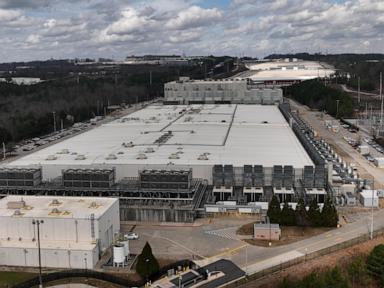
Critics point to the massive power draw of a hyperscale facility as a localized disaster. They see 100 megawatts and panic. What they fail to grasp is the concept of Load Factor.
Unlike a residential neighborhood that spikes in the morning, dips at noon, and surges when everyone turns on their ovens at 6:00 PM, a data center is a flat line. It is predictable. In the world of power generation, predictability is the ultimate currency. Intermittent renewables—the very thing Maine is trying to build—need "anchor tenants" that can consume power consistently to make the economics of new transmission lines work.
If you block the data centers, you kill the incentive to build the high-voltage transmission lines that the green energy transition requires. You aren't "saving" the grid; you are ensuring it stays stuck in the 1970s. I have watched developers walk away from nine-figure solar projects because there wasn't a large-scale industrial buyer nearby to justify the interconnection costs. Without the data center, the wind farm doesn't get built.
Jobs are the Wrong Metric
The "lazy consensus" says data centers are bad because they don't employ 5,000 people. This is a 20th-century metric applied to 21st-century infrastructure. We don't judge a bridge by how many people work on the bridge; we judge it by what the bridge enables.
Data centers are the bridges of the modern economy.
The tax revenue generated by these facilities per square foot dwarfs almost any other land use. In Loudoun County, Virginia, data center tax revenue pays for school systems and parks while requiring zero additional school seats, zero additional police patrols for residential sprawl, and minimal traffic impact.
By demanding "more jobs" per megawatt, activists are essentially asking for inefficient industries. They want a factory that creates traffic and pollution over a silent building that prints money for the local municipality. It is a backwards trade-off that only makes sense if you value optics over actual fiscal health.
The Water Misinformation Campaign
The most frequent "gotcha" used in Maine and elsewhere is water usage. "They’re stealing our water to cool servers!"
Let’s dismantle that.
Modern data centers are moving aggressively toward air-cooled systems or "closed-loop" liquid cooling. In a closed-loop system, the water is recycled indefinitely. The "evaporative" cooling that people see in old photos is rapidly becoming a legacy technology for new builds. Furthermore, a single golf course in a dry climate consumes more water than many mid-sized data centers, yet you rarely see a state-wide moratorium on putting greens.
If we want to talk about resource management, let’s talk about the Energy Reuse Effectiveness (ERE). Imagine a scenario where a data center’s waste heat is piped into local district heating systems or greenhouses. This isn't science fiction; it's happening in Northern Europe. Instead of banning the facility, Maine should be demanding heat-capture integration. A moratorium kills innovation; a high standard forces it.
The Cost of Saying No
When a state like Maine signals that it is "closed for business" to the backbone of the internet, it doesn't just lose Google or Microsoft. It loses the entire ecosystem of secondary tech investment. It tells every venture-backed startup that the local government is prone to emotional, reactive legislating.
The moratorium bill was a classic example of "legislating by headline." It was a response to a fear of the unknown.
If Maine wants to protect its environment, it should be doubling down on data centers that are required to fund their own renewable offsets. The tech giants are currently the largest corporate buyers of renewable energy in the world. They aren't the problem; they are the only ones with a balance sheet large enough to pay for the solution.
Addressing the "People Also Ask" Nonsense
"Do data centers raise electricity prices for residents?"
Only if the regulators are asleep at the wheel. When a data center enters a market, it should be required to pay for the infrastructure upgrades it necessitates. This is called "contributions in aid of construction." When done correctly, the industrial ratepayer subsidizes the fixed costs of the grid, which can actually lower the burden on residential accounts. If your rates are going up, blame your utility commission, not the server rack.
"Why can't we just build them in the desert?"
Latency. Physics doesn't care about your zoning preferences. If you want 5G, instant financial transactions, and functional AI, the compute power needs to be relatively close to the users and the existing fiber backbones. Maine has a cold climate—which is a natural advantage for cooling—and proximity to East Coast hubs. Rejecting that geographical gift is economic malpractice.
The Harsh Reality of Digital Sovereignty
We are entering an era of "compute sovereignty." States that host the infrastructure will have the power, the tax base, and the priority for future tech deployments. States that ban it will become digital colonies, paying out of state for services they are too timid to host themselves.
Governor Mills didn't just protect a business interest; she protected Maine from becoming a technological backwater.
The idea that we can have a digital society without digital physical infrastructure is the ultimate NIMBY delusion. You cannot stream the video, run the AI, or manage the "smart grid" if you refuse to build the engine room.
Stop asking how much power a data center takes. Start asking why your state is too stagnant to generate enough power to lead the world.
Build the racks. Upgrade the grid. Ignore the Luddites.