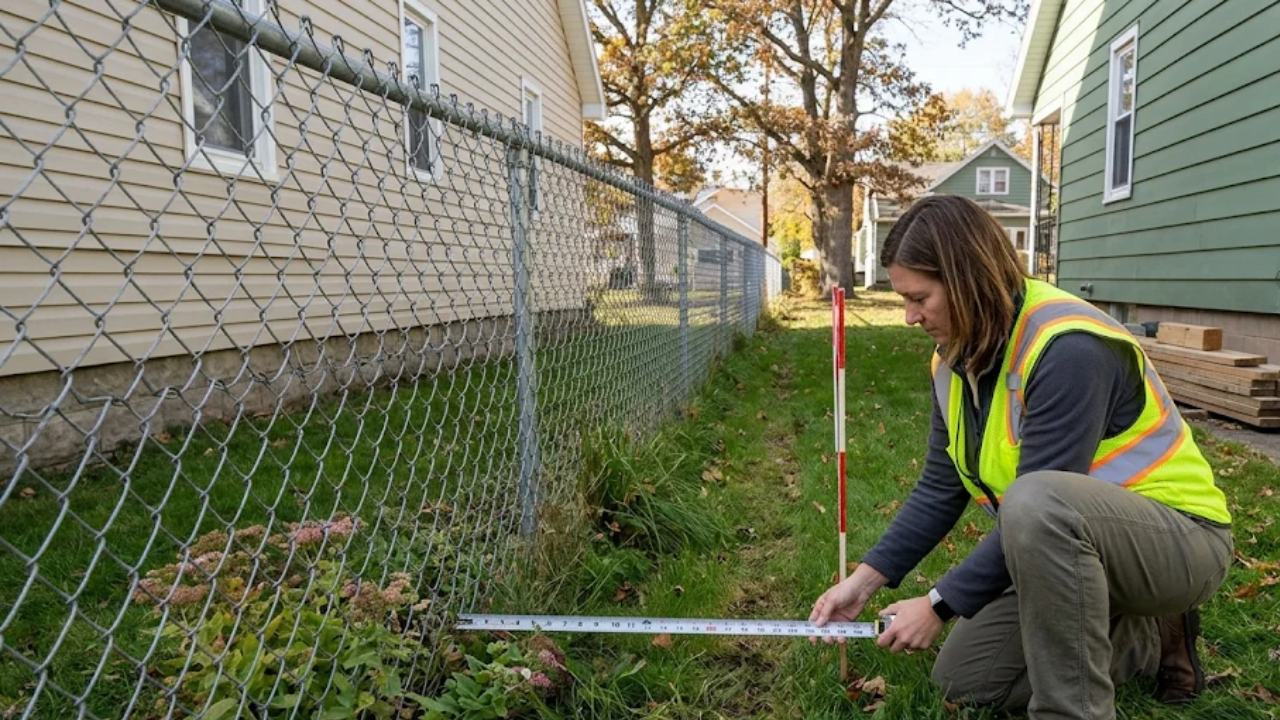
Property lines rarely spark headlines until someone puts up a fence, plants a hedge, or tries to sell a house. When a New York homeowner spends nearly three decades mowing, weeding, and caring for a narrow strip of land along her property boundary—only to find herself locked in a legal battle with neighbors over who actually owns it—the dispute exposes a quiet collision between everyday neighborhood habits and strict state property law.
At the heart of this conflict is adverse possession, a legal doctrine often misunderstood as "squatters' rights," which allows a person to claim legal title to land they do not hold a deed for if they meet rigid statutory requirements over a set period. In New York, that statutory clock runs for 10 years. Yet as a 29-year maintenance history demonstrates, simply taking care of a patch of grass for decades does not automatically hand you the deed.
The Anatomy of a Backyard Border War
Most residential boundary disputes begin with an invisible line. Deeds describe property using metes and bounds—bearings, distances, and survey markers buried inches beneath topsoil—rather than visual cues like tree lines, retaining walls, or old chain-link fences.
Over decades, neighbors routinely treat a convenient physical feature as the true dividing line. One homeowner mows up to a row of shrubs; the adjacent owner never objects because the yard looks neat and nobody wants to pay thousands of dollars for a land survey without a reason.
That unspoken truce usually holds until the property changes hands. A new buyer orders a fresh title survey before closing, discovers that a driveway apron, garden bed, or ten-foot strip of lawn actually sits on their side of the legal boundary, and decides to reclaim it. Suddenly, 29 years of sweat equity collides with a recorded deed.
Why 29 Years of Mowing Can Still Lose in Court
To win an adverse possession claim in New York, a claimant cannot merely show they used the land longer than the 10-year statutory period. Under New York Real Property Actions and Proceedings Law (RPAPL) Article 5, the possession must satisfy five strict elements simultaneously, proven by clear and convincing evidence—a much higher legal bar than the "preponderance of the evidence" standard used in ordinary civil lawsuits.
The possession must be:
- Hostile and under a claim of right
- Actual
- Open and notorious
- Exclusive
- Continuous for the entire 10-year statutory period
If any single pillar collapses, the entire claim fails.
The 2008 Statutory Rewrite That Changed Everything
For years, New York courts wrestled with cases where homeowners accidentally built fences or tended lawns a few feet over the line. Then, in 2008, the New York State Legislature amended the RPAPL to curb what lawmakers viewed as opportunistic land grabs over minor boundary encroachments.
The 2008 amendments introduced two major hurdles that directly affect cases involving long-term yard maintenance:
- The "Claim of Right" Definition: Under RPAPL § 501, a "claim of right" now requires a reasonable basis for the belief that the property belongs to the adverse possessor. If a homeowner knew all along that the strip belonged to the neighbor—or if a survey in their closing file showed the true boundary—they cannot claim a good-faith belief of ownership.
- De Minimis Non-Structural Encroachments: Under RPAPL § 543, minor encroachments like fences, hedges, shrubbery, plantings, sheds, and non-structural walls are now deemed permissive and non-adverse as a matter of law. Even more critically, lawn mowing and routine maintenance across a boundary line are explicitly treated as permissive acts rather than hostile assertions of ownership.
Think about what that means in practice. A homeowner could cut a neighbor's grass every Saturday morning from 1997 to 2026, edge the border, and rake the leaves every autumn, and New York law still views those actions as neighborly courtesy rather than a legal takeover.
The Timeline Problem Retroactive Law vs. Vested Rights
Here is where seasoned real estate litigators earn their fees. When someone has maintained a strip of land for 29 years—stretching back to the late 1990s—the clock did not start in 2008. It started a decade earlier.
New York appellate courts have repeatedly ruled that the 2008 statutory amendments cannot be applied retroactively to strip away property rights that had already vested prior to the law's effective date in July 2008.
Consider a hypothetical example to see how the calendar governs the outcome. Suppose a homeowner bought a house in 1997, erected a permanent stone wall enclosing an adjacent five-foot strip in good faith, and maintained it exclusively without interruption. By 2007—ten full years later—title by adverse possession would have already vested under the pre-2008 legal standard, before the stricter rules ever took effect. Conversely, if that same homeowner only began maintaining the strip in 2001, the 10-year clock had not finished running when the law changed in 2008, subjecting the entire claim to the harsher statutory barriers.
This distinction turns a straightforward neighborhood argument into an evidentiary archaeology project. Lawyers end up hunting for decades-old aerial photographs, dated family snapshots from backyard barbecues, receipts from landscapers, and testimony from former neighbors who moved away twenty years ago.
Permissive Use The Silent Killer of Adverse Possession Claims
Even under pre-2008 standards, hostility in property law does not mean anger or fistfights over the hedge. It means using the land without the true owner's permission and in a way that denies the true owner's rights.
Permission destroys hostility instantly. If a neighbor said in 1998, "Go ahead and plant tomatoes on that strip, I don't use it anyway," the clock never even started ticking. You cannot adversely possess land you were invited to use.
Neighbors defending their recorded deeds routinely argue that any maintenance over the decades happened with tacit consent. In tight suburban neighborhoods across New York—from Long Island and Westchester to the Hudson Valley and Western New York—allowing a neighbor to mow a shared border strip is standard social friction avoidance. Courts are deeply reluctant to punish property owners for being polite by handing away chunks of their deeded acreage.
Exclusivity and the Shared Lawn Trap
Exclusivity presents another major stumbling block. To prove exclusive possession, the claimant must show they acted as a true owner would, keeping others—including the record title holder—off the strip.
If the deeded owner occasionally walked across that strip to access the back of their house, stored garbage cans near the edge, or had utility workers enter the area without asking the claimant's permission, exclusivity evaporates. Unlike a locked shed or a fenced-in backyard addition, an open strip of grass rarely shows clear physical exclusion.
The Real Financial Stakes Behind a Few Feet of Dirt
Outsiders often wonder why two neighbors would spend tens of thousands of dollars in legal fees fighting over a narrow strip of grass that might only be three to eight feet wide. In New York real estate, those few feet can carry massive financial consequences.
- Zoning and Setback Violations: Municipal zoning codes dictate minimum distances between structures and property lines. Losing a five-foot strip can suddenly place an existing garage, deck, or driveway in violation of local setback laws, making the property unmarketable without a zoning variance.
- Title Insurance Exceptions: No title insurer will guarantee clear title to a parcel subject to an active boundary dispute or an unrecorded adverse possession claim. Until the litigation ends or the parties sign a formal boundary line agreement, selling or refinancing either home becomes nearly impossible.
- Lot Size and Development Rights: In high-density suburbs and New York City boroughs, buildable square footage and floor-area-ratio calculations depend directly on exact lot dimensions. Shaving off even a small strip can reduce a property's appraised value far beyond the raw price per square foot of the grass itself.
Why Title Insurance Rarely Saves Homeowners in Boundary Fights
Many homeowners assume their owner's title insurance policy will step in and pay their legal bills if a neighbor challenges their property line. Most discover too late that standard policies exclude boundary issues.
Unless the buyer paid extra for an expanded coverage policy or obtained a certified instrument survey at closing that was specifically insured by the title company, the policy almost always contains a standard "survey exception." That clause exempts the insurer from covering any state of facts an accurate survey would show—meaning boundary discrepancies, encroaching fences, and adverse possession disputes fall squarely onto the homeowner's personal bank account.
How Property Owners Can Protect Their Boundaries Before Trouble Starts
Waiting until a neighbor hires a surveyor or puts up stakes is the most expensive way to handle a property line question. Land use attorneys and licensed surveyors rely on concrete preventative steps to lock down boundaries before memories fade and deeds change hands.
- Order a Staked Boundary Survey: A paper survey from twenty years ago does not show where the lines sit on the ground today. Hiring a licensed New York land surveyor to locate iron pins and place visible stakes removes all guesswork.
- Execute a Recorded Boundary Line Agreement: When both neighbors agree on where a fence or hedge sits—or want to settle a minor discrepancy without litigation—they can sign a Boundary Line Agreement and record it with the county clerk. This permanently fixes the line for all future buyers.
- Issue a Written License Agreement: If you want to let a neighbor mow, garden, or park on a strip of your land without risking a future adverse possession claim, put a simple revocable license in writing. Signed acknowledgment that the use is permissive stops the 10-year statutory clock dead in its tracks.
- Object in Writing to Unauthorized Encroachments: If a neighbor builds a fence, retaining wall, or shed across your line, document the objection immediately via certified mail and consult a real estate attorney before the 10-year window closes.
A deed is only as secure as the owner's willingness to enforce it. In New York, decades of routine yard care may build a pristine lawn, but without clear statutory proof or a recorded agreement, the person holding the deed still holds the upper hand.