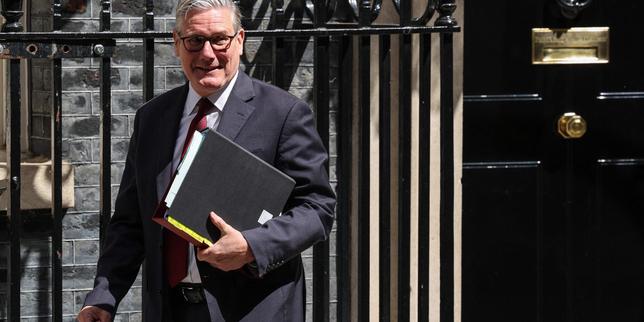
British politics doesn't do quiet summers anymore. If you think the massive parliamentary majority Keir Starmer won back in 2024 bought him an easy ride, you haven't been paying attention to the ground shifting beneath Westminster. The local election disaster earlier this month proved that voters are fickle, angry, and completely willing to punish the Treasury for a stagnant economy and high energy bills.
Now, everything rests on a single vote. On June 18, the voters of Makerfield will head to the polls for a by-election triggered by Josh Simons stepping down. It’s not just another local vote. It’s an absolute referendum on the prime minister's survival.
The strategy coming out of Downing Street is pure survival mode. Starmer insists he won't walk away, telling entrepreneurs in North London that he intends to lead the Labour Party into the next general election. But behind closed doors at Chequers, the mood is rancorous. The pressure isn't just coming from the opposition benches; it's coming from his own cabinet.
The King Across the River
What makes Makerfield a cinematic political drama is the man stepping into the arena. Andy Burnham, the high-profile Mayor of Greater Manchester, is running to return to parliament as the Labour candidate. It’s a transparent play for the top job. Burnham hasn't hidden his ambitions, and he’s already positioning himself as the anti-Westminster champion.
Burnham is already running a campaign that looks more like an alternative government manifesto than a standard by-election bid. He’s talking about bringing local rail lines into Manchester’s Bee Network, slashing transit fares, and lowering rents. More importantly, he’s explicitly challenging how Whitehall functions, arguing that the UK suffers from a bloated national state and a malnourished local one.
For Starmer, this is a nightmare scenario. If Burnham wins big, he enters the House of Commons with an immediate mandate for change, backed by a party membership that is increasingly exhausted by Starmer’s cautious, managerial style. If Burnham loses, it means the Labour brand is so toxic in its traditional northern heartlands that even a local heavyweight can't save it.
A Fragmented Electorate and the Reform UK Threat
You can't understand the peril facing Downing Street without looking at how the British electorate is splitting apart. In 2024, Labour won Makerfield with a fairly slim majority of 5,399 votes over Reform UK. That was before a wave of post-election disillusionment, the winter fuel payment cuts, and the recent economic fallout from the Iran crisis.
Reform UK has already demonstrated a terrifying capacity to overturn massive Labour majorities. Look at what happened in Runcorn and Helsby, where Reform overturned a 14,000-vote Labour cushion to win by a hair. Then the Greens did the exact same thing in Gorton and Denton, completely wiping out a 13,000 Labour majority.
Traditional voting patterns are dead. The first-past-the-post system, which gave Starmer his massive parliamentary majority on a historically low share of the popular vote, is now working against him. If progressive voters split toward the Greens and working-class voters jump to Reform, the Labour base simply evaporates.
The Cabinet Insurgency
Starmer’s authority is draining away in real-time, and his colleagues know it. Senior figures including Foreign Secretary Yvette Cooper and Energy Secretary Ed Miliband have quietly urged him to set out a timetable for an orderly transition of power. Angela Rayner has already made it clear she doesn't want to return to the cabinet as Health Secretary, signaling a distinct break from the core leadership team.
Biographers and insiders close to the Prime Minister paint a picture of immense internal anger. Starmer is reportedly furious with Miliband, viewing his private maneuvers as a deep betrayal.
Labour Party Leadership Challenge Threshold: 81 MPs
Right now, Starmer is relying on a camp of Downing Street hardliners who remind him that party rules require 81 MPs to formally trigger a leadership contest. So far, the rebels haven't reached that number. But the June 18 vote changes the math completely. A defeat in Makerfield will provide the momentum the rebels need to cross that threshold.
The Economic Hail Mary
To prevent a complete mutiny before June 18, Chancellor Rachel Reeves is prepping a series of urgent economic measures designed to win back angry voters. Buoyed by better-than-expected first-quarter growth, the Treasury is moving to cut daily living costs.
- Dropping the planned 5p increase in fuel duty that was set for September.
- Pumping up to £18 billion into a domestic defense investment program over the next four years.
- Introducing an autumn support package to help families deal with soaring energy bills.
It's a classic pre-election scramble, but it might be too late to shift the narrative. Voters are feeling the pinch now, and short-term tweaks rarely undo months of economic pessimism.
If you want to track how this crisis unfolds, keep a close eye on the internal polling out of Greater Manchester over the next three weeks. The real indicator of Starmer’s survival won't be his public speeches—it will be whether backbench MPs start publicly distancing themselves from Downing Street policy as June 18 approaches. Watch the data on Reform UK's polling numbers in the north; if they hold steady above twenty percent, the Prime Minister's hardline stance will become completely untenable.