Manila has pushed back against Beijing’s appeals for direct crisis communication despite repeated warnings of maritime miscalculation in the South China Sea, arguing that bilateral channels have repeatedly failed to restrain aggressive behavior at sea. Rather than treating direct contact as a safety valve, Philippine officials view it as a mechanism that has historically been used to manage optics while coercive operations continue uninterrupted. That skepticism sits at the heart of the standoff between the Philippines and China.
Anyone who has watched maritime disputes long enough recognizes the pattern. A tense encounter happens near a disputed feature. Statements fly. Then comes the call for calm dialogue, hotline activation, or quiet diplomatic consultations. On paper, crisis communication sounds like basic risk management. In practice, across the contested waters of the West Philippine Sea and the wider South China Sea, direct contact has often looked less like de-escalation and more like a treadmill.
The Illusion of the Safety Valve
Crisis hotlines and bilateral consultation mechanisms are built on a straightforward premise: when ships come close in tight quarters, fast communication prevents accidents from spiraling into conflict. Navies and coast guards around the world rely on bridge-to-bridge radio, established distress protocols, and direct command links to avoid misunderstandings. Those tools work best when both sides share a baseline agreement on rules and intent.
In the South China Sea, that baseline is contested at every turn. Beijing frames its presence around historic rights and sovereign control over features claimed by Manila under international law and a 2016 arbitral ruling that China rejects. When two sides disagree on what constitutes lawful passage versus trespass, a phone call or a working-group meeting does not automatically resolve the friction. It can just restate incompatible positions.
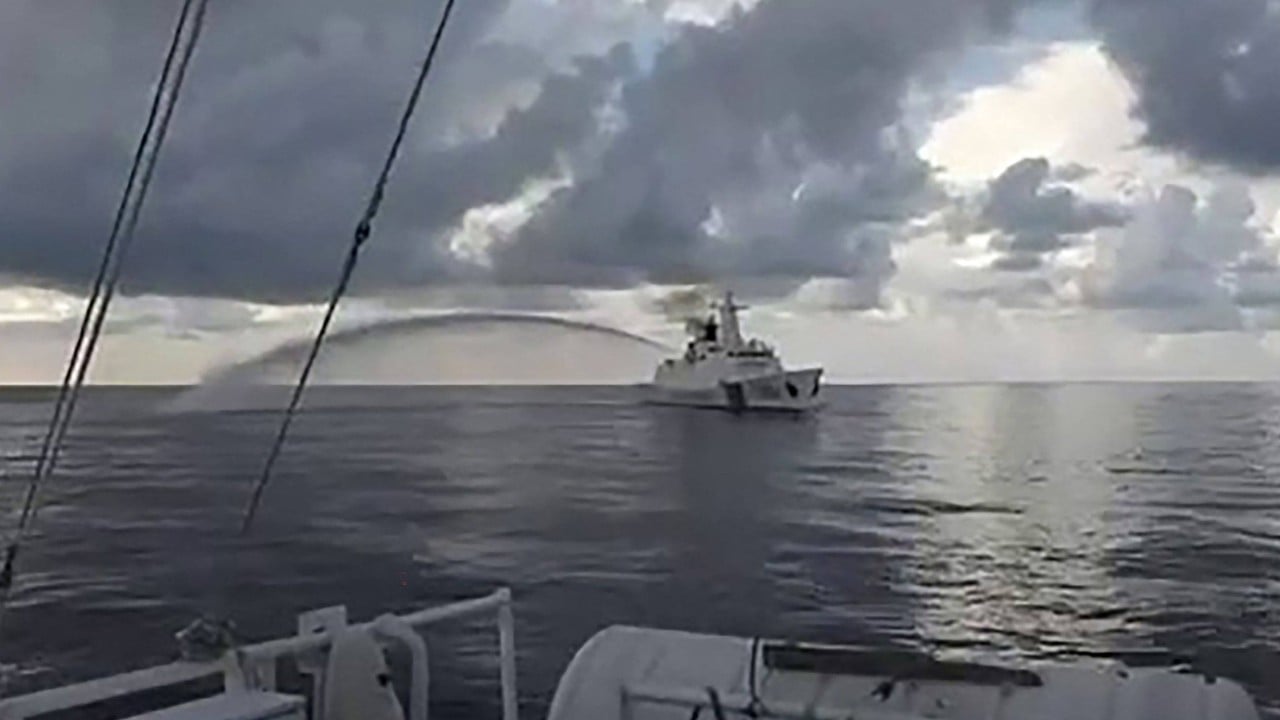
Philippine policymakers have drawn a hard lesson from years of engagement. Talks can drag on while vessels block resupply runs, deploy water cannons, or shadow patrols near features like Second Thomas Shoal or Scarborough Shoal. Critics of Manila’s posture argue that refusing direct engagement raises the odds of an accidental collision turning into something worse. That argument has real weight. Close quarters at sea leave very little margin for error.
Yet there is a counter-argument that rarely gets enough attention outside Manila. Engagement itself carries a cost when one side treats diplomacy as parallel pressure rather than restraint. If picking up the phone allows Beijing to project reasonableness while operations on the water keep shifting facts, Manila may conclude that silence or public transparency serves its interests better than closed-door assurances.
What Miscalculation Actually Means at Sea
Warnings about miscalculation tend to sound abstract until you picture a small vessel pitching in rough swell with coast guard ships maneuvering inches apart. Miscalculation does not require a mastermind ordering an attack. It can start with a misjudged turn, a radio channel that goes unanswered, a captain trying to prove resolve in front of cameras, or a flare fired out of fear rather than orders.
Even minor bumps carry outsized stakes when alliances and national pride are involved. A dented hull is one thing. An injured crew member or a sinking supply boat is another. Once blood is drawn or a vessel goes down, domestic pressure in both capitals can narrow the room for quiet compromise.
Beijing’s warnings about miscalculation often pair concern over incidents with a clear condition: keep things bilateral, keep outside powers out, and keep the dispute framed around direct talks. From Manila’s perspective, accepting that framing hands away leverage. Manila has spent years building coalitions, documenting incidents publicly, and reinforcing security ties with partners such as the United States, Japan, and Australia precisely because going one-on-one has felt like stepping into an uneven ring.
Asymmetric Pressure and the Credibility Problem
To understand why Manila resists Beijing’s calls for direct contact, look at the asymmetry between the two sides. China commands a massive coast guard, a large navy, and a sprawling maritime militia alongside civilian fishing fleets that can crowd contested waters. The Philippines has a smaller coast guard and a military long focused on internal security that is still modernizing its maritime capabilities.
When capabilities are uneven, process matters enormously. In bilateral talks, the larger power naturally sets much of the rhythm, agenda, and tone. A smaller state can find itself spending energy simply pushing back against narratives that paint its routine resupply or patrol missions as provocations.
Consider a hypothetical example to see how that dynamic plays out. Suppose a Philippine supply boat approaches an outpost and is blocked by larger vessels. A bilateral channel opens, and Beijing urges restraint while insisting its ships are merely enforcing order. If Manila accepts quiet talks without public accountability or clear operational limits, the next resupply mission can face the exact same blockade. Over time, repeated cycles of pressure followed by polite consultations can condition observers to treat abnormal coercion as normal background noise.
That is why public transparency has become a central tool for Manila. Inviting journalists aboard resupply vessels and releasing video or photos of close encounters changes the information environment. Instead of letting conflicting accounts cancel each other out behind closed doors, Manila puts physical actions on record.
Of course, publicizing every friction point has its own risks. Spotlight diplomacy can harden positions and make backing down politically harder for leaders on both sides. Some analysts worry that airing grievances loudly shrinks the space for quiet face-saving exits when tensions spike. Manila seems willing to accept that risk because it views quiet channels without results as a dead end.
Domestic Politics and the Cost of Appearing Soft
Foreign policy never happens in a vacuum. In the Philippines, public opinion toward Beijing is deeply shaped by lived experience in coastal communities and years of contentious maritime history. Any Philippine administration that appears overly accommodating on South China Sea sovereignty faces swift domestic backlash.
Leaders in Manila know that sovereign rights are not just legal abstractions in a courtroom. Fishermen who feel pushed out of traditional grounds experience sovereignty as food security and livelihood. When ordinary citizens see footage of aggressive maneuvers against Philippine vessels, calls from abroad to just talk things out can sound detached from reality.
At the same time, Manila has to balance firm pushback with practical management of broader ties. Trade, investment, agricultural exports, and regional diplomacy do not vanish overnight just because maritime disputes flare. Philippine officials have repeatedly tried to draw a line between defending sovereign rights at sea and avoiding unnecessary economic self-harm, even though Beijing often links the two in practice.
Meanwhile, Beijing has its own domestic constraints and strategic calculus. Projecting strength in waters it claims is tied to nationalist messaging and long-term regional ambitions. Warning of miscalculation allows Beijing to cast itself as the responsible adult urging calm, while placing blame on Manila and its security partners whenever tensions rise.
That framing creates a sharp clash of narratives. One side says: stop escalating with outside backing and talk directly to prevent disaster. The other side says: stop coercing vessels in our exclusive economic zone and respect international law if you want real stability.
Why Minilateralism and Alliances Reshape the Math
One major factor behind Manila’s confidence to push back is the shifting security geometry around the South China Sea. Rather than facing pressure in isolation, the Philippines has leaned into minilateral groupings and bilateral defense modernization. Joint patrols, intelligence sharing, and rotational deployments with treaty allies and regional partners give Manila options it did not have a decade ago.
These partnerships do not eliminate the risk of an incident at sea. In fact, having foreign ships or aircraft nearby during a tense moment adds complexity to the airspace and waters. A close pass by an aircraft or an aggressive shadow by a vessel can quickly turn a bilateral spat into a broader regional worry.
Still, from Manila’s vantage point, collective backing alters the deterrent equation. Coercion works best when a target feels alone and cornered. When multiple countries pay attention, conduct freedom-of-navigation operations, or speak out on maritime rules, the cost to the coercing side rises, at least reputationally and diplomatically.
There is a catch, though. Reliance on external partners brings questions about autonomy and predictability. Political shifts in partner capitals can alter priorities or timelines. A smart strategy in Manila cannot treat alliances as a blank check or assume outside help will always arrive on the exact terms Philippines leaders prefer.
The Gray Zone Trap No Hotline Fixes
Much of the friction in the South China Sea unfolds in the gray zone, the space between routine peacetime competition and outright armed conflict. Gray zone tactics rely on incremental moves that stay just below the threshold that would trigger a major military response. A laser shone at a crew, a water cannon blast, a dangerous maneuver, or a sudden swarm of vessels can disrupt operations without crossing into declared war.
Traditional crisis hotlines were largely designed for conventional military incidents or accidental clashes, not sustained gray zone pressure. If one side views gray zone harassment as legitimate law enforcement or routine patrol, calling a hotline to complain about harassment does not solve the core disagreement. It merely registers a protest.
That leaves a thorny dilemma for anyone worried about stability. Without effective guardrails, the risk of an accidental spark remains real. Yet without mutual respect for basic operational norms, crisis mechanisms can easily become theater.
True de-escalation requires more than a phone number or a scheduled meeting. It requires restraint at the tactical level, clear rules on safe separation between ships, and a willingness by both sides to step back from dangerous maneuvers near contested features. Until those habits take root, skepticism toward direct contact in Manila will remain stubborn.
Where the Standoff Goes From Here
Rejecting Beijing’s calls for direct contact does not mean Manila has closed the door on diplomacy forever. States routinely keep channels open through embassies, coast guard contacts, or regional forums even while trading sharp public criticisms. What Manila is rejecting is the idea that bilateral talks should serve as a substitute for accountability or a cover for continued pressure at sea.
Watch what happens on the water rather than listening only to diplomatic rhetoric. The real test of whether either side is serious about preventing miscalculation lies in ship spacing, radio discipline, and restraint during resupply missions. Words are cheap when vessels are idling safely in port; discipline is tested when hulls are close and tempers run high.
If Beijing wants Manila to take calls about miscalculation seriously, actions on the water have to match the warning. Otherwise, every appeal for calm will sound like a request to look away while the pressure continues.