The sea at dawn is not blue. It is an unpolished sheet of pewter, heavy and cold, reflecting a sky that refuses to break.
Standing on the bridge of a destroyer five hundred miles off the coast of Luzon, you do not think about gross domestic product statistics or freedom of navigation communiques. You think about the coffee in your thermos, the salt crusting on your eyelashes, and the profound, terrifying vastness of the water. Beneath this surface lies a world measured not in miles, but in seconds. Seconds for a radar sweep to bounce off a hull. Seconds for a crew to react. Seconds that separate deterrence from catastrophe.
We are told that peace is a noun. It is not. It is a verb, constantly negotiated at thirty knots through salt spray and heavy swells.
Listen closely.
Across thousands of miles of open ocean, a quiet architecture of steel and satellite signals is being drawn. It is a contest of wills fought by people whose names will never make the evening news. On one side stands a military establishment stretching back generations, anchored by alliances forged in the fires of past centuries. On the other rises a modern industrial powerhouse with shipyards glowing twenty-four hours a day, turning out hulls at a pace not seen since the industrial mobilization of the 1940s.
To understand what is happening in the Indo-Pacific right now, you have to forget the dry briefings given behind walnut desks in Washington and Beijing. You have to look at the fishermen whose nets are tangled by gray-hull patrols. You have to look at the young sailors—nineteen years old, skin peeling from the tropical sun—who stare into infrared scopes night after night, waiting for a blip that might change history.
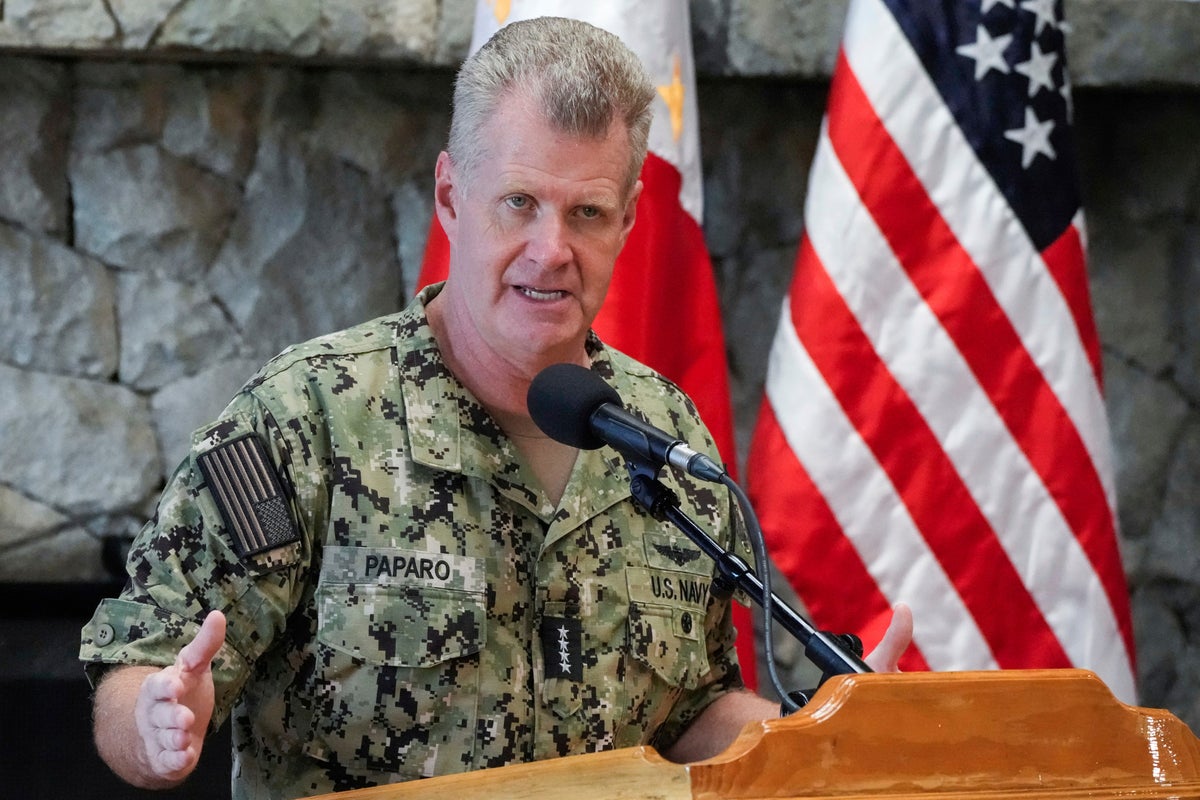
When top United States commanders step up to podiums and pledge that Beijing will not dominate these waters, they are not simply talking about maritime law. They are talking about the integrity of a global artery. Nearly half of the world's container ship fleet passes through these straits. The smartphone in your pocket, the fuel in your car, the coffee you drank this morning—all of it rides on the currents of the South China Sea and the Taiwan Strait.
Dominance here means control over the choke points of the twenty-first century.
Imagine a highway with no exits, stretching across four thousand miles of open water. Now imagine someone putting up tollbooths every five hundred miles, demanding papers, checking manifests, and eventually, closing the road entirely to anyone who does not share their ideology. That is the fear. That is the architecture being resisted.
Yet, resistance is expensive.
During my time working alongside naval planners, I learned a simple, sobering truth: logistics is the skeleton of strategy. You can build the most advanced fighter jet in existence, but if you cannot refuel it three thousand miles from home, it is a very expensive paperweight. For decades, American strategy relied on a network of permanent bases—massive hubs of concrete and fuel depots that could withstand almost anything.
That era is ending.
The strategy has shifted toward something far more precarious and far more resilient. They call it agile combat employment in the boardrooms, but on the ground, it looks like a handful of mechanics landing a transport plane on a remote jungle airstrip, fixing a wing under a camouflage net, and taking off before local spotters can radio their coordinates. It is chess played with thousands of moving pieces across an ocean larger than the moon's surface area.
Consider what happens next in this silent chess match.
Beijing’s maritime strategy is built on what military analysts call anti-access area denial. Picture an invisible fence of anti-ship missiles, radar stations built on disputed coral reefs, and swarms of maritime militia vessels acting as floating tripwires. The goal is simple: make the cost of entry too high for anyone else to bear. Convince the world that the risk of sailing here outweighs the reward.
The counter-strategy relies on distribution. Instead of putting all eggs in a few massive aircraft carriers—floating cities that make tempting targets—the allied approach scatters power. Hundreds of smaller, unmanned vessels skim the waves. Satellites track every wake from low Earth orbit. Submarines, silent and unseen, patrol the deep trenches where the water turns black and freezing.
It is a technological arms race, yes. But it is fundamentally human.
Let me introduce you to Commander Li, a hypothetical name for a very real archetype. He is forty-two, an instructor at a naval academy in Qingdao, steeped in the century-long humiliation of his nation's past maritime weakness. When he looks at the Indo-Pacific, he does not see a global commons. He sees a backyard that was partitioned by foreign powers while his ancestors starved. He sees a historical correction that is long overdue. His motivation is not malice; it is destiny, as he understands it.
Now look across the water at Lieutenant Miller. She is twenty-six, an electronic warfare officer stationed in Yokosuka. Her grandfather fought in the Pacific theater, a fact she remembers every time she reads intelligence reports about Chinese naval expansion. She does not think about geopolitics when she reports for duty at 0400 hours. She thinks about the crew below deck, about the redundant power systems, about whether the code she updated yesterday will hold if things go dark.
These two worldviews are on a collision course, not because anyone necessarily wants war, but because their baselines are incompatible.
One side demands exclusivity. The other demands openness.
You cannot compromise on an ocean. You cannot split a shipping lane down the middle and let two opposing navies claim sovereignty over the same square mile of water. Someone has to give way. And neither side is in the mood to yield an inch.
This brings us to the core tension of our time. The deterrent posture maintained by Washington and its regional partners—Japan, Australia, the Philippines, and others—is designed to make the cost of aggression too steep to calculate. It is an exercise in psychological architecture. The entire game is about convincing the other side that today is not the day to cross the line.
Every single patrol is a message. Every joint exercise involving thousands of troops landing on remote beaches in Luzon is a neon sign flashing across the horizon: We are here. We are watching. The cost is too high.
But deterrence is a fragile flower. It requires constant tending. Miss one beat, show one moment of hesitation, and the psychological barrier crumbles.
We live in the shadow of this invisible contest. Most people go about their days eating brunch, scrolling through feeds, arguing about local politics, entirely unaware that the price of their stability is being underwritten by a kid from Ohio shivering on a destroyer deck off the coast of Palawan.
The commander’s vow—that Beijing will not dominate the Indo-Pacific—is not a guarantee. It is a bet. A bet placed against the relentless march of industrial capacity, against the clock of technological surprise, against the sheer weight of geography.
The sun rises higher over the Philippine Sea. The pewter surface of the water turns a blinding, metallic silver. On the radar screen, a small green dot flickers, moves ten miles to the northeast, and disappears into the clutter.
Somewhere out there, in the vast, indifferent blue, the mapmakers are still drawing lines that no one dares to cross.