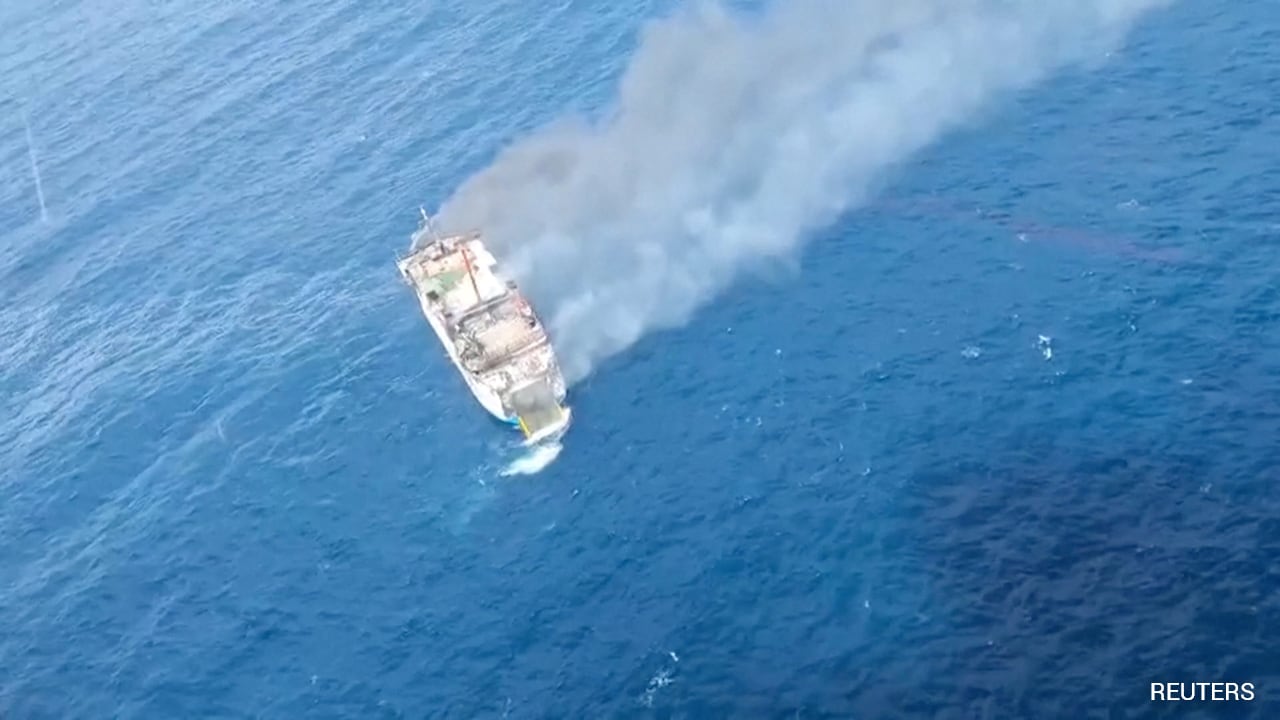
Marine transit incidents are rarely isolated mechanical failures; they are structural breakdowns where human response time, emergency asset distribution, and environmental variables intersect under extreme pressure. When a maritime fire forces mid-ocean evacuation, survival depends entirely on the kinetic efficiency of the response chain. The recent incident in Indonesian waters involving a burning ferry—resulting in one fatality and 172 individuals successfully extracted—serves as a stark case study in the friction points of marine crisis management.
To understand how a vessel transitions from a transit platform to an active hazard zone, one must analyze the systemic pressures governing archipelago logistics. High passenger density, variable regulatory enforcement, and extended emergency asset deployment vectors dictate the baseline risk profile of inter-island transit. When fire breaks out below deck, the standard operational calculus shifts from route optimization to thermal containment and immediate abandonment protocols.
The Triad of Maritime Fire Vulnerability
Marine vessel fires operate under a distinct set of physical constraints that differentiate them from structural fires on land. The combination of combustible synthetic materials, restricted ventilation channels, and isolated locations creates a high-risk environment.
[Ignition Source] ---> [Fuel Load (Cargo/Interior)] ---> [Oxygen Supply (HVAC/Openings)] ---> [Thermal Runaway]
Fuel Load Concentration and Containment Limits
Modern ferries maximize interior volume to transport both passengers and vehicular cargo. This creates high concentrations of polymer-based furnishings, textiles, and internal combustion fuels within a confined steel shell. When a thermal event initiates, the spatial density accelerates smoke accumulation. Escape routes quickly become obscured, transforming structural corridors into zero-visibility zones long before structural integrity is compromised.
Ventilation Dynamics and Oxygen Ingress
Marine ventilation systems are engineered to circulate air across multiple compartments. During a fire, these same ducts act as transport highways for toxic gases and superheated air. Without immediate automated damper isolation, oxygen feeds the combustion cycle while smoke bypasses standard fire boundaries, trapping passengers in forward or upper compartments away from primary muster stations.
Evacuation Bottlenecks at Bulkhead Transitions
The architectural layout of inter-island ferries typically features narrow stairwells and restricted watertight door clearances. When panic sets in, human movement through these choke points drops significantly below theoretical capacity. The transition from open deck spaces to embarkation stations represents the single highest point of friction in any evacuation matrix.
The Operational Cost Function of Emergency Response
Evaluating the rescue of 172 passengers requires examining the operational variables that dictate survival outcomes during mid-sea crises. The effectiveness of any rescue operation is a function of time, location, and resource availability.
$$\text{Survival Probability} = f(\text{Response Time}) - (\text{Environmental Friction} + \text{Information Latency})$$
The Response Time Gradient
The distance between the distressed vessel and the nearest operational coast guard or naval asset establishes the baseline time window. In sprawling archipelagic regions, assets are frequently distributed across vast maritime sectors. Every minute of transit delay exponentially increases thermal exposure for passengers and degrades the structural stability of the burning hull.
Environmental Friction Variables
Sea state, wind speed, and visibility directly govern the mechanics of transferring passengers from a listing, burning vessel to rescue craft. High swells complicate life raft deployment and make side-to-side vessel transfers hazardous. The Indonesian incident occurred within coastal or inter-island transit zones where local fishing vessels and commercial traffic often bridge the gap before official state assets arrive, highlighting the critical value of decentralized, opportunistic rescue networks.
Information Latency and Distress Signaling
Before a rescue asset can deploy, precise coordinates and status updates must clear communication loops. Delays in transmitting an accurate distress signal compound the response time gradient. When onboard power systems fail due to fire damage, secondary communication protocols must immediately activate to prevent telemetry blackouts.
Systemic Vulnerabilities in Inter-Island Transit
Standard safety compliance metrics often fail to capture the operational realities of high-volume passenger routes. Mitigating recurring maritime disasters requires addressing three systemic failure points.
Regulatory Compliance vs. Operational Reality
While statutory frameworks mandate specific quantities of life rafts, personal flotation devices, and fire suppression systems, actual maintenance cycles and crew readiness vary widely. Compliance on paper does not guarantee functional readiness under emergency stress. Crew members require continuous, scenario-based simulation training rather than static certification to execute rapid abandonment protocols effectively.
Passenger Density and Spatial Management
Overcrowding remains a persistent risk factor in high-demand travel seasons. When passenger counts exceed optimal manifest thresholds, the physical distribution of life-saving equipment per capita drops, and evacuation pathways become obstructed by baggage and temporary seating configurations.
Asset Redundancy and Fire Suppression Architecture
Many regional ferries rely on localized, manual fire-fighting apparatus rather than total-flooding gas or water-mist suppression systems in engine and cargo spaces. Without automated detection and suppression linked to central command, small electrical or mechanical ignitions can cascade into catastrophic hull fires before crew intervention can take effect.
Strategic Operational Recommendations
To shift the safety baseline from reactive rescue to preventative containment, maritime operators and regulatory bodies must implement structural engineering and protocol upgrades across all regional fleets.
- Mandatory Automated Suppression in High-Risk Zones: Retrofit all vehicle decks and engine rooms with localized thermal-triggered suppression systems that operate independently of central power grids.
- Decentralized Emergency Asset Staging: Position fast-response rescue craft at strategic maritime junctions across high-density transit corridors rather than centralizing assets in major ports.
- Optimized Egress Architecture: Redesign interior corridor signage, lighting, and bulkhead door clearance to eliminate choke points and maintain visibility during total power loss scenarios.
- Dynamic Passenger Manifest Tracking: Implement digital ticketing and scanning at embarkation points to maintain real-time, highly accurate headcounts, eliminating ambiguity during rescue coordination.


