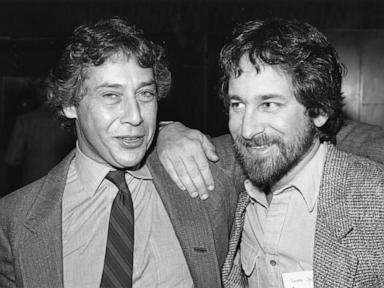
Hollywood loves a neon-lit myth about youth, but the cinematic landscape lost one of its fiercest traditionalists when Mark Rydell passed away at the age of ninety-seven. He did not achieve fame by chasing passing digital trends or relying on bloated superhero franchises. He earned his reputation by anchoring himself in character psychology, actor trust, and uncompromising narrative tension. When news of his death at ninety-seven spread through the industry, it marked the quiet closing chapter for a rare breed of filmmaker who bridged the golden era of television with the gritty auteur-driven renaissance of nineteen-seventies cinema.
You might remember him best as the director behind the sun-drenched, emotionally raw family drama On Golden Pond, which pulled in ten Academy Award nominations and secured acting wins for both Henry and Jane Fonda. Yet reducing Rydell's career to a single lakeside triumph misses the wider, harder-edged truth of his multi-decade run. He was an actor’s director first, a disciplined technician second, and a survivor of studio boardrooms always.
The Juilliard Foundation and the Acting Crucible
Before Rydell ever stepped behind the camera to call action, he spent years standing in front of audiences. Born in New York City, he studied music at the Juilliard School, initially training as a classical pianist before pivoting toward performance. That musical background mattered. It bled directly into how he managed pacing, dialogue cadence, and emotional crescendos on set. He understood rhythm. He knew when a scene needed to hold a tense silence and when a character should strike a high, sharp note.
His early days included grinding it out on the New York stage and landing television roles during the frantic live-broadcast era of the nineteen-fifties. This meant he learned the craft under pressure. If a live broadcast went sideways, you improvised or you failed publicly. That grit carried over into his transition to directing television classics like Ben Casey and I Spy.
Television in that era was not treated as a prestigious cinematic stepping stone. It was a factory. Rydell treated it as an intensive masterclass in visual storytelling, learning how to squeeze maximum dramatic impact out of minimal budgets and punishing production schedules. When he finally transitioned to feature films with The Fox in nineteen sixty-eight, he brought that television-honed efficiency with him, but injected it with the psychological daring that the changing cultural climate demanded.
Directing Icons Without Breaking Them
Actors can smell fear and incompetence from fifty paces. Rydell survived because he spoke their language fluently. He spent time in the trenches as a performer, studying at the Neighborhood Playhouse under legendary acting teacher Sanford Meisner. That grounding gave him a distinct advantage when handling notoriously volatile or demanding star talent.
Consider the casting dynamic of On Golden Pond. Directing real-life father and daughter Henry and Jane Fonda in a story specifically built around deep-seated familial resentment and emotional reconciliation is a high-wire act. Real family histories bleed into scripted lines. Old grievances find new oxygen on a soundstage. Rydell did not shy away from that friction. He utilized it. He created an environment where the vulnerability required for those performances felt safe, even while pushing the actors toward uncomfortable personal territory.
Directing is ninety percent casting and ten percent staying out of the way. But the ten percent requires you to have the courage to tell a massive star when their vanity is ruining the frame.
He applied that same unflinching gaze to The Rose, starring Bette Midler as a self-destructive rock star modeled loosely on Janis Joplin. Midler was transitioning from powerhouse concert performer to dramatic lead. The role demanded raw, unvarnished exhaustion. Rydell pushed Midler past her comfort zone, capturing a performance that felt less like an acting job and more like an emotional evacuation. The resulting film was messy, loud, and undeniably alive. It proved he could handle modern pop culture iconography just as deftly as classic theatrical royalty.
The Business Behind the Art
We often romanticize the seventies as a magical era where studios handed bags of cash to visionary directors and walked away. That is a fairy tale. It was a high-stakes corporate gamble where directors had to fight tooth and nail for every frame of artistic integrity. Rydell understood the economics of moviemaking. He knew that to make personal, character-driven dramas about flawed humans, you had to keep the production solvent.
His filmography showcases a restless refusal to be typecast. He bounced effortlessly between genres. He tackled the Western with The Cowboys, forcing a young John Wayne to mentor a group of underage boys on a grueling cattle drive, a narrative choice that famously altered the aging star's screen mortality. He steered the gritty crime drama Cinderella Liberty. He directed the romantic comedy Intersection.
Each project demanded a distinct mechanical approach. Westerns require a mastery of geography, space, and horizon lines. Intimate dramas require tight focal lengths, capturing the micro-expressions of a face twitching under pressure. Rydell possessed that technical versatility. He was not an auteur defined by a singular, repetitive visual gimmick. He was a professional storyteller who chose the tool that best served the human conflict at the center of the script.
The Vanishing Craft of Mid-Budget Drama
The real tragedy of Rydell passing away at ninety-seven is not merely the loss of a talented individual. It highlights the absolute extinction of the kind of career he built. Today’s major studios rarely greenlight mid-budget, character-driven adult dramas. The financial architecture of modern entertainment relies on intellectual property, four-quadrant global appeal, and computerized risk mitigation.
If a studio executive read the script for The Fox or The Rose today, the notes meeting would likely demand a franchise tie-in or an algorithmic overhaul to guarantee international box office returns. Rydell operated in a window of time where human behavior, psychological deterioration, and quiet emotional reconciliation were considered sufficient fuel to captivate an audience for two hours.
His legacy challenges modern filmmakers to look past the green screen and remember that tension lives between people, not inside digital rendering farms. He did not need massive CGI spectacles to command attention. He needed a lens, a script that respected the intelligence of the viewer, and actors willing to strip away their armor.
Mark Rydell spent his final years teaching, mentoring younger generations of directors, and advocating for the preservation of actor-centric storytelling. He watched the industry transform from celluloid and live television into streaming platforms and algorithmic metrics, yet his core philosophy never shifted. Art requires risk, actors require empathy, and audiences ultimately respond to the brutal, beautiful truth of human imperfection.