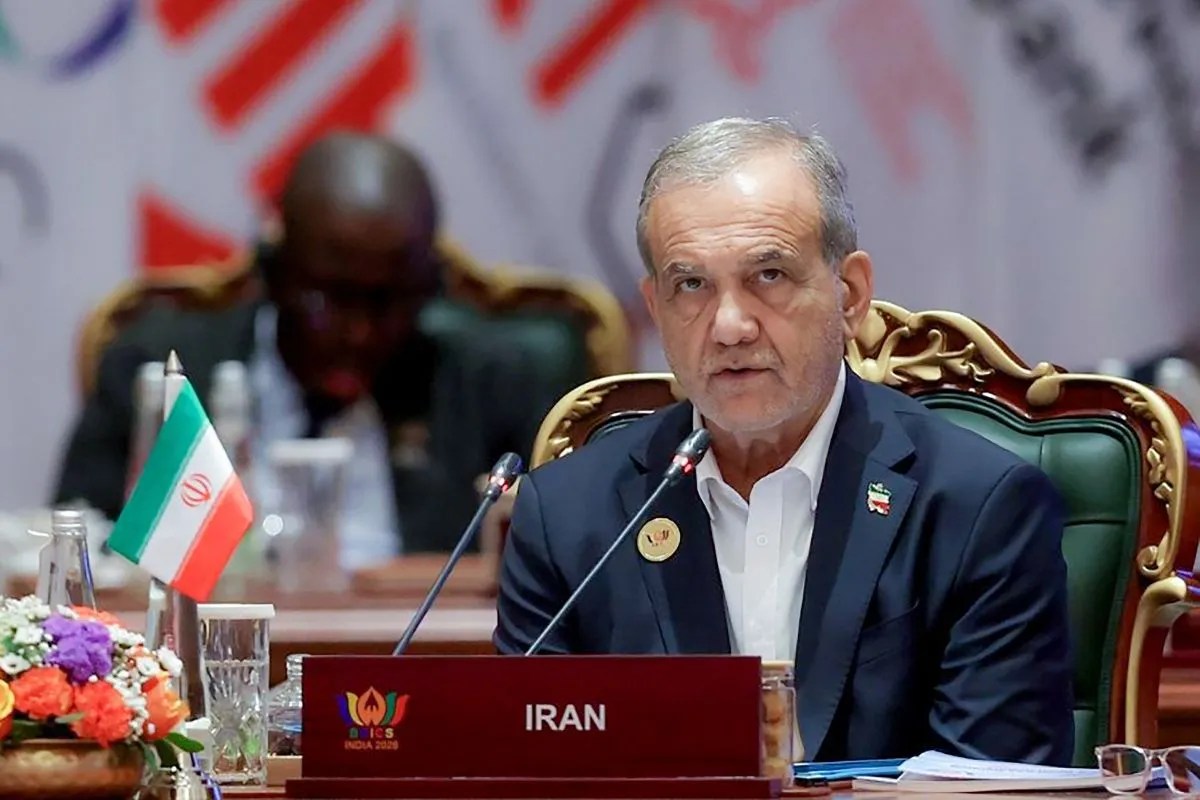
Geopolitical chess matches rarely play out on stages as bright or as tense as the United Nations General Assembly in New York. When Iranian President Masoud Pezeshkian touched down in the United States amid an active military conflict with Washington and Israel, the optics alone signaled a massive diplomatic gamble. You aren't just looking at another standard round of international posturing here. This visit took place against the backdrop of closed airspace, severe movement restrictions imposed by the US State Department, and a furious war of words between Tehran and the White House.
If you've been trying to figure out why this specific UN assembly matters so much more than previous years, you have to look at the ground reality in the Persian Gulf. The conflict didn't stay contained. With major shipping bottlenecks like the Strait of Hormuz feeling the squeeze and regional proxies exchanging fire, Pezeshkian’s journey to Manhattan wasn't a sign of backing down. It was a calculated effort to take Tehran's narrative directly to the global microphone, even while restricted mostly to his Manhattan hotel and the UN headquarters.
The Reality Behind the New York Restrictions
Let's talk about the logistics because they tell a story of deep hostility. Washington didn't exactly roll out the red carpet. American authorities slapped strict containment measures on the Iranian delegation, limiting Pezeshkian's physical footprint to a tight radius. On top of that, visa denials clipped the wings of several members of his media and support teams, drawing sharp rebukes from Tehran.
Yet, Pezeshkian went anyway. Why? Because sitting out the General Assembly would have handed a total victory to Washington's diplomatic isolation strategy. By showing up, he forced the international community to look past the economic sanctions and listen to Iran's defense. When the Iranian president stepped up to the podium, the US delegation made a point of walking out of the assembly hall. That empty row of seats spoke volumes about where bilateral relations stand right now.
What Pezeshkian Actually Said at the Podium
Most mainstream coverage focused purely on the fiery quotes, but the core message was structured around two contrasting positions: fierce military defiance paired with an open door for conditional nuclear talks. Pezeshkian didn't mince words about Donald Trump's threats of total destruction or the joint military campaigns launched by the US and Israel earlier in the year.
Instead of playing the role of the aggressor, Pezeshkian flipped the script. He argued that Iran has spent decades as a victim of state-sponsored pressure rather than being the source of regional terror. He brought up the human cost, highlighting civilian casualties and arguing that nuclear technology remains a domestic energy right rather than a weapon-building program.
"We did not bend the knee," Pezeshkian told world leaders, emphasizing that while Tehran is ready to talk diplomacy, it will never negotiate under the barrel of a gun or accept the language of force.
The Nuclear Standoff and the Road Ahead
Behind closed doors with UN leadership like Secretary-General António Guterres, the conversation focused heavily on breaking the nuclear deadlock. Tehran maintains that the US broke past diplomatic pacts three times over, destroying mutual trust. Meanwhile, Washington insists that Iran must dismantle its military capabilities and accept stringent constraints before any permanent sanctions relief is put on the table.
Here is what most casual observers miss about this dynamic. Pezeshkian operates under immense pressure from hardliners back home who view any engagement with the West as a trap. His trip to New York was a tightrope walk. He had to prove to domestic critics that he wouldn't surrender to Western demands, while simultaneously signaling to European and Asian diplomats that Iran isn't closed to a negotiated settlement.
If you are tracking where this goes next, keep your eyes on backchannel communications in neutral capitals. The speeches in New York make for great headlines, but actual de-escalation will happen quietly through intermediaries, long before any photo-ops take place on American soil.



