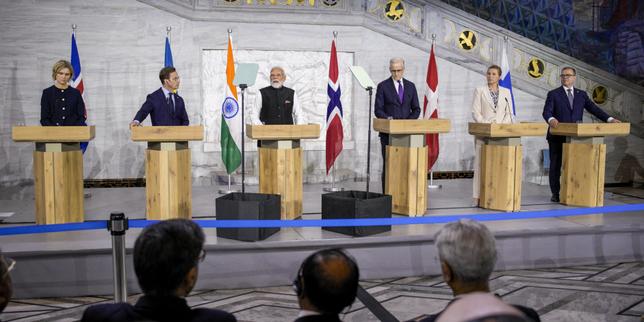
The confirmation that President Donald Trump will travel to China for a formal trilateral summit with President Xi Jinping and President Vladimir Putin marks a structural break in post-Cold War diplomatic architecture. Standard media coverage frames this event through personality dynamics or immediate partisan reactions, missing the underlying mechanics of great power bargaining. A trilateral configuration among Washington, Beijing, and Moscow alters the payoff matrices of global trade, energy markets, and security alliances by collapsing two separate bilateral disputes into a single, interconnected negotiation. To understand the outcomes of this meeting, analysts must discard diplomatic rhetoric and examine the structural incentives, leverage asymmetries, and institutional constraints governing each capital.
The Structural Shift from Bilateralism to Trilateral Bargaining
For the past decade, U.S. foreign policy operated on a dual-track containment model. Washington managed strategic competition with China primarily through trade tariffs, export controls on advanced semiconductors, and Indo-Pacific security partnerships, while simultaneously isolating Russia through financial sanctions, energy price caps, and military aid to Ukraine. The strategic logic relied on keeping these theaters compartmentalized so that concessions in one arena did not bleed into the other.
A formal trilateral summit in Beijing dismantles that compartmentalization. By sitting at the same table, the three leaders create a unified bargaining space where security guarantees in Eastern Europe, tariff schedules across the Pacific, and energy flows across Eurasia become fungible variables. In game theory, moving from two-player sequential games to a three-player simultaneous game introduces the risk of coalition formation. Specifically, Washington faces the structural disadvantage of negotiating on host territory where Beijing and Moscow share an established alignment against U.S. financial and military hegemony.
However, an alignment is not an alliance. The core error in superficial geopolitical analysis is treating China and Russia as a monolithic bloc. Their underlying economic functions are asymmetric:
- China's Objective Function: Beijing requires stable access to Western consumer markets, high-end technology inputs, and predictable maritime trade routes to manage domestic deflation, real estate deleveraging, and industrial overcapacity. Prolonged global instability directly threatens the Chinese Communist Party's domestic legitimacy, which rests on economic performance.
- Russia's Objective Function: Moscow operates under a wartime mobilization economy. Its primary currency is geopolitical disruption, territorial control, and the degradation of Western security architectures. Having absorbed extensive Western sanctions, Russia's marginal sensitivity to new economic penalties is low, giving Putin a higher tolerance for protracted conflict than either Trump or Xi.
- The United States' Objective Function: Washington seeks to arrest industrial hollowing, reduce overseas military entanglements that drain fiscal capacity, and reset trade balances through bilateral reciprocity rather than multilateral consensus.
Trump's decision to enter a Beijing-hosted summit indicates a willingness to bypass traditional multilateral institutions—such as NATO, the G7, and the World Trade Organization—in favor of direct executive deal-making. This approach prioritizes speed and transactional clarity over institutional preservation, creating immediate friction with traditional U.S. treaty allies in Europe and East Asia who are excluded from the room.
Deconstructing the Three-Body Leverage Matrix
Evaluating the probable outcomes of the summit requires quantifying the specific leverage each actor brings to the table and the domestic constraints limiting their room for maneuver. Without verified summit agendas, the mechanics of the negotiation can be mapped through the primary pressure points each nation controls.
Washington's Asymmetric Tools
The United States holds two dominant forms of structural leverage: access to the world's largest consumer market and control over the global dollar-clearing system.
First, tariff architecture serves as Trump's primary blunt instrument. By threatening or implementing across-the-board tariffs on Chinese imports—and secondary tariffs on nations routing Chinese goods—Washington directly targets Beijing's export-led growth model. Because China's domestic consumption remains insufficient to absorb its manufacturing output, losing U.S. market share triggers immediate factory closures and rising youth unemployment inside China.
Second, Washington controls the escalation ladder regarding secondary sanctions on Chinese financial institutions facilitating Russian defense procurement. Up to this point, the U.S. Treasury has calibrated these sanctions to avoid triggering a systemic global banking crisis. In a trilateral setting, the threat of severing major Chinese state-owned banks from dollar clearing acts as a powerful deterrent against deeper Sino-Russian military integration.
The limitation of U.S. leverage lies in domestic inflation sensitivity and supply chain dependencies. Aggressive tariff implementation risks reigniting consumer price inflation in the United States, while critical mineral processing—specifically rare earth elements, gallium, and germanium—remains heavily concentrated within Chinese borders. Washington cannot execute a total economic decoupling without absorbing severe short-term industrial disruption.
Beijing's Home-Field Advantage and Economic Constraints
Hosting the summit allows Xi Jinping to project global diplomatic primacy to both his domestic audience and the Global South. Substantively, Beijing's primary leverage stems from its position as the indispensable manufacturing hub for global green energy, electronics, and pharmaceutical precursors, alongside its financial lifeline to Moscow.
Since 2022, China has absorbed discounted Russian crude oil and pipeline gas while supplying Russia with dual-use machine tools, microelectronics, and commercial vehicles. This economic dependency gives Xi significant coercive capacity over Putin. If Beijing restricts dual-use exports or curbs energy purchases, Russia's wartime industrial base faces severe contraction.
Yet Xi enters the summit constrained by severe domestic macroeconomic headwinds. China faces a structural demographic decline, a multi-year contraction in property values that has eroded household wealth, and mounting local government debt. Xi needs a stabilization of U.S.-China trade relations to prevent foreign capital flight and secure breathing room for domestic industrial upgrading. Consequently, Beijing has a strong incentive to act as a broker, extracting U.S. tariff relief and technology export exemptions in exchange for pressuring Moscow toward a negotiated settlement in Eastern Europe.
Moscow's Spoiler Dynamics and Territorial Reality
Vladimir Putin enters Beijing with the weakest macroeconomic hand but the highest tactical risk tolerance. Russia's economy is heavily distorted by military spending, suffering from acute labor shortages and elevated interest rates required to contain inflation. Despite these pressures, Russia retains operational momentum on the ground in Ukraine and possesses the world's largest nuclear arsenal, ensuring it cannot be coerced through conventional military threats.
Putin's primary objective is the formal recognition of territorial gains in Ukraine, the permanent neutralization of Ukraine's NATO aspirations, and the dismantling of Western sanctions regimes. In a trilateral setting, Putin's main leverage is his capacity to act as a spoiler. If Washington and Beijing attempt to draft a framework that ignores Moscow's core security demands, Putin can escalate kinetic operations or deepen military technology transfers to U.S. adversaries such as Iran and North Korea, thereby raising the security costs for both Washington and Beijing.
The Transmission Mechanisms of a Trilateral Bargain
If the three leaders move beyond ceremonial posturing to substantive deal-making, any resulting framework will operate through three specific transmission mechanisms across global markets and security architectures.
1. The Eurasian Security-for-Trade Swap
The central transactional hypothesis of the summit involves linking Eastern European security arrangements to Pacific trade policy. In this scenario, Washington agrees to freeze NATO expansion, halt long-range weapons transfers to Kyiv, and push for a territorial ceasefire along current lines of control. In exchange, Moscow agrees to halt offensive operations and limit strategic weapons deployments near European borders.
To secure Beijing's enforcement of this ceasefire, Washington would offer phased reductions in punitive tariffs on non-strategic Chinese consumer goods and establish a predictable licensing regime for legacy semiconductor equipment. Beijing, in turn, would underwrite Ukrainian reconstruction and use its economic leverage to ensure Moscow adheres to the demarcation lines.
The operational flaw in this mechanism is verification and enforcement. Ceasefires without credible, armed peacekeeping buffers historically degrade into frozen conflicts that resume once the revisionist power reconstitutes its forces. Furthermore, European NATO members—excluded from the Beijing talks—retain independent fiscal and industrial capacity to continue supporting Ukraine, potentially undermining a bilateral U.S.-Russian understanding.
2. Commodity Market Realignment and Energy Flows
A trilateral thaw directly impacts global energy and agricultural pricing. Currently, Western sanctions force Russian crude oil onto a shadow fleet of tankers, increasing transaction costs and routing supplies predominantly to China and India at discounted rates.
If the summit produces a partial lifting of U.S. energy sanctions as part of a broader conflict settlement, Russian oil and liquefied natural gas would re-enter global markets more efficiently. This supply normalization would depress global benchmark crude prices, easing inflationary pressures in Western economies while simultaneously reducing Russia's per-barrel discount. However, lower global oil prices reduce the profit margins of U.S. shale producers, creating a domestic political trade-off for the Trump administration between lower consumer fuel costs and domestic energy sector revenues.
Simultaneously, agricultural trade serves as an immediate confidence-building measure. China can rapidly execute large-scale purchases of U.S. soybeans, corn, and pork—commodities easily substituted from Brazilian suppliers—to deliver an immediate, quantifiable political win for Trump's domestic constituency without compromising Beijing's core industrial policies.
3. Technology Bifurcation and Export Control Boundaries
While tariffs are negotiable, high-end technology controls represent a structural boundary. Neither Washington nor Beijing will surrender primacy in artificial intelligence, quantum computing, or advanced aerospace.
A realistic outcome of the summit is not the elimination of export controls, but their precise codification. Rather than unpredictable, rolling blacklists that disrupt global corporate supply chains, the three powers could establish clear red lines separating civilian commercial technology from military-grade dual-use systems. This reduces compliance uncertainty for multinational corporations while keeping the core technological competition intact.
Institutional Blind Spots and Execution Risks
Analysts tracking this summit must account for severe execution risks that standard diplomatic commentary overlooks. Agreements reached at the leader-to-leader level frequently stall when translated into bureaucratic implementation.
First, the Principal-Agent Problem within the U.S. government creates implementation friction. Even if Trump agrees to modify sanctions or tariff schedules in Beijing, statutory restrictions passed by Congress—such as the Countering America's Adversaries Through Sanctions Act (CAATSA)—legally constrain executive authority to unilaterally lift certain penalties on Russia without legislative review. Similarly, bipartisan consensus in Washington regarding the Chinese technological threat means any perceived concession on semiconductor controls will face immediate legislative pushback.
Second, Allied Defection Risk threatens the long-term strategic position of the United States. The postwar international order relies on U.S. security guarantees preventing regional powers like Japan, South Korea, Germany, and Poland from developing independent nuclear deterrents. If a trilateral summit in Beijing signals that Washington is willing to trade away allied security interests for bilateral commercial gains, key allies will accelerate independent militarization and hedge diplomatically toward Beijing, permanently eroding U.S. strategic reach.
Third, Asymmetric Compliance favors authoritarian regimes over democratic ones. In a centralized state like China or Russia, executive directives translate immediately into state-owned enterprise behavior, customs enforcement, and capital allocation—and can be reversed just as quickly without public accountability. In the United States, tariff adjustments and regulatory shifts require formal administrative procedures, face judicial challenges, and remain subject to electoral cycles. Beijing and Moscow can bank front-loaded U.S. concessions while slow-walking their own structural commitments.
Strategic Imperatives for Market and Policy Positioning
The confirmation of the Beijing trilateral summit signals the end of predictable, rules-based multilateralism and the formal arrival of great power sphere-of-influence bargaining. Organizations, investors, and policy analysts must adjust their operating assumptions immediately rather than waiting for post-summit communiqués.
- Price in Volatility, Not Resolution: Do not mistake a high-profile summit for a permanent resolution of great power competition. Treat any announced trade truces or ceasefire frameworks as tactical pauses designed to buy industrial and military reconstitution time. Maintain supply chain redundancies across neutral jurisdictions—such as India, Vietnam, and Mexico—while recognizing that transshipment routes will face heightened scrutiny from U.S. customs enforcement.
- Hedge Commodity and Defense Exposures: Position portfolios for a potential bifurcation in sector performance. A credible de-escalation framework in Eastern Europe will compress geopolitical risk premiums in crude oil and European natural gas while rotating capital from Western defense contractors toward industrial reconstruction and agricultural exporters. Conversely, a summit breakdown will trigger immediate tariff escalation and secondary financial sanctions, sharply driving up volatility in emerging market currencies and global semiconductor equities.
- Monitor Operational Metrics Over Diplomatic Rhetoric: Ignore joint statements praising mutual respect or historic breakthroughs. Track hard data in the ninety days following the summit: U.S. Treasury Office of Foreign Assets Control (OFAC) licensing changes, Chinese customs data on dual-use exports to Russia, physical crude tanker flows through the Baltic and Black Seas, and Congressional legislative riders blocking executive tariff or sanctions relief. These indicators will reveal whether the Beijing summit produced a functional restructuring of global power or merely a temporary tactical truce.